Last Updated on September 16, 2026 by Wisnu Arista H.
Designing Luxury Villa Bali: Expert Guide
Are you an expat, a new villa owner, or a seasoned property developer looking to build a profitable tropical oasis? Navigating property development on the Island of the Gods can feel incredibly overwhelming if you do not know where to start.
In this comprehensive pillar guide, you will learn the exact fundamental steps for designing luxury villa Bali to create a stunning, highly functional, and weather-resistant space. We will skip the basic fluff and dive straight into actionable strategies, material selection, and investment tips to elevate your property’s overall market value.
The truth is…
Building in the tropics is entirely different from building in a four-season country. From managing extreme humidity to sourcing local custom furniture, you need a well-tested process. Let’s explore everything you need to know to transform your empty concrete shell into a breathtaking luxury sanctuary. This guide comes from our interior design team in Bali.
What Makes Designing a Luxury Villa in Bali Different From Standard Builds?
Luxury is the luxury of not being seen. In a true premium villa, you should feel like the only person on the island. This is achieved through clever landscaping.
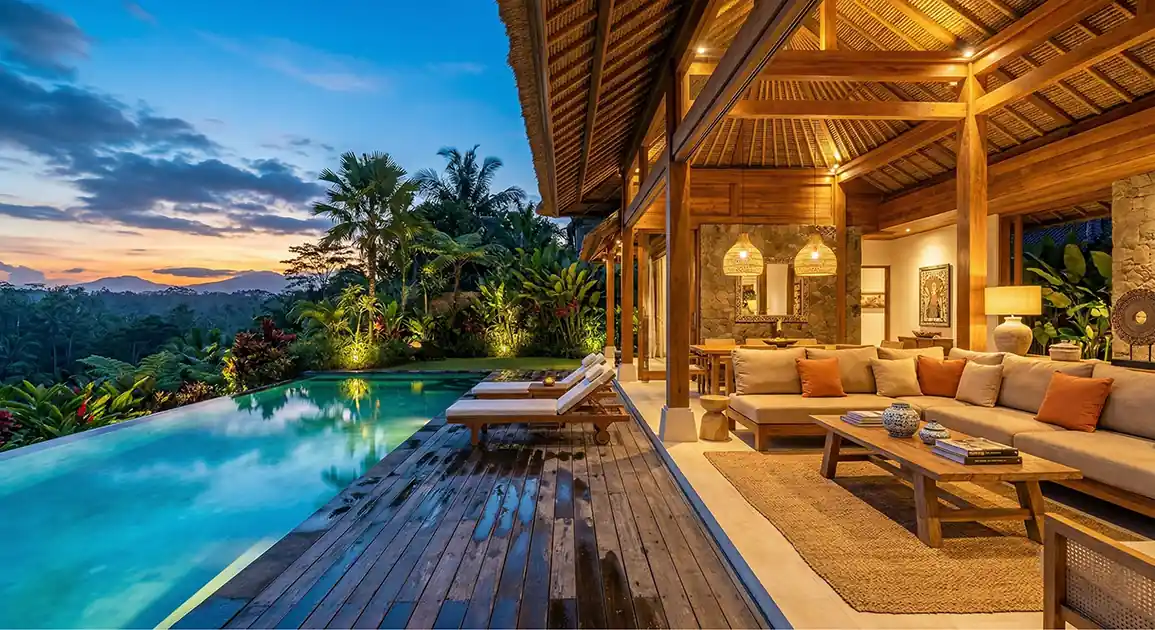
Designing a luxury villa in Bali is the specialized architectural practice of creating functional, aesthetically pleasing indoor and outdoor spaces tailored specifically to tropical climates. It expertly combines traditional Balinese craftsmanship with modern luxury, focusing intensely on optimal natural airflow, sustainable local materials, and seamless indoor-outdoor living spaces.
Densely planted walls of bamboo and tropical palms create “green fences” that render the villa a private fortress. You should be able to enjoy your private pool, outdoor shower, or sun deck completely unobserved, without hearing traffic or neighbors.
By mastering these elements, property owners can maximize both aesthetic comfort and long-term property value.
Why Professional Space Planning Makes or Breaks a Bali Villa
Many first-time investors attempt to manage their villa renovations or construction projects completely solo. If you are working with an existing structure, our Bali villa renovation guide covers what to expect before you break ground. While this might seem like a great way to save money upfront, it almost always leads to costly structural mistakes and severe project delays.
The humid climate and intense tropical sun are unforgiving to the wrong materials. A seasoned professional understands exactly which woods will warp, which fabrics will fade, and which metals will rust when exposed to salty ocean breezes.
This is exactly why partnering with a reputable interior designer Bali is your most reliable professional safeguard. A local expert acts as your interior designer, material sourcer, and fit-out supervisor all rolled into one — a non-negotiable partner when you are building to the standard investors now expect. They understand the nuances of the local market and can translate your Pinterest boards into drawings your architect and builder can execute.
What Are the Core Benefits for Property Developers?
If you are developing properties to sell or rent on Airbnb, time is quite literally money. Here is why taking the professional route is a highly profitable business decision:
| Investment Factor | DIY / Unprofessional Approach | Professional Design Service |
| Material Sourcing | High risk of overpaying for low-quality materials | Trade pricing and export-grade quality control |
| Time Management | Often delayed by months due to contractor miscommunication | Strict timelines, weekly updates, & fit-out supervision |
| Property ROI | Standard market rate and average nightly bookings | Premium valuation & a stronger rental position |
Tropical Architecture and Airflow — The Engineering Most Developers Ignore
When you are designing a luxury villa in Bali, aesthetics alone are not enough. The structural layout must deeply respect and respond to the local climate.
High humidity, intense equatorial sunlight, and heavy monsoon rains require very specific, strategic layout decisions. A seasoned expert understands how to optimize natural cross-ventilation, ensuring your villa stays cool without relying entirely on expensive air conditioning systems.
Think about it this way…
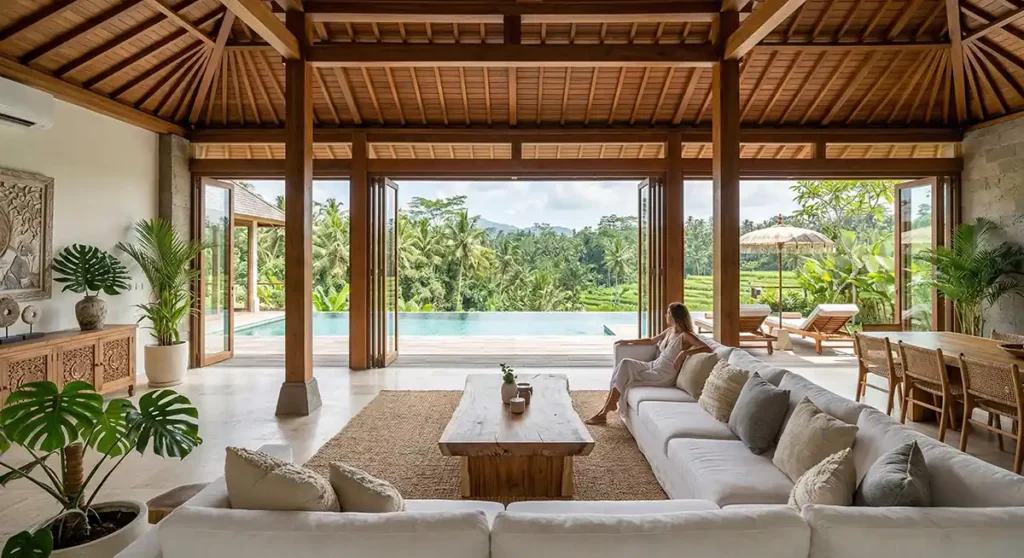
A poorly planned space will feel dark, damp, and unwelcoming. Conversely, strategic space planning blends the boundaries between the inside and the outside, a hallmark of the island’s most famous luxury resorts. See our blueprint of how to set Indoor Outdoor Design Bali up properly
How Does Airflow Affect Your Villa’s Longevity?
Proper ventilation is not just about comfort; it is about protecting your investment. Stagnant air in a humid environment inevitably leads to toxic mold growth, which destroys custom furniture, ruins expensive paint jobs, and creates severe health hazards for your guests.
By implementing high ceilings, strategically placed louvers, and open-plan living areas, you allow the tropical breeze to act as a natural, continuous dehumidifier.
Best Sustainable Materials for Luxury Villas in Bali’s Tropical Climate
One of the most critical decisions is selecting materials that can endure the harsh elements.
1. Solid Teak Wood (Kayu Jati)
Teak is the benchmark material for tropical furniture and structural elements. It naturally produces its own oils, making it incredibly resistant to termites, rot, and water damage. Always ensure your design team sources Grade A teak from certified Perhutani plantations for outdoor decking and premium furniture.
2. Natural Rattan and Bamboo
These fast-growing materials are not only eco-friendly but also bring that highly sought-after “boho-chic” aesthetic to your space. They are lightweight, durable, and perfect for statement light fixtures or relaxed seating areas.
3. Polished Concrete and Natural Stone
For flooring, polished concrete offers a sleek, modern look that naturally stays cool underfoot. Alternatively, local stones like batu candi (lava stone) or Sukabumi stone are perfect for pool areas, offering natural slip resistance and stunning aquatic color tones. See how we define Luxury Tropical Bathroom Design Bali.
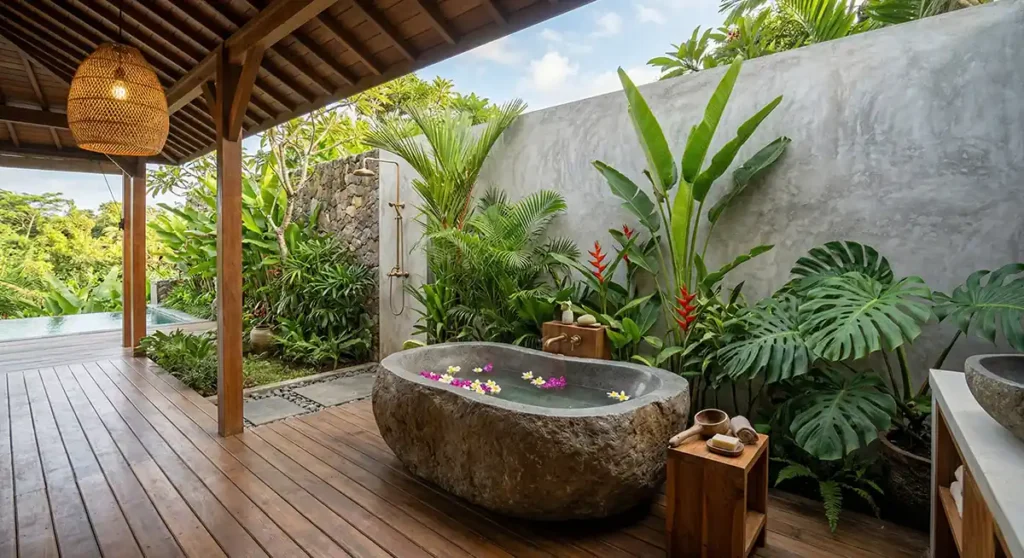
Top Architectural Trends in Bali for 2026
The aesthetic landscape is constantly evolving, and choosing the right style is one of the most exciting decisions you will make. While the traditional carved-wood look will always hold historical value, modern investors are leaning toward specific, high-yielding styles — from Modern Mediterranean to the raw, sculptural look of tropical brutalism.
What is Modern Mediterranean Tropical?
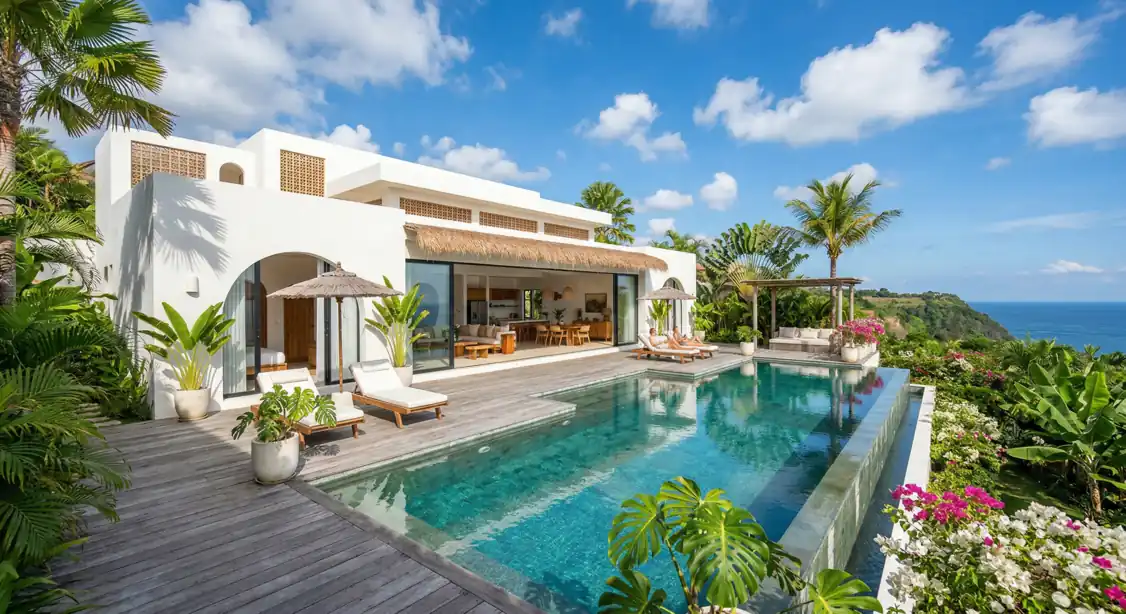
This is currently the most requested style by property developers. It blends the clean, curved lines and stark white plaster of Mediterranean architecture with lush tropical landscaping and warm wooden accents. It is highly photogenic, making it incredibly successful on social media and booking platforms.
See how we apply this in our Modern Mediterranean tropical villa Bali breakdown.
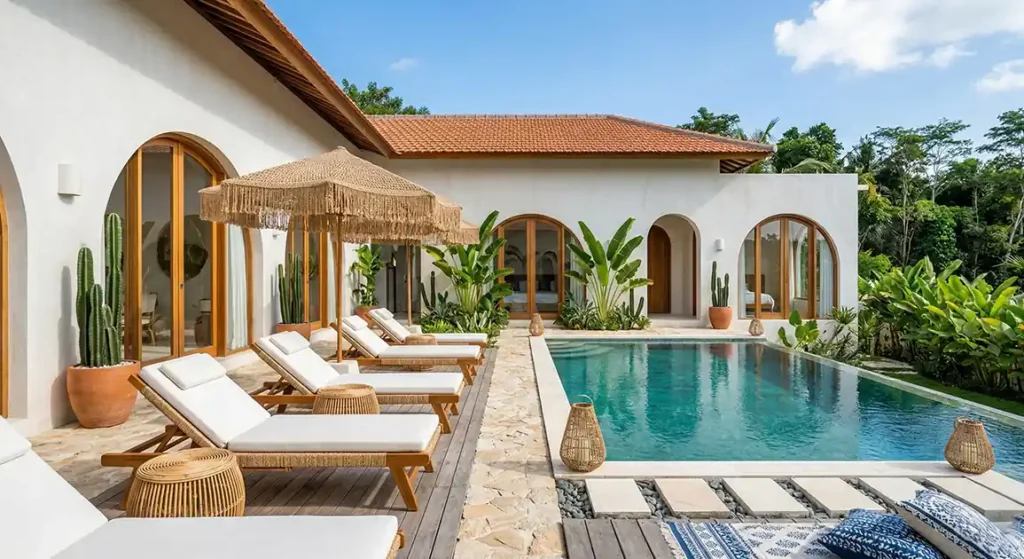
How to Achieve the Wabi-Sabi Aesthetic?
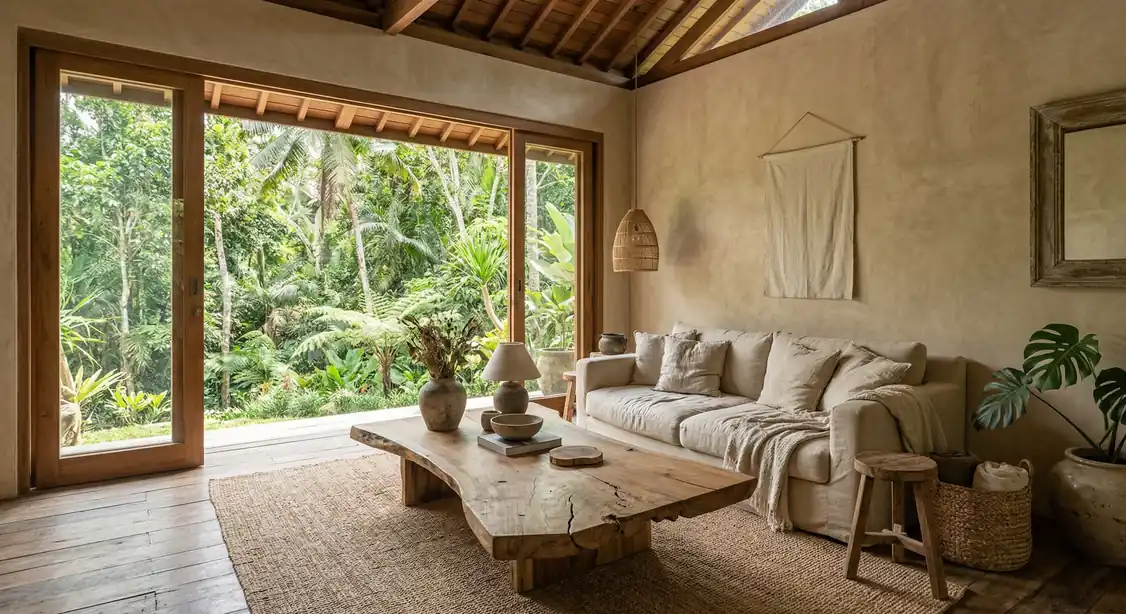
Wabi-sabi embraces the beauty of imperfection. This style uses raw, unfinished textures like lime-wash walls, organic linen fabrics, and asymmetrical pottery. It creates a deeply calming, grounding environment that perfectly suits yoga retreats and wellness-focused villas.
Why is Minimalist Luxury Gaining Popularity?
Minimalism here does not mean cold or empty. It means intentional design. By reducing clutter and focusing on a few high-impact, custom-made furniture pieces, the space feels larger, more expensive, and is significantly easier for villa staff to clean and maintain.
The Step-by-Step Process for Designing Luxury Villa Bali
Understanding the standard operational workflow is essential, especially from overseas. Here is how a premium agency will handle your investment from start to finish. If you are based abroad, the interior can be designed entirely remotely through our online interior design service.
Step 1: Initial Consultation and Concept Boarding
Everything begins with your vision. Your team will collect your references, analyze your target demographic (e.g., honeymooners vs. digital nomads), and create comprehensive mood boards to align on the visual direction.
Step 2: 3D Rendering and Technical Drawings
Before a single hammer is swung, you should receive photorealistic 3D renders of your space. This ensures you know exactly what you are paying for. Technical drawings are then handed over to the contractors to ensure every electrical socket and plumbing fixture is perfectly placed.
Step 3: Custom Furniture Sourcing and Production
Instead of buying mass-produced retail items, top agencies have direct relationships with local artisans. They will custom-build your sofas, dining tables, and built-in wardrobes to fit the exact millimeter of your villa’s layout. To ensure every piece aligns with the approved concept, we manage custom furniture production directly — from workshop to installation.
Step 4: Installation, Styling, and Handover
Once the dusty construction phase is over, the magic happens. The design team moves in to install the furniture, hang the bespoke lighting, dress the beds with premium linens, and place curated artwork. You are handed the keys to a fully furnished, ready-to-rent property.
Navigating the Bali Property Market as an Expat
Investing in Indonesian real estate comes with a steep learning curve. When you design a luxury villa here, you cannot simply apply Western construction expectations to local island infrastructure.
Here is the deal…
Communication styles, supply chain logistics, and local holidays can drastically affect your timeline. A professional design agency acts as your cultural and professional bridge. They negotiate with local suppliers, ensuring you do not pay inflated prices on raw materials.
If you are managing from overseas, read our complete guide to remote villa project management in Bali.
How to Manage Renovations from Overseas?
If you are living in Australia, Europe, or the US while your villa is being built, communication is your lifeline. Insist on a partner who provides weekly video walkthroughs, detailed PDF progress reports, and transparent financial spreadsheets.
What Drives the Build Budget for a Luxury Villa in Bali?
Budgeting for a luxury villa here requires a deep understanding of local economics. While labor is generally cheaper than in Western countries, imported luxury items carry massive import taxes.
To maximize your budget, source as much of your material locally as the quality allows. Indonesia has some of the best woodworkers, stone masons, and textile weavers in the entire world. By focusing on bespoke, locally made items, you keep your costs down while maintaining a strictly high-end, luxury feel.
What is the ROI on Professional Styling?
Do not view professional styling as an expense; view it as a high-yield marketing investment. Villas with cohesive, professional aesthetics command significantly higher nightly rates on Airbnb compared to poorly furnished competitors.
See These Principles in Built Projects
The clearest way to judge a design approach is to see how it resolves in real commissions. Four recent villa projects cover different parts of this guide:
- Villa Ombak Cinema Room — a dedicated cinema room designed inside a private villa, currently in build.
- Soho Blue Kitchen — a raw concrete shell reworked into a navy and blue-marble kitchen that anchors the villa’s open living space, in Kayu Tulang.
- Private Villa Interior, Canangsari — a full villa interior specified end to end, with locally made furniture.
- Lokalé Villas, Kayu Tulang — a villa development with the interior design approved and now in build.
5 Expert Tips Before You Break Ground in Bali
Before you finalize your mood boards and sign a contractor agreement, keep these five uncompromising rules in mind. These are the details that separate a high-ROI luxury villa from a stressful money pit:
- Avoid the “Glass Box” Trap: Massive floor-to-ceiling West-facing windows look incredible in 3D renders, but in Bali, they turn your living room into a greenhouse. If you use them, you must budget for automated solar shading and oversized AC units.
- Specify Wood Moisture Content (MC): If you are buying local teak furniture or decking, ask for the kiln-dried moisture content in writing. Timber keeps absorbing moisture in Bali, so what matters is that it was dried for an open tropical interior rather than a heated European one. Put it in too green and doors and tables warp and crack within months.
- Over-Engineer Your Waterproofing: Bali’s wet season is brutal. Do not accept standard residential waterproofing for your roof or bathrooms. Demand commercial-grade membrane waterproofing, or you will be dealing with black mold in your ceilings by year two.
- Plan for “Phantom Flow”: Design your layout so pool cleaners, gardeners, and housekeeping can access the outdoor areas and MEP (mechanical) rooms without ever walking through the main living room.
- Embrace Wabi-Sabi Maintenance: Natural materials age. Raw limestone will grow moss, and copper fixtures will turn green. Instead of fighting it with harsh chemicals, design your villa to age gracefully. (Read more on how to master this in our guide to Wabi-Sabi Interior Design in Bali).
Designing luxury villa Bali is not about copy-pasting a Pinterest board. It is a highly localized, deeply technical process that requires mastering tropical weather, navigating local supply chains, and understanding spatial flow. Don’t leave your CapEx to chance. Work with a specialized interior design studio that understands the island’s unique DNA.
Ready to start? Our Bali interior design studio takes the interior side of a villa build, from concept and technical drawings through custom furniture and fit-out supervision on site. Send us your plans and we will tell you what we would do with them.
Frequently Asked Questions (FAQ)
Depending on the size and scope, a full design, furniture production and installation process typically takes between 3 to 6 months. This includes the time required for manufacturing custom furniture and importing specific high-end fabrics.
Absolutely. In tropical architecture, the outdoor space is just as important as the indoor space. Most top-tier agencies handle pool decking, outdoor sunken lounges, gazebo styling, and select the right tropical plants to complement the architecture.
No, you do not. With a trusted professional agency, you can manage the entire process remotely. They will act as your eyes and ears on the ground, providing regular updates and video calls on the interior fit-out, while your builder stays responsible for the construction.
An architect focuses on the structural integrity, exterior shell, and building permits of the property. An interior expert focuses on optimizing the internal space planning, lighting design, custom cabinetry, material finishes, and aesthetic styling to make the structure livable and luxurious.