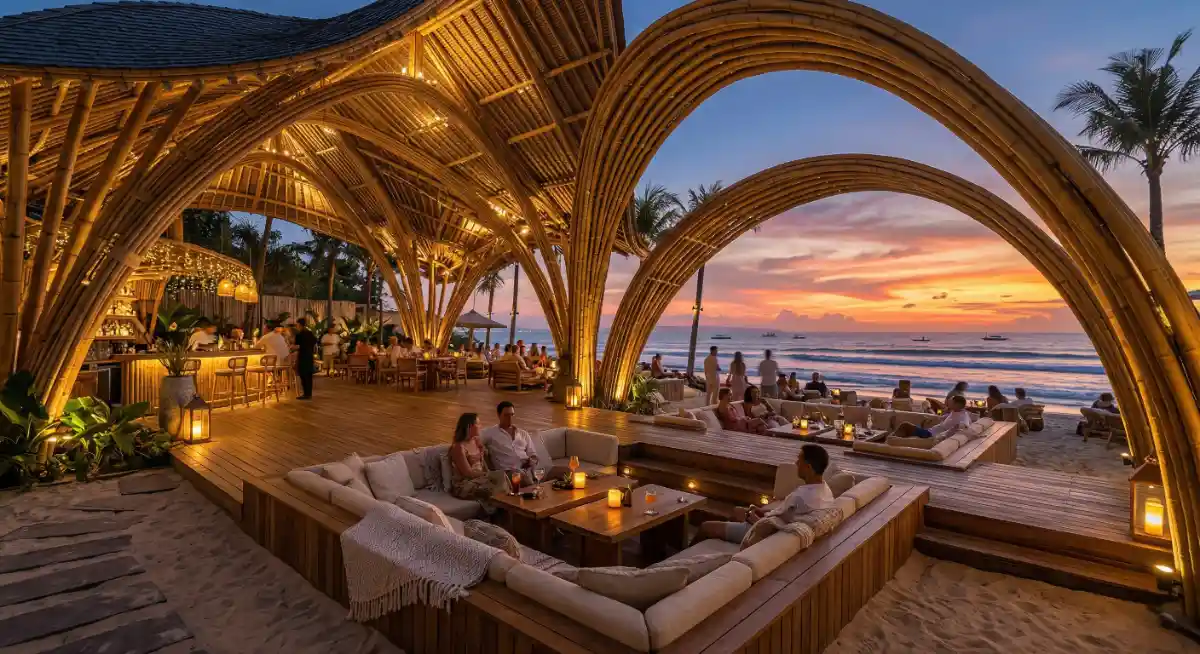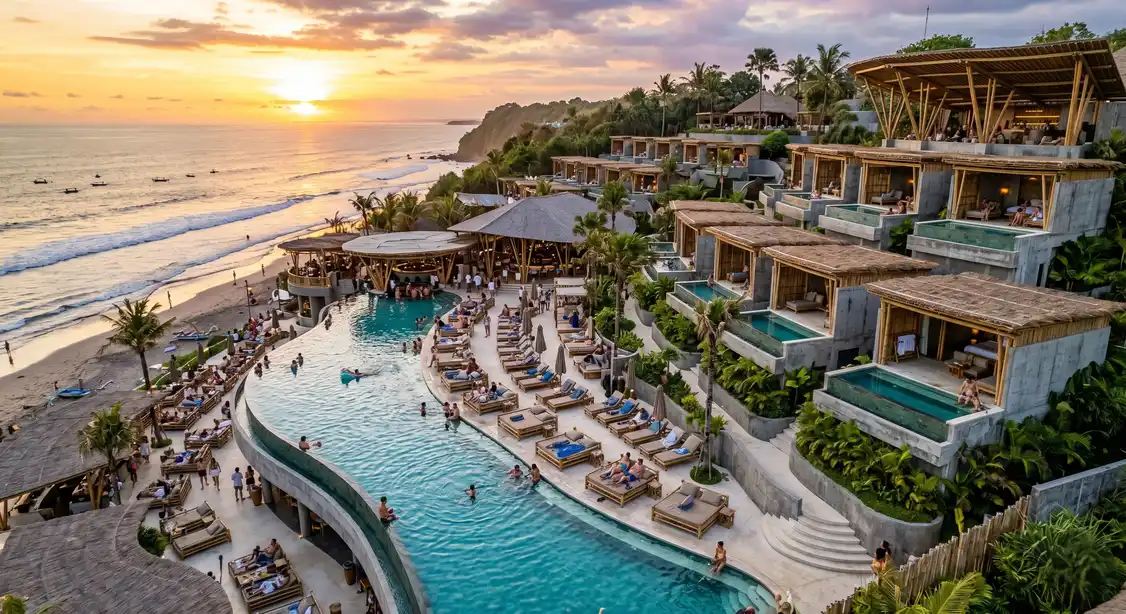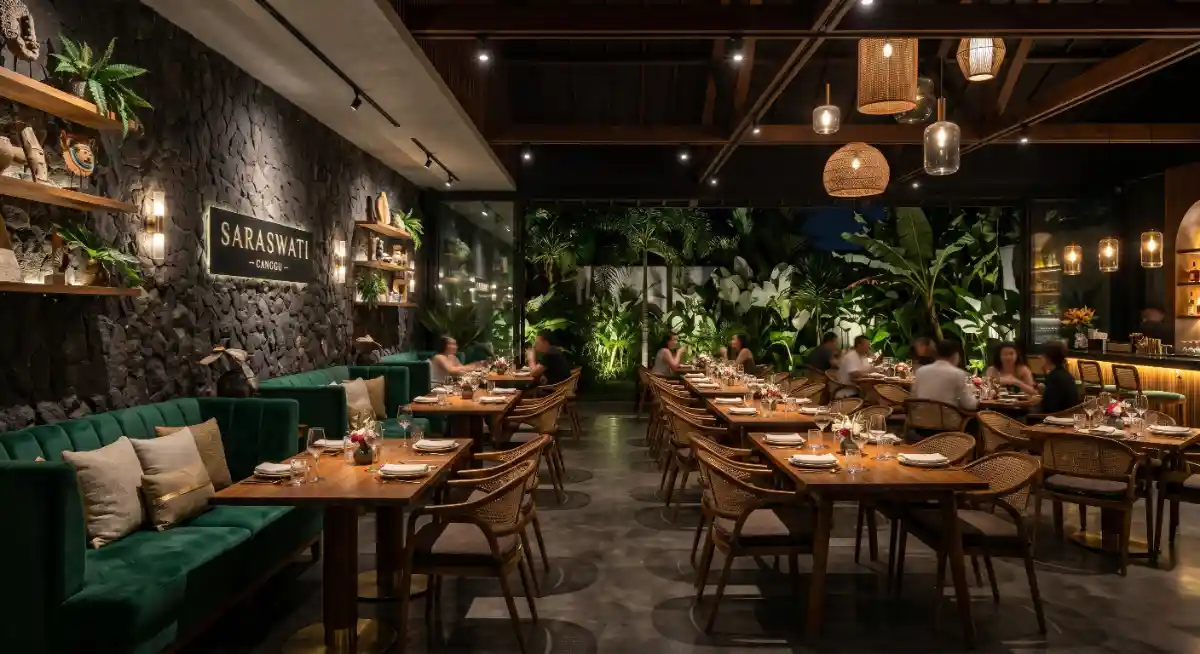
Last Updated on August 6, 2026 by Wisnu Arista H.
Restaurant Interior Design Bali: The Psychology of High-ROI Layouts
Let’s be blunt. If you are entering restaurant interior design Bali right now, you are stepping into a fiercely competitive industry.
Walk down Batu Bolong in Canggu or drive through the cliffs of Uluwatu, and almost every single venue looks like it belongs on the cover of an architecture magazine. Serving incredible food? That’s not a competitive edge anymore. That is just the bare minimum requirement so you don’t get laughed out of the market.
If your space isn’t actively working to squeeze every drop of revenue out of your floor plan, the island’s brutal rent prices will erode your margins fast. I saw too many amateur investors drop half a million dollars on pretty rattan chairs and custom art, only to realize that their waiters physically can’t move fast enough during a Friday night rush because the layout is a mess.
Mastering your commercial space isn’t about looking pretty. It’s about math, human psychology, operational friction, and protecting your cash flow. Here is the reality of how seating, lighting, and layout actually make you money.
The Math Behind Table Turnover
Your daily revenue ceiling is hard-capped by one simple metric: how long a guest sits in your chair.
Running a high-traffic brunch spot? You need them in, fed, photographed, and out in 45 minutes flat so you can flip the table. Running a premium steakhouse? You want them anchored to that seat for three hours so they order dessert and that second bottle of Malbec.
It all comes down to anthropometrics—how the human body physically reacts to your furniture over time. In restaurant interior design Bali, this is the lever most designers ignore — and the first one profitable operators pull.
- The Fast-Casual Rush: Want high turnover? Use backless stools. Buy rigid wooden chairs with straight 90-degree backs. Keep the tables slightly too narrow. It looks amazing on Instagram, but after 45 minutes, it gets just uncomfortable enough that guests ask for the bill without consciously realizing why. It’s a subtle, intentional friction.
- The Long Game (High Ticket): Fine dining means sinking people into deep, plush banquettes. You need angled backrests (around 105 degrees) and massive, heavy tables. You are physically telling their brain, ‘You are safe here. Relax. Keep spending.’
- The Wobbly Table Killer: I cannot stress this enough. Bali floors are rarely perfectly level, especially if you are using poured concrete or natural stone. If you buy cheap, rigid table bases, your tables are going to wobble. Nothing kills the vibe of a $100 meal faster than spilled wine because of a cheap table leg. Spend the money on self-leveling bases (like FLAT Tech) or bolt cantilevered tables straight into the wall.
Lighting for Food (and The Smartphone Factor)
In restaurant interior design Bali in 2026, if your food looks bad on an iPhone camera, your venue practically doesn’t exist.
But here is the mistake rookies make: they panic and flood the entire dining room with bright, flat, even light. Congratulations, you just killed the vibe.
The actual secret to high-end F&B lighting is high CRI (Color Rendering Index) pin-lighting. You drop the ambient room light so it feels moody and exclusive. Then, you hit the exact center of every dining table with a narrow-beam, warm 2700K spotlight. The effect is pure theater. The food pops. The colors look insane for social media. But the guests? They are sitting in flattering, soft, shadow-free light.
And please, automate this. A morning cafe needs a totally different energy than a late-night wine bar. If you are relying on your staff to manually dim 15 different light switches every sunset, human error will eventually ruin the atmosphere.
HVAC and Managing the “Scent” of Your Dining Room
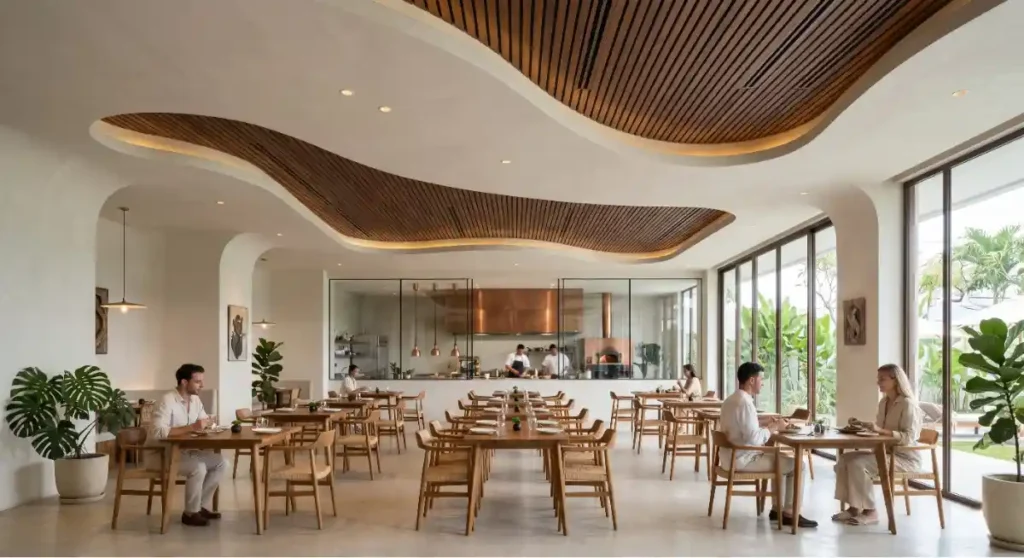
Looks matter, but smell hits the brain faster.
If you are building an enclosed, AC-cooled space, your airflow has to be mathematically perfect. Bad HVAC balance creates something called “Positive Air Pressure” in the kitchen.
What does that mean? It means every time a waiter opens the kitchen door, the heavy smell of deep-fryer grease, raw garlic, and dishwashing chemicals pushes out into the dining room. This destroys the guest experience.
Real commercial interior design Bali relies on engineered Negative Air Pressure in the Back of House (BOH). The massive exhaust hoods over the stoves are designed to suck slightly more air out of the building than the kitchen vents can replace, creating a constant, subtle vacuum. Because of this vacuum, every time a waiter opens the door, the kitchen actively pulls the fresh, cold, heavily filtered air from the dining room inward. This invisible wall of rushing air traps the odors where they belong. The guests smell the coffee and the expensive cocktails, never the trash cans.
Acoustic Baffling: Fixing the Noise Problem in Restaurant Interior Design Bali
Bali loves the brutalist, industrial aesthetic. Polished concrete, glass walls, exposed steel beams. Visually? Stunning. Acoustically? an acoustic problem.
Put 60 people inside a glass-and-concrete box with an espresso machine running, and the sound amplifies aggressively. guests have to raise their voices to be heard. That is called dining fatigue, and it is exactly why people leave negative reviews complaining about “bad energy” or a “chaotic vibe.”
You have to hide acoustic baffling everywhere. Spray the ceiling with acoustic cellulose. Shove thick, high-density acoustic foam under the tables and chairs where nobody looks. Use fluted wood panels to break up the sound waves. You want the room to sound energetic and busy, but quiet enough to actually have a conversation.
Getting the acoustic spec right requires hands-on commercial experience — work with an interior designer in Bali who has handled F&B builds, not only residential projects.
The “Viral Corner” Mistake in Restaurant Interior Design Bali
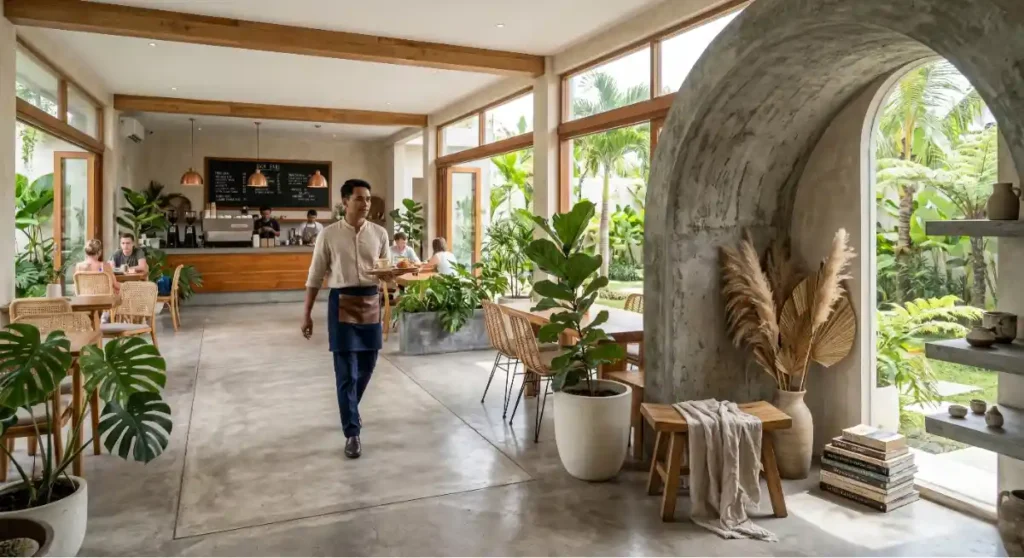
Every owner begs for their place to go viral on TikTok. So, they try to make every single corner of the room a photo op. Don’t do this.
If your whole restaurant is a photo studio, influencers will stand in your aisles blocking traffic. Your waiters will be dodging tripods while carrying hot plates. Service slows down, food goes cold, and the operational flow collapses.
The smart play? Build a dedicated “Viral Zone.” A crazy brutalist arch, an indoor jungle, or a wild bathroom mirror installation. Put it far away from the main pathways between the kitchen pass and the dining tables. Control where people take photos so your staff can actually do their jobs.
Heavy-Duty F&B Material Selection
Restaurant interior design Bali operates in a brutal environment — a busy venue will destroy residential furniture in weeks. Because chairs get dragged constantly, lime juice gets spilled, heavy ceramic plates get dropped. If you put raw terrazzo or unsealed marble on your tables, they will stain permanently by day two. If you use cheap linen on your banquettes, tropical sweat and sunscreen will ruin it instantly.
Stop buying furniture meant for a living room. Specify commercial-grade vinyl, heavy-duty sealed microcement, and marine-grade timbers. A $300 chair that breaks in two months is a liability.
But honestly, none of this matters if your restaurant interior design Bali is a mess. Before you even think about fabric swatches or paint colors, make sure your mechanical and electrical foundations are bulletproof.
Your layout is your silent salesman. Engineer it strictly to protect your margins.
Frequently Asked Questions About Restaurant Layouts
The global industry standard for a profitable, full-service restaurant is the 60/40 rule. Approximately 60% of your floor plan should be dedicated to the Front of House (dining, bar, reception), and 40% must be reserved for the Back of House (commercial kitchen, prep, storage, and staff areas) to ensure smooth operations during peak hours.
Seating anthropometrics directly dictate how long a guest stays. Fast-casual cafes use rigid chairs and backless stools to create subtle physical friction, encouraging guests to leave after 45 minutes. Fine-dining venues use plush, angled banquettes (105-degree backrests) to anchor guests comfortably, encouraging multi-hour stays and higher spending.
Avoid flat, bright overhead lighting. The secret is utilizing High CRI (Color Rendering Index) pin-lighting. Keep the ambient room light low and moody, but use warm 2700K narrow-beam spotlights aimed directly at the center of the tables. This illuminates the food perfectly for social media while keeping the guests in flattering, soft light.
Running a smaller all-day format instead? Our cafe interior design guide covers the same durability rules at a tighter budget. Scaling up to a full beachfront venue is the opposite direction — see beach club design.