Last Updated on June 24, 2026 by Wisnu Arista H.
Japandi Interior Design in Bali: Calm, Minimal & Tropical
Japandi interior design fuses two aesthetics: Japanese minimalism and Scandinavian warmth. The first brings clean lines, low furniture, calm, and function. The second adds light woods, cosy textiles, and a sense of comfort. The result is spare but soft: uncluttered, natural, and quietly liveable rather than stark.
Most owners ask whether that calm, minimal look survives Bali’s heat, humidity, and indoor-outdoor living. The answer is yes — provided you adapt it.
This guide explains what Japandi is and why it suits a tropical villa. It covers the materials, the palette, and how to apply the look room by room. Japandi is one of several styles in our Bali interior design styles guide — but it deserves a closer look of its own.
The Japandi Design Philosophy
Think of Japandi as a balance of two minimalisms. From Japan it takes restraint, low furniture, and a reverence for craftsmanship — the idea of “less, but better.” From Scandinavia it takes warmth: lighter woods, soft natural textiles, and comfort that stops minimalism tipping into coldness. Where the two meet is a muted, natural palette, honest materials, and rooms where every object earns its place.
It is closely related to wabi-sabi, the Japanese aesthetic of imperfection and patina. Wabi-sabi is an influence inside Japandi, not the same thing. It is the broader hybrid style; wabi-sabi informs its love of natural, imperfect texture. Japandi is a complete interior formula — furniture, palette, layout. Wabi-sabi is a way of treating surfaces and materials.
Why Japandi Works So Well in Bali
Japandi suits Bali better than most imported styles. Several of its core principles align with how tropical villas naturally work.
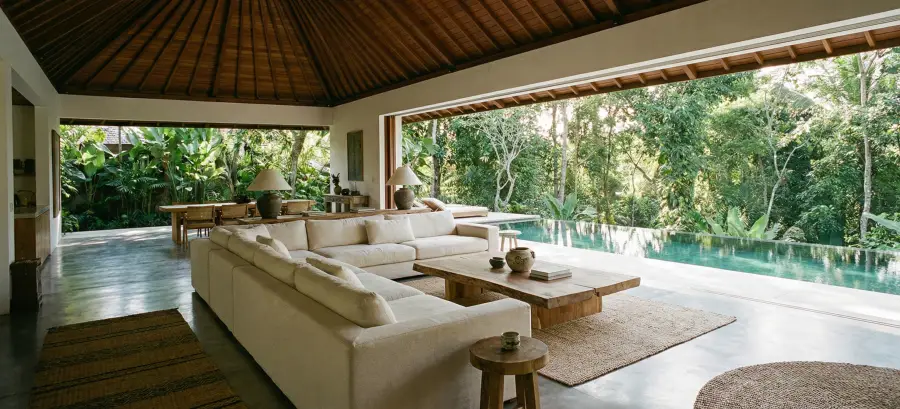
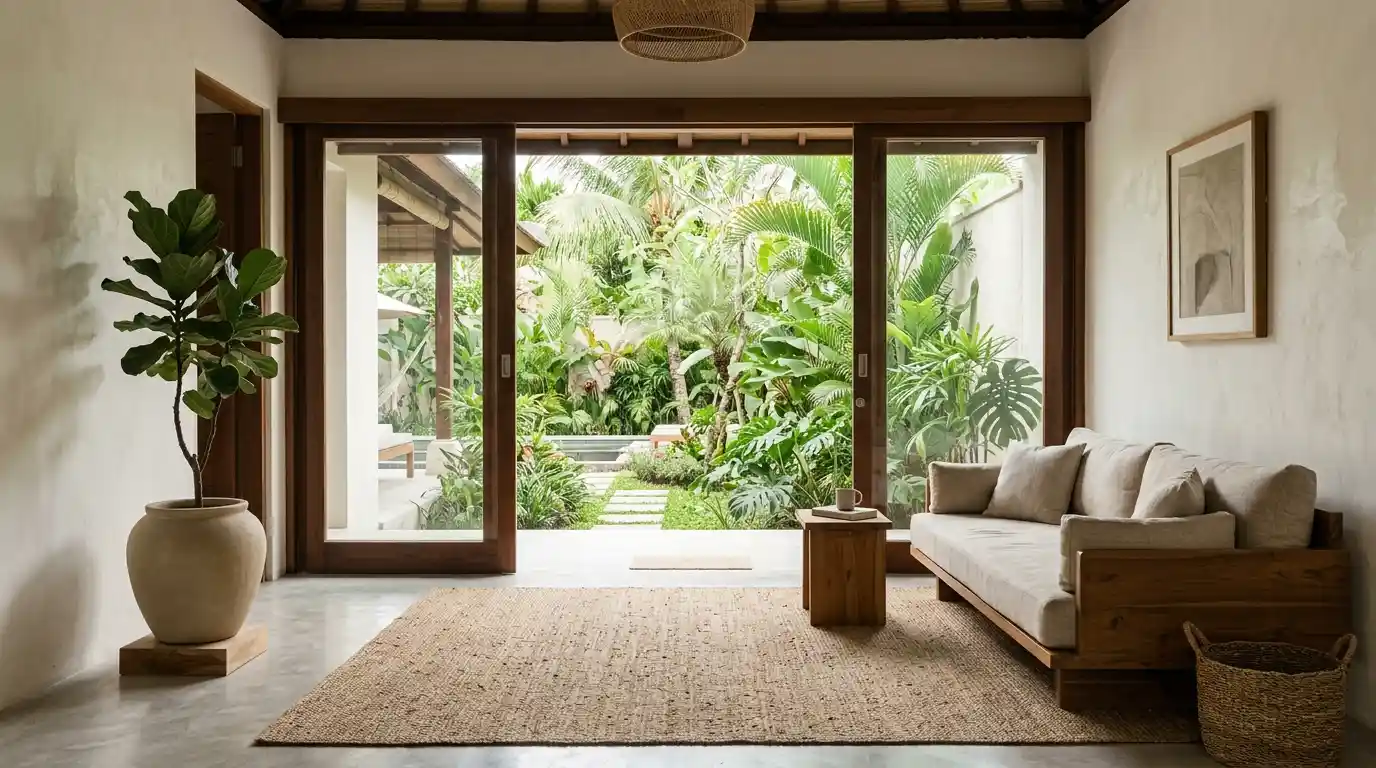
The first is indoor-outdoor flow. Low furniture, uncluttered floors, and clean sightlines suit open villa layouts and the constant connection to a garden. Minimalism reads as generous, not empty, when it opens onto greenery.
The second is natural light. The pale, muted palette makes the most of soft natural light — and Bali has it in abundance. The third is the contrast itself. Calm, neutral interiors against lush tropical planting create exactly the serene-against-vivid tension the style seeks.
The fourth is craft. Japandi’s emphasis on solid, well-made natural-wood pieces aligns with Bali’s tradition of timber craftsmanship. Local craftsmen can deliver the look. Owners who want warmth without Balinese ornamentation find it a natural fit. Our Bali interior design service adapts Japandi to the tropical climate.
Materials, Palette & Textures for Tropical Japandi
Japandi interior design in Bali comes down to materials — choosing ones that deliver the look and survive the humidity.
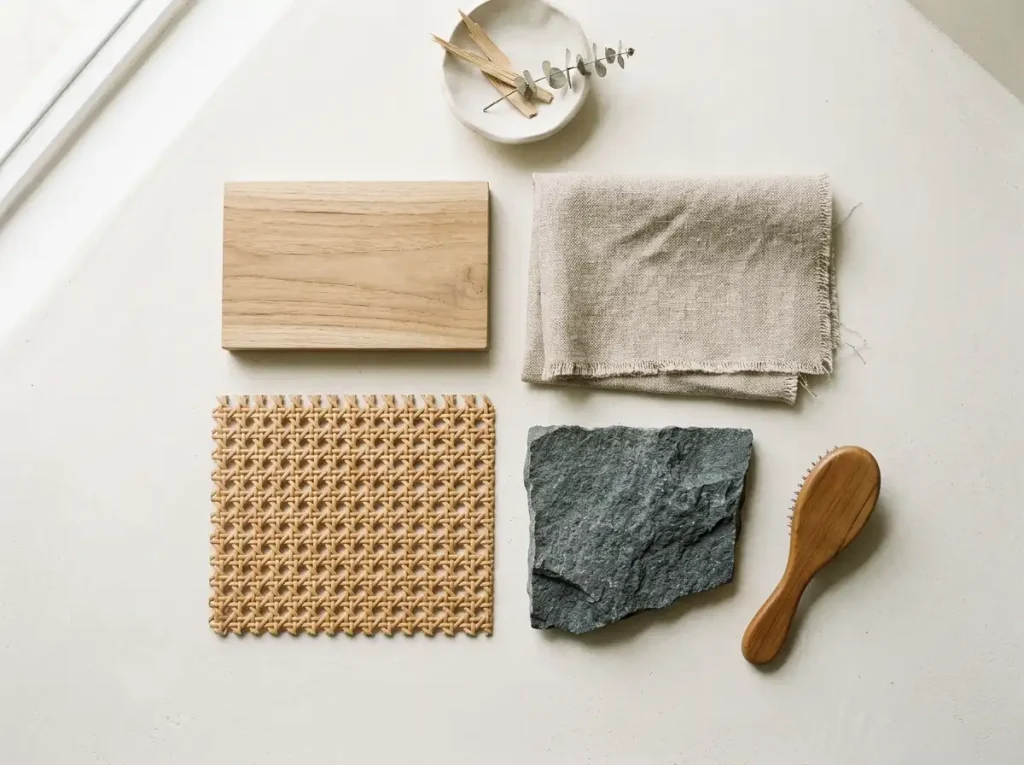
The palette is muted and natural: soft neutrals, warm whites, oatmeal and greige. Deeper charcoal or black accents and natural timber tones ground it. Textures do the work that colour does in other styles — matte over glossy, woven over smooth, natural over synthetic. Core materials are light-to-mid timbers, rattan, natural fibre, stone, linen, and cotton — all in matte finishes.
Here is where the climate note matters. Japandi leans heavily on wood, and not all timber behaves in Bali’s humidity. Specify kiln-dried plantation hardwoods finished with natural penetrating oils rather than untreated or composite timber that warps and swells. Choose treated rattan and natural fibres, since untreated versions grow brittle or mouldy within a season.
Use stone — andesite or sealed terrazzo — for surfaces that take moisture. Because we produce furniture in-house, each low, solid-wood piece gets made to the right dimensions in climate-appropriate timber. Stock items rarely survive the conditions. The look stays true; we simply choose the materials for the tropics.
How to Get the Japandi Look, Room by Room
The style is consistent across a home, but each room has a few concrete moves that deliver it.
In the living area, choose low, solid-wood furniture with clean lines and keep floors clear. Layer natural textiles — a linen throw, a woven rug — for warmth. Restrained styling is key: a few considered objects, not a display.
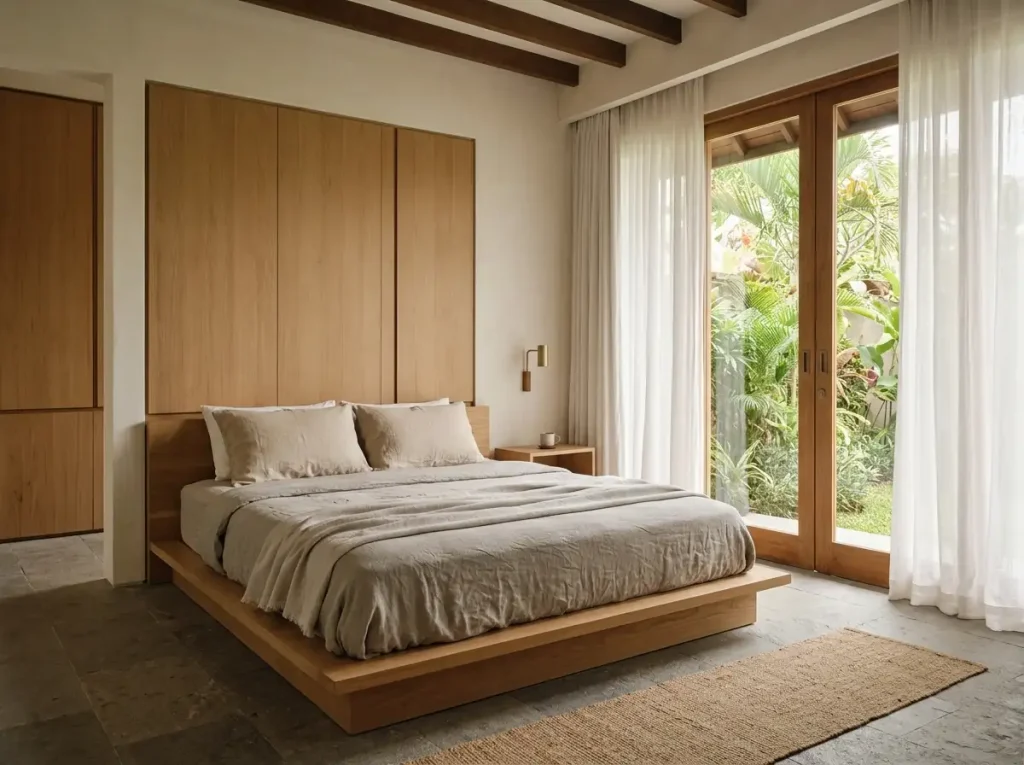
In the bedroom, a low platform bed, muted bedding, and built-in storage keep the calm intact. The goal is a room that feels uncluttered without feeling empty.
In the bathroom, natural stone, timber accents, matte fittings, and simple lines carry the style. Good ventilation keeps natural materials healthy in a humid space.
The thread is the same in every room: built-in storage, natural materials in matte finishes, and a disciplined palette. Effortless calm is less about adding the right things and more about removing the wrong ones. Give everything that remains a place to be put away.
Common Japandi Mistakes in a Tropical Home
A few predictable errors undo Japandi in Bali. The first is over-minimising into coldness — stripping back so far the space feels bare rather than calm. The Scandinavian warmth prevents this; do not lose it.
The second is non-humidity-tolerant materials — untreated timber, composite furniture, or unsuitable fibres that fail fast in the climate.
The third is clutter creep. The style only works with adequate storage — without it, clean surfaces fill up and the look collapses. Each mistake is avoidable with the right materials and a layout planned around storage from the start.
Bring Calm to Your Bali Villa
Japandi interior design in Bali might be exactly what your villa needs. Book a free design consultation. We will adapt it to the climate and help you get the calm, natural look in materials built to last.
FAQ — Japandi Interior Design in Bali
A hybrid of Japanese minimalism and Scandinavian warmth. Japanese minimalism brings clean lines, low furniture, calm, and craftsmanship. Scandinavian warmth adds light woods and cosy natural textiles. The result is uncluttered but soft: a muted natural palette, honest materials, and rooms where every object earns its place. “Less, but better” sums up the philosophy.
Yes, and it adapts well. Its low furniture, clean sightlines, and pale palette suit open, light-filled villa layouts and indoor-outdoor living. The key is climate-tolerant materials — kiln-dried timber, treated natural fibres, stone. These ensure the natural look survives Bali’s humidity rather than degrading.
Wabi-sabi is an aesthetic of imperfection, patina, and natural texture. Japandi is a complete hybrid interior style that uses wabi-sabi as one of its influences. It covers furniture, palette, and layout — the full formula. Wabi-sabi is a way of treating surfaces and materials. Wabi-sabi sits inside Japandi, not alongside it.
It depends on how you approach it. The “less, but better” principle means fewer pieces — but each should be solid and well-made. That costs more per item than mass-produced furniture, but you buy far fewer. The saving is in buying less; the investment is in quality, custom natural-wood pieces that last.
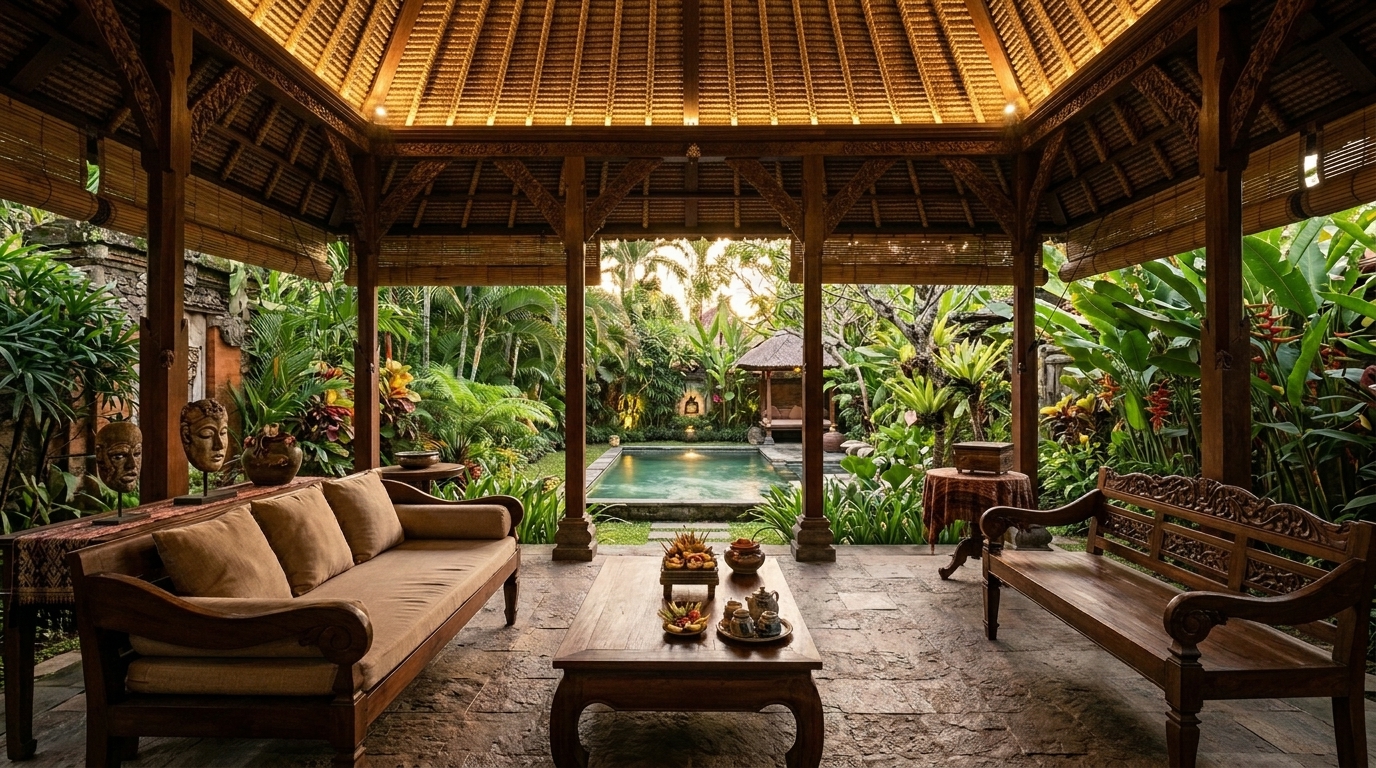
Yes — it blends well. A Balinese frame with Japandi restraint, or a tropical-modern shell with the same natural materials, can work beautifully. All three share an indoor-outdoor logic and honest use of material. The key is a consistent material palette and a single point of view — so the result feels intentional.