Last Updated on October 1, 2026 by Wisnu Arista H.
Cafe Interior Design Bali: A Coffee Shop That Draws a Crowd
Great cafe interior design in Bali gets three things right at once. The layout moves people past the counter without friction. Materials handle heat, humidity, and heavy daily traffic without failing. And the look earns its place on social media without becoming a gimmick. Get all three right and the space works as a business, not just a backdrop. Get them wrong and the room jams at the counter, wears out fast, or photographs well but loses the regulars.
This is a practical walkthrough: layout, materials, lighting, operations, and the mistakes to avoid. It comes from a studio that produces the furniture for these spaces, custom counters and all, rather than one that only styles them.
What Makes Cafe Interior Design in Bali Different?
Designing a cafe in Bali is not the same as designing one in a temperate city. The differences are practical, not cosmetic.
The climate comes first. Heat and humidity rule out materials that work fine elsewhere. Many Bali cafes use open frontages and indoor-outdoor seating. The design has to handle weather, airflow, and the shift from interior to terrace.
Natural daytime light is the second factor. Bali cafes live by daytime trade, so how a space handles light matters more than evening ambiance. Third is the local market. Bali has a genuine specialty-coffee culture and a strong cafe-hopping habit, particularly across Canggu, Seminyak, Ubud, and Uluwatu. Customers actively seek out distinctive spaces and move between them. That culture rewards a cafe with a clear identity. All of this falls within the discipline of commercial interior design in Bali, but cafes have their own rules.
Planning the Layout: Flow, Zoning & Capacity
Layout makes or breaks a cafe: it governs the customer experience and how much the space can actually earn.
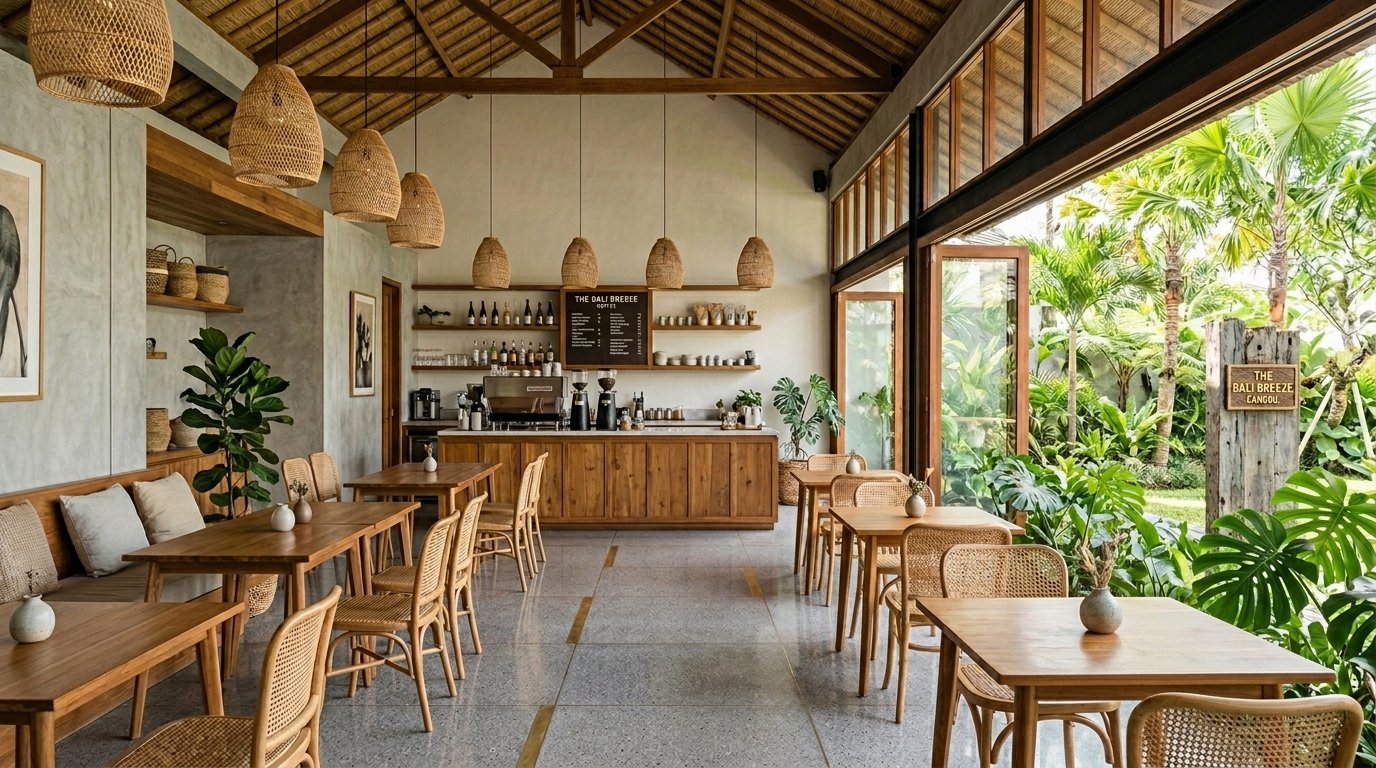
Start with the counter: everything orbits it. Its position sets the “golden path”: the route from entrance past the display to the order and collection point. Keep that path obvious, unobstructed, and long enough to show what you sell. Behind the counter, the barista workflow needs space to move efficiently between machine, grinder, and handover. A slow bar caps throughput no matter how full the room is.
Then zone the seating to match how cafes are actually used here. Solo and laptop customers want edges, power, and separation. Couples want smaller two-tops. Groups need flexible, movable tables. A communal table adds capacity and sociability.
This is also where you make the central trade-off of cafe design: dwell versus turnover. A long-stay cafe needs comfort and power but turns tables slowly. A high-turnover cafe prioritises quick seating and flow. Decide which you are before placing a single chair. Keep restrooms on a path that does not cross the service flow.
Materials & Finishes That Survive a Bali Cafe
Cafe interior design in Bali has a durability problem that temperate climates do not. Heat, humidity, and heavy daily traffic put materials under constant stress. A cafe takes more punishment than a home (spills, cleaning, foot traffic), so choose materials for endurance first, looks second.
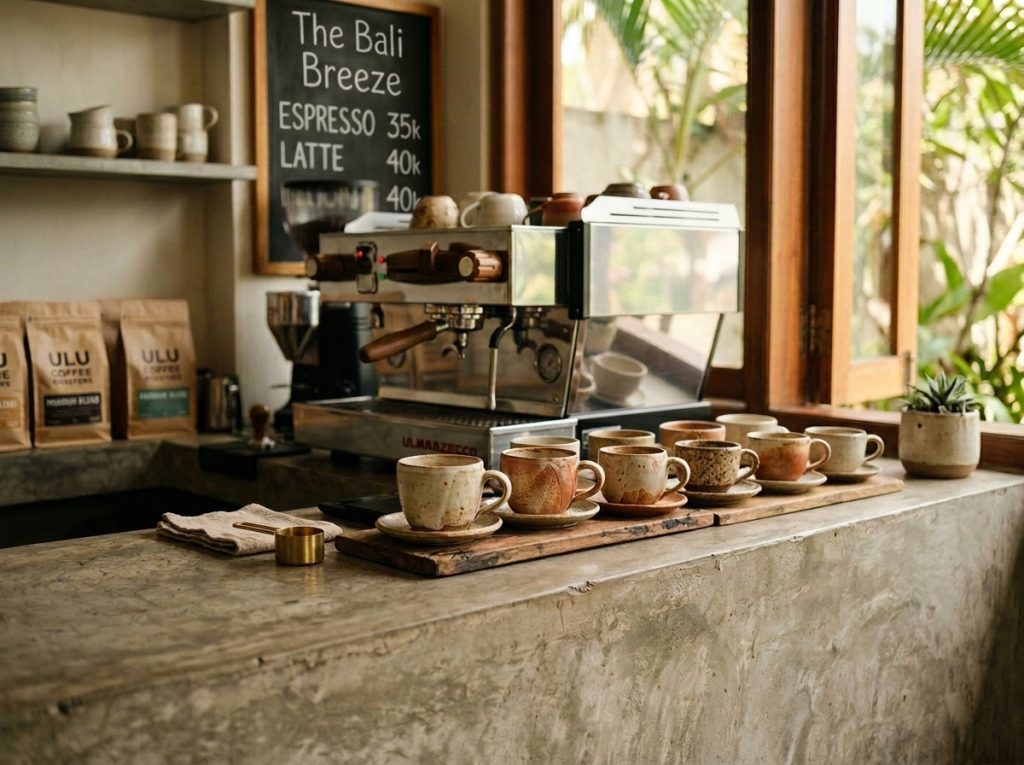
The reliable performers are sealed timber, terrazzo or micro-cement floors, natural stone, and treated rattan as an accent. These take heavy use, tolerate humidity, and clean easily. Floors take the most abuse: foot traffic and frequent mopping. Terrazzo and micro-cement handle both without degrading, which is why they dominate Bali fit-outs. Counters, the most-used surface in the building, should be hard, sealed, and water-resistant: materials that survive years of daily service.
What fails is predictable. Porous surfaces stain. Composite materials swell in humidity. Delicate finishes look sharp on opening day and worn within months. We produce the high-wear pieces (counter, banquettes, communal tables) in materials matched to the traffic and climate. We do not use stock items that cannot handle a humid, high-use cafe. In a commercial space, that durability is what keeps the fit-out from becoming a refit two years early.
Lighting, Seating & the Instagrammable Factor
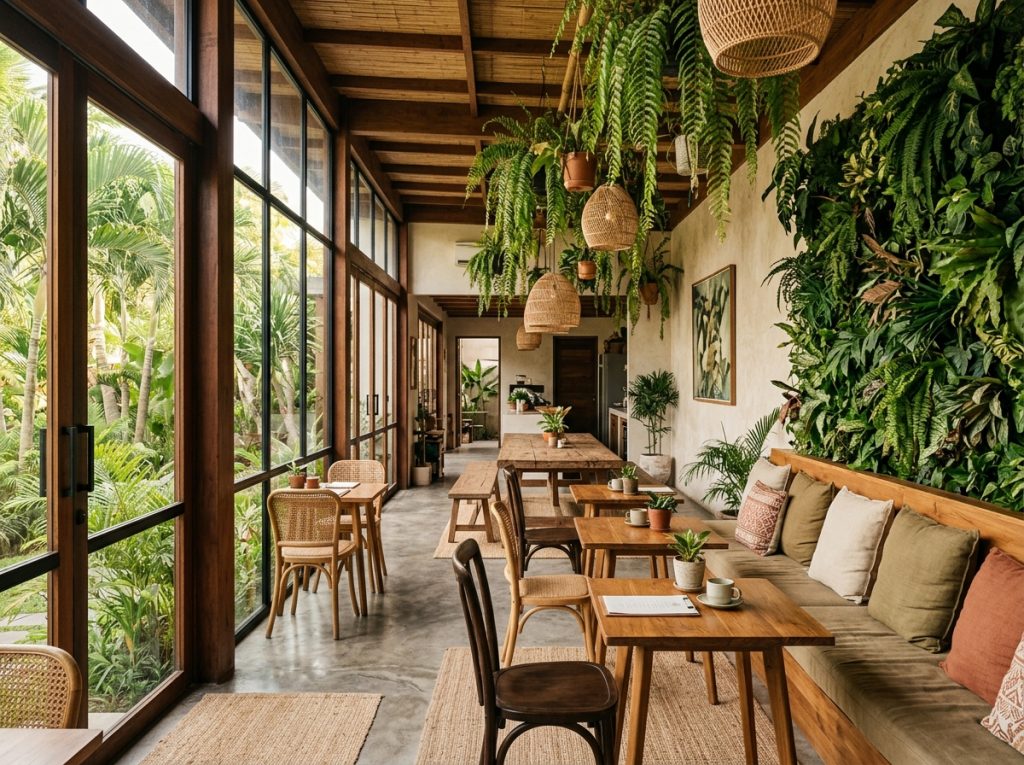
In a daytime cafe, lighting strategy starts with the sun. Maximise and control natural light. It makes a cafe feel alive during trading hours and flatters both the food and the photos. Supplement with layered artificial lighting for overcast days and the corners daylight misses, but natural light should lead.
Calibrate seating comfort to your dwell strategy, not maximise it blindly. A long-stay cafe invests in genuinely comfortable seating. A turnover-focused one keeps it pleasant but not so plush that tables never free up.
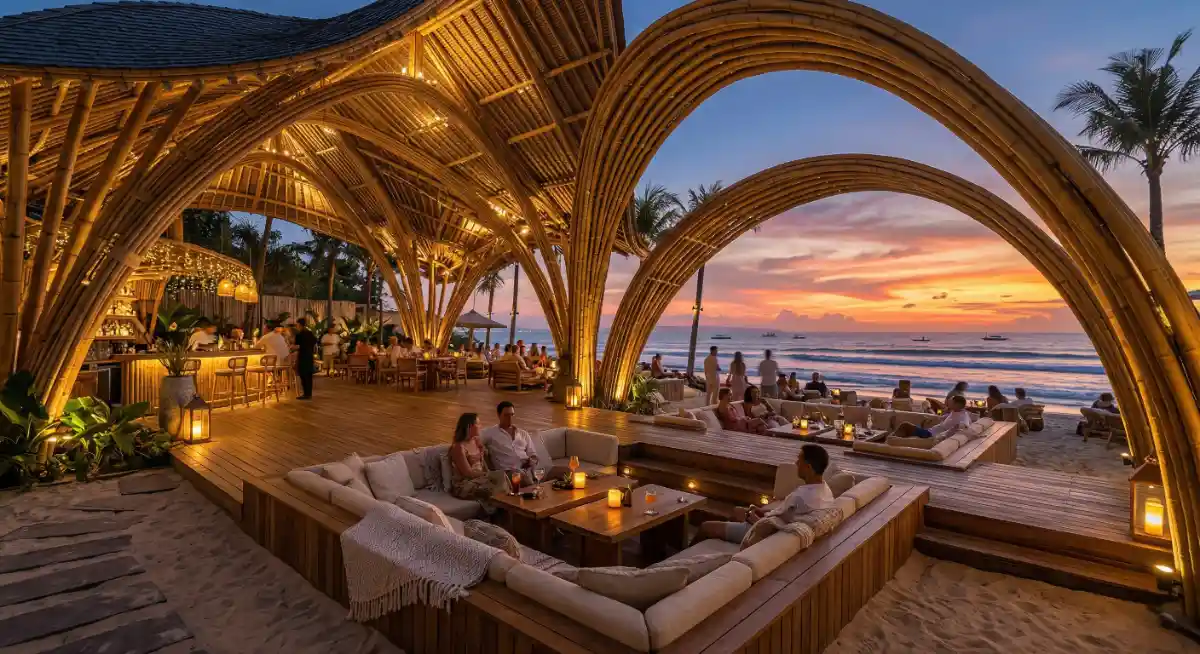
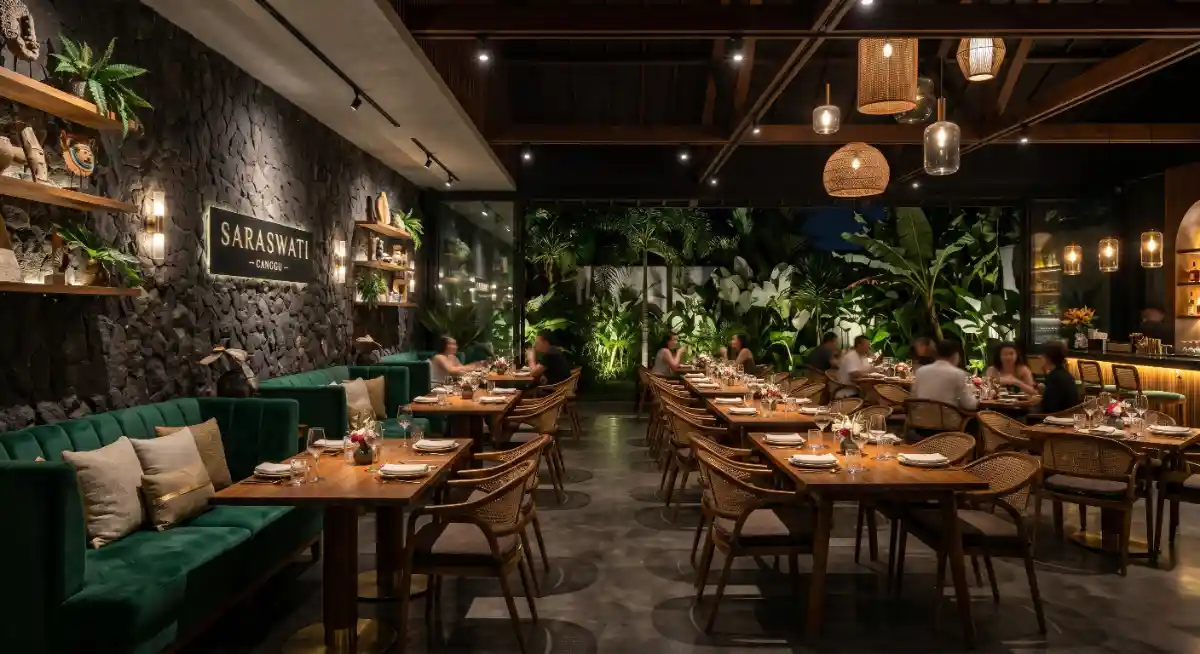
Then there is the social-media factor. In Bali, that is real free marketing, not a vanity concern. One considered feature moment, such as a signage wall, greenery or a statement counter, gives customers something to photograph and share. That pulls footfall at no media cost. The trick is making it a genuine part of the design, not a bolted-on gimmick. The best Instagrammable cafes are simply well-designed cafes with one or two memorable moments.
Designing for Operations & Staff Flow
The decisions that make or break daily trade are usually the ones customers never see. Back-of-house needs enough room for storage, prep, and deliveries without spilling into the customer area. The barista bar needs an efficient layout so staff are not crossing paths during a rush. Plan power and data around the equipment and the laptop crowd. Do not retrofit them. Ventilation matters in a humid climate, both for comfort and for keeping the space and its materials healthy.
And deliveries and waste need a path that does not run through the seating. None of this is glamorous. But a cafe that runs smoothly behind the counter delivers the experience the design promises. That is exactly what our Bali interior design service plans for from the start.
Common Cafe Design Mistakes in Bali
A handful of mistakes recur across cafe and restaurant projects:
- Over-seating: Cramming in tables to maximise capacity kills flow and comfort, and ultimately costs more trade than it gains.
- Wrong materials: Specifying surfaces that can’t take the humidity and traffic leads to an early refit.
- Designing for the camera, not the baristas: A beautiful counter that is miserable to work behind slows every order.
- Ignoring acoustics: A full cafe that becomes unbearably loud drives people away. Linger-friendly trade depends on it.
Each is avoidable by designing around how the cafe actually operates. These appear across cafe interior design in Bali, from small neighbourhood spots to destination flagships. They all share the same root cause: fit-out decisions made before anyone thought through the operations. You can see the opposite approach in Nasi Lemak Wak Teni at Discovery Mall, Kuta. We designed the two-storey restaurant unit around its service flow, finished it in timber, and it was completed in 2026.
Planning a Cafe in Bali?
If you are opening or refitting a cafe, the design decisions you make now shape how it trades for years. Book a free design consultation. We will plan a space that moves people, survives Bali’s climate, and keeps customers coming back.
A cafe shares most of its brief with two other F&B formats. See our guide to restaurant interior design for how the same principles scale up.
Beach club design covers the largest of the three.
Frequently Asked Questions
There is no single figure: cost depends on the size of the space, the condition you start from, how much custom joinery (counter, banquettes) is involved, and the quality of materials and finishes. The bigger drivers are scope and bespoke elements rather than floor area alone. A clear brief and a realistic scope matter more than chasing a headline rate.
A good cafe layout makes the path from entrance to counter obvious and unobstructed, gives the barista bar room to work efficiently, and zones seating for the different ways customers use the space: solo, couples, groups, communal. Above all it reflects a clear decision about dwell versus turnover, which shapes everything else.
Durable, humidity-tolerant, easy-clean materials: sealed timber, terrazzo or micro-cement floors, natural stone, and treated rattan as an accent. Counters should be hard, sealed, and water-resistant. Avoid untreated or porous surfaces and composite materials, which stain, swell, or wear out fast under constant traffic and humidity.
Build one or two genuine feature moments into the design, such as a signage wall, greenery or a statement counter, rather than bolting on gimmicks. Strong natural light is the single biggest factor, since it flatters both the space and the photos. The most photographed cafes are simply well-designed ones with a memorable detail.
Not always, but a designer earns their place where the stakes are high: a competitive location, a tight space that has to work hard, or a custom fit-out. For a very small, simple cafe an owner with a clear vision can do a lot alone. The more the layout, flow, and durability matter to the business, the more design pays for itself.