Last Updated on October 16, 2026 by Wisnu Arista H.
Visitors to Bali quickly notice how differently the island’s rooms feel. From a cliffside villa in Uluwatu to a cafe in Canggu, the local design language is distinct. What actually creates that look?
Planning to build, renovate, or update a tropical property? Understanding the core elements of the Balinese interior design style is essential. It goes well beyond picking out curtains. It is about translating the character of the island into a functional, livable home.
This guide covers what sets the local approach apart. Pairing Balinese craft with modern comfort is a reliable approach for a lasting home.
Balinese style is just one of several distinctive looks worth weighing up before you commit. For the bigger picture, see our complete guide to Bali interior design styles, which compares it with tropical modern, Japandi, wabi-sabi and more.

What Defines the Authentic Bali Villa Aesthetic?
The authentic Bali villa aesthetic is defined by “Tropical Modernism.” It is a seamless blending of open-air architectural layouts with organic, locally sourced materials like solid teak wood, rattan, and natural stone, all designed to harmonize with the island’s humid climate and lush environment.
The Magic of “Tropical Modernism”
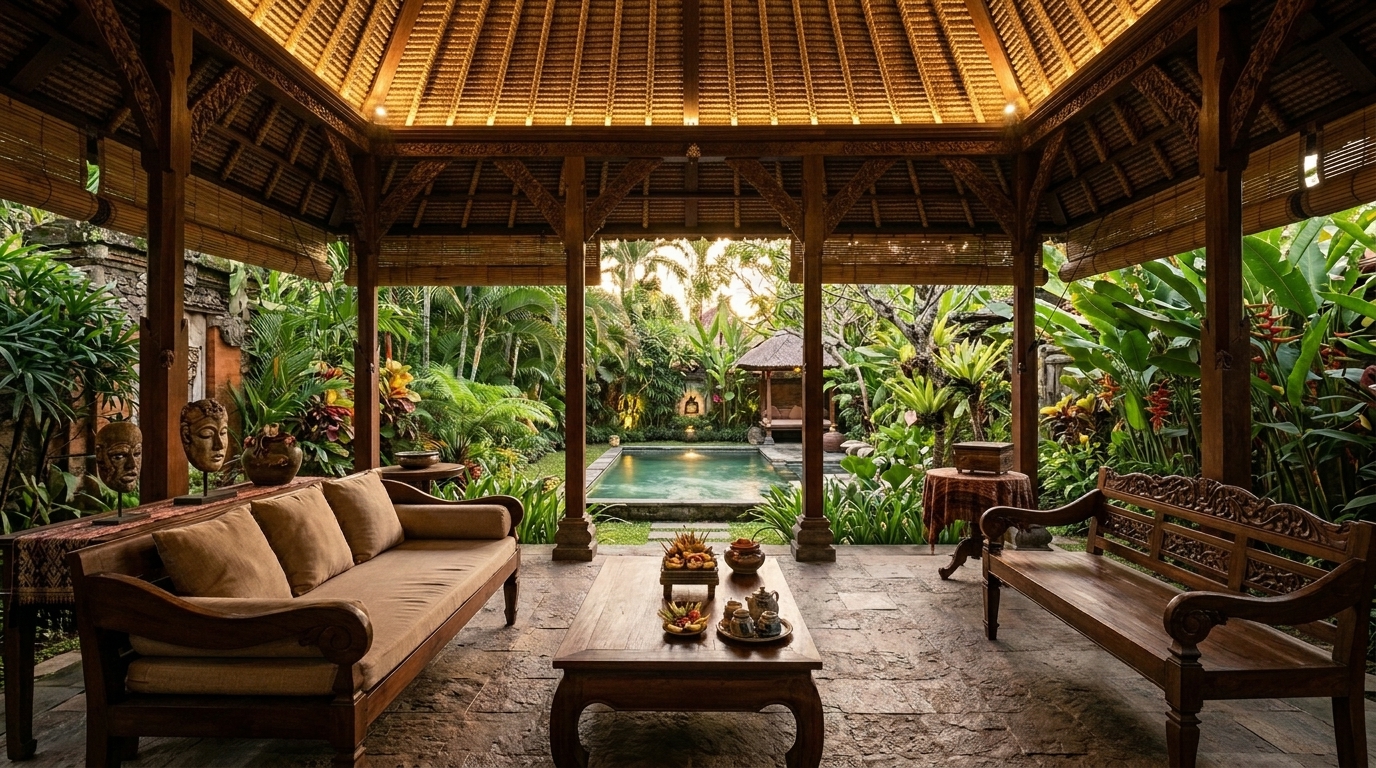
Balinese interior design grows out of the island’s own building tradition. Its core is open pavilions, carved timber, natural stone and alang-alang thatch, all opening onto the garden. In most villas built today it is adapted rather than copied. The materials and garden-facing layout stay, with cleaner lines and modern comfort added. Today’s high-end properties lean toward that adapted form, which this guide calls Tropical Modernism.
What makes it so special? It is the intentional blurring of boundaries. In Western architecture, a house is designed to protect you from the outside world. In Bali, a house is designed to invite the outside world in.
Blurring the Lines Between Indoors and Outdoors
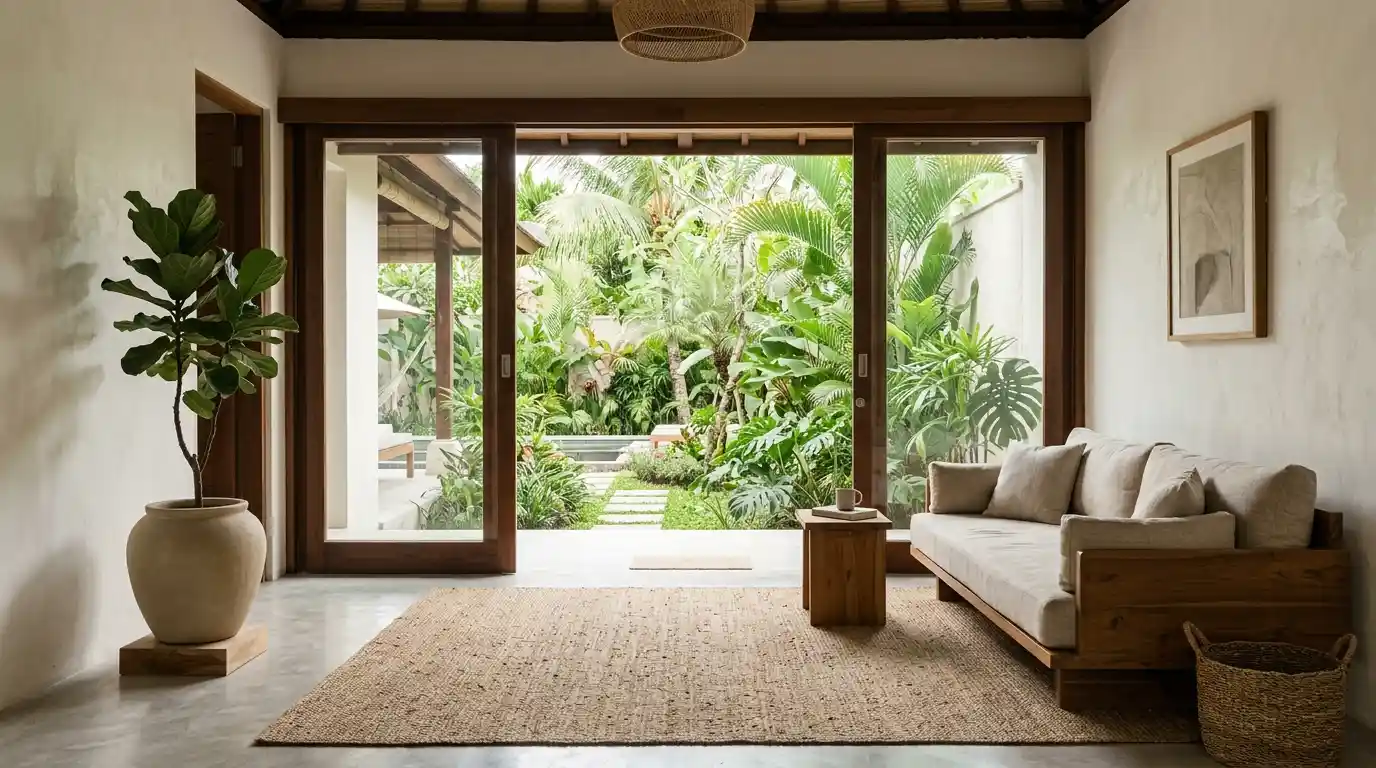
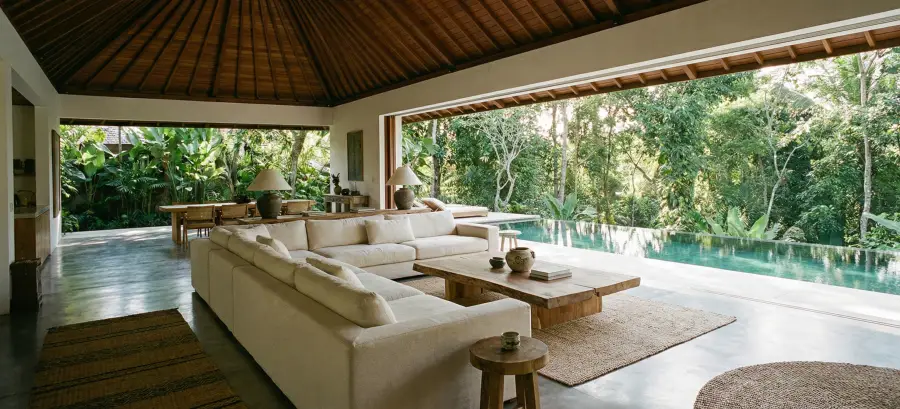
A living room that opens straight onto the pool terrace is the hallmark of a great tropical home.
Wide bi-fold glass doors, continuous terrazzo flooring from kitchen to patio, and indoor planters blur the threshold. The eye reads inside and outside as one connected space.
Harnessing Natural Light and Cross-Ventilation
It is not just about looks; it is about survival in the tropics. A well-thought-out design will study the wind patterns and the sun’s trajectory over your property.
Designers use slatted wood partitions, high vaulted ceilings, and strategically placed skylights to ensure the house stays cool naturally. This significantly reduces the reliance on aggressive air conditioning, which is both eco-friendly and cost-effective.
A Deep Connection to Local Craftsmanship
In Europe or North America, homeowners often order mass-produced pieces from large catalogues. Creating the Balinese interior design style here gives you direct access to local woodcarvers, weavers and stonemasons.
Authentic Local Materials
The practical advantage of working here is the ability to custom-build almost everything. From hand-woven rattan pendant lights to hand-carved stone bathtubs, the scope for custom work is extensive.
Because our parent company has decades of manufacturing expertise, we understand that true luxury lies in bespoke items. When you incorporate authentic Bali furniture into your space, you are not just filling a room; you are investing in generational craftsmanship. Pieces made from solid Perhutani Teak or Suar wood tell a story that flat-pack furniture simply cannot replicate.
Material Selection: Designed to Survive the Elements
A design can look good on paper, but the wrong materials can degrade within a year or two here. Monthly average relative humidity at Ngurah Rai station stayed between 77 and 84 percent through 2023 and 2024 (BPS Bali). That sustained moisture, salty air and strong sun test every finish in a villa.
Why Solid Teak Wood Is the Staple
If there is one material synonymous with the island’s aesthetic, it is Teak (Kayu Jati).
- Naturally Resistant: It contains high levels of natural oils, making it resistant to termites and water damage.
- Aging Gracefully: As it ages, it develops a beautiful patina that adds character to the space.
- Versatility: It can be used for everything from heavy structural beams to delicate, minimalist dining chairs.
Natural Stone and Terrazzo
Instead of standard ceramic tiles, luxury villas heavily utilize local stones like Andesite, Lavastone, and classic Terrazzo. These materials remain cool to the touch (perfect for bare feet on a hot day) and offer an earthy, grounded texture that anchors the airy, modern architecture.
Sustainability and Spiritual Harmony
Balinese space planning is shaped by the island’s spiritual tradition. The philosophy of Tri Hita Karana means the three causes of well-being: harmony with God, among people, and with nature. It guides how compounds, courtyards and rooms relate to one another.
Embracing Biophilic Design
Modern aesthetics have adapted this philosophy through biophilic design. This means integrating nature not just as a decoration, but as a core component of the home.
Mature trees are often preserved and built around rather than cut down. Bathrooms often open to the sky, letting you shower outdoors surrounded by tropical foliage.
Bringing Balinese Interior Design Into Your Villa
Buying local decor is the easy part. Getting the proportions right and specifying materials that survive the humidity is where a professional team helps most.
This is where the bridge between a good idea and a well-executed result happens. Translating the Balinese interior design style into a modern villa means coordinating local workshops, climate-ready fabrics and custom joinery.
Conclusion: Crafting Your Tropical Sanctuary
At its best, Balinese design pairs natural materials and local craft with clean, comfortable rooms that open to the garden. It creates spaces built to slow down in and suited to the climate outside.
Getting that balance right takes local material knowledge, reliable workshop relationships, and detailing built for the wet season.
Planning a villa in Bali? Explore our interior design services in Bali to plan your layout, materials and custom furniture with our studio.
Frequently Asked Questions
Absolutely. Many villas on the island blend Japandi (Japanese-Scandinavian) or Mediterranean influences with tropical materials. The key is balance: use local textures like rattan and teak to ground your preferred international style.
The palette is deeply inspired by nature. You will see a lot of warm off-whites, earthy terracottas, muted sage greens, and the natural golden-brown hues of exposed teak wood. The goal is to create a calming, neutral base that allows the lush green exterior to pop.
You can add Balinese decor yourself, but architectural flow and climate-ready materials usually need professional planning. Working with our interior design services in Bali helps protect your finishes from humidity and termites over time.