Last Updated on September 18, 2026 by Wisnu Arista H.
Sustainable Interior Trends Bali 2026: The Shift to Eco-Luxury
In 2026, ‘sustainable’ has shifted from a visible gesture to seamless eco-integration. For luxury property investors and homeowners, the expectation is now fundamentally different. The expectation is no longer tropical aesthetics alone, but deep, functional eco-integration. This guide breaks down the sustainable interior trends Bali 2026 has made non-negotiable for high-end villas.
We have seen a surge in demand for interiors that breathe and materials that tell a story. The priority: minimizing environmental impact without sacrificing the ‘wow factor’ Bali is known for. Below, our team at Bali Best Design breaks down the definitive trends dominating Bali in 2026.
What is Sustainable Interior Design in Bali?
To understand the current shifts, we must first define the core of the movement. Sustainable interior design in Bali is an integrated architectural approach. It prioritizes renewable resources, energy autonomy, and circular manufacturing — minimizing carbon footprint while enhancing human wellness.
The defining sustainable interior trend in Bali for 2026 is ‘Regenerative Luxury.’ The interior actively contributes to occupant health and the local environment — through passive cooling, non-toxic materials, and support for local artisans. A new generation of investors is driving this shift. They know a green villa is more durable and commands a higher resale value. The trends below are the practical expression of this shift — each engineered for Bali’s specific climate.
1. Thermodynamic Architecture: How Passive Cooling Works in Bali Villas
The most significant and unavoidable shift in 2026 is the strategic rejection of the energy-heavy “Glass Box” villa.
Global energy costs are rising. Travelers increasingly seek authentic, open-air tropical experiences. Together, these forces have made passive cooling the top sustainable interior trend in Bali. For the techniques themselves, see our guide to passive cooling techniques for Bali villas.
How Does the Stack Effect Cool a Bali Villa?
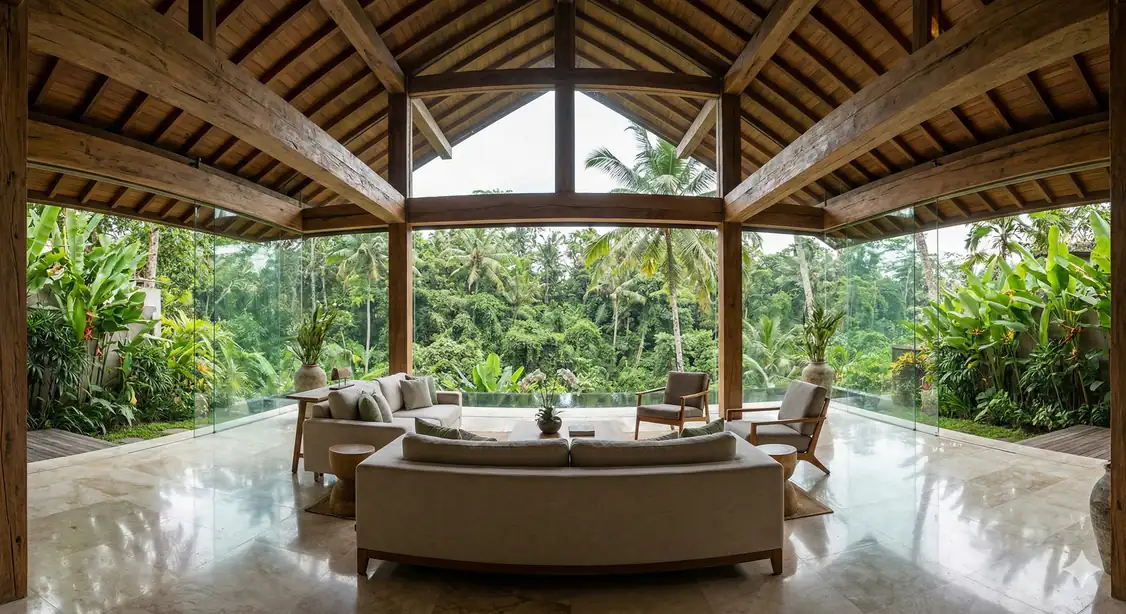
In modern villa construction, architects are moving away from flat, heat-trapping roofs. In sustainable interior design Bali, they are designing properties with extremely high, vaulted ceilings that masterfully utilize the “Stack Effect.”
Automated louvers, bamboo screens, or cross-ventilation vents are placed at the highest point of the roofline. This allows trapped hot air to rise and escape naturally.
Simultaneously, this action draws in a constant, refreshing flow of cool air from ground-level shaded openings. This brilliant aerodynamic method drastically reduces the need for 24/7 air conditioning, lowering electricity consumption every hour the breeze does the work instead.
What Are Living Eaves in Bali Villa Design?
Furthermore, top designers are now implementing extended roof eaves. These overhangs reach up to three meters, engineered to block direct afternoon sunlight from interior glass walls.
Paired with high-thermal-mass materials — rammed earth or volcanic stone — the building core stays naturally cool.
Even during Bali’s peak dry season heat in August and September, the interior temperature remains remarkably stable. These eaves often feature living elements — cascading vines that add a layer of evaporative cooling to the incoming breeze.
2. Reclaimed Teak: The New Status Symbol of Sustainable Interior Design In 2026
In the highly competitive world of eco-luxury development, “New” is no longer the benchmark for superior quality. Instead, “Legacy” is the defining status symbol.
Reclaimed teak wood, meticulously salvaged from old Javanese houses (Joglos) or dismantled colonial-era infrastructure, has become one of the most in-demand materials.
That’s why using reclaimed teak is far more than just a rustic aesthetic choice; it is a vital engineering decision for tropical climates.
This timber has spent decades seasoning, so it has long finished the drying shrinkage that cracks fresh boards and moves far less in Bali’s humidity. Well-grown, long-rotation heartwood shares much of that stability; young, sapwood-heavy teak does not.
If you’re deciding between reclaimed and new teak for your project, our reclaimed teak vs. new teak guide for Bali luxury villas walks through the practical differences in cost, durability, and sourcing.
To elevate your property’s exclusivity, utilizing bespoke custom furniture made from this heritage wood ensures that your interior remains built to last generations. Every single piece tells a historical story while emitting zero VOC (Volatile Organic Compound) emissions into your breathing space.
3. Biophilic Integration 2.0 : Deep Ecosystems
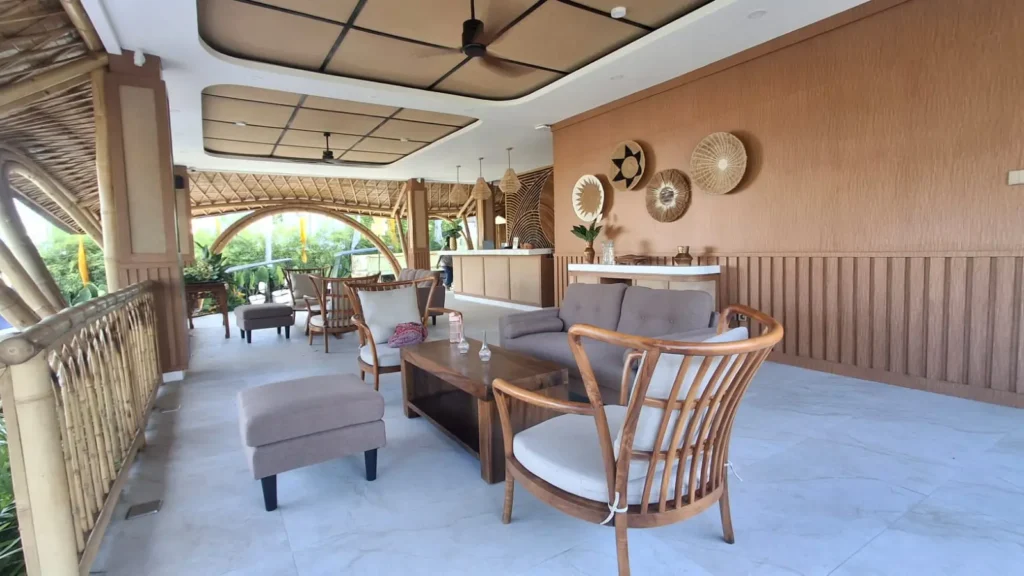
While biophilic design has been around for years, the 2026 sustainable interior trend in Bali is Deep Integration. We cover the full framework — 14 biophilic patterns and their measurable outcomes — in our dedicated guide to biophilic design and wellness interiors in Bali. It is no longer about putting a plant in a corner; it is about building the home around a living ecosystem.
- Indoor Water Spines: Using natural stone koi ponds that flow from the exterior courtyard through the heart of the living room. This creates natural humidity and evaporation, cooling the air as it moves through the house.
- Vertical Bio-Filters: Living walls are being used not just for beauty, but to filter interior air and provide edible herbs for the villa’s kitchen.
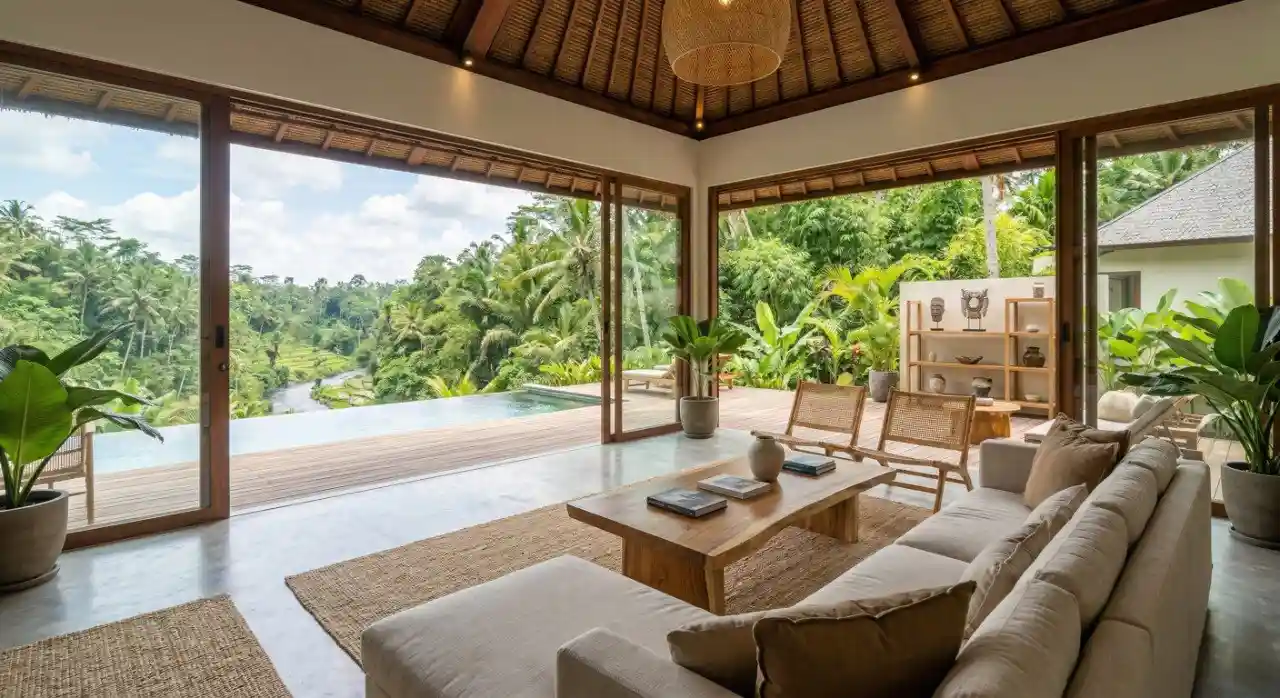
- Visual Continuity: Large-scale disappearing glass walls that allow a seamless visual transition from the bespoke furniture indoors to the untamed jungle outdoors.
The measurable impact of deep biophilic integration goes beyond aesthetics. Viewing a natural scene rather than a built one raises parasympathetic recovery after stress, measured through heart-rate variability (Brown, Barton and Gladwell, Environmental Science & Technology, 2013). Time spent in nature does the same for stress hormones: 20 to 30 minutes produces the largest fall in salivary cortisol, around 21% per hour beyond the normal daily decline (Hunter, Gillespie and Chen, Frontiers in Psychology, 2019). For short-term rental owners, this shows up in reviews. Guests consistently describe these properties as “restorative,” “calming,” and “unlike anywhere I’ve stayed before.” That language is not accidental. They result from structural design decisions made before a single piece of furniture is chosen.
4. Zero-Waste Furniture: How Circular Manufacturing Reduces Villa Carbon Footprint
The modern luxury traveler and property buyer in 2026 are increasingly informed about supply chains.
They want to know the origin of their dining table and the history of their bedframe. The ethical treatment of the artisans who crafted it matters too. This shift explains why circular-economy goods now define sustainable interior trends in Bali.
Demand for imported factory goods is declining among sustainability-conscious buyers. They carry a massive carbon footprint, lack cultural soul, and often degrade quickly in tropical weather.
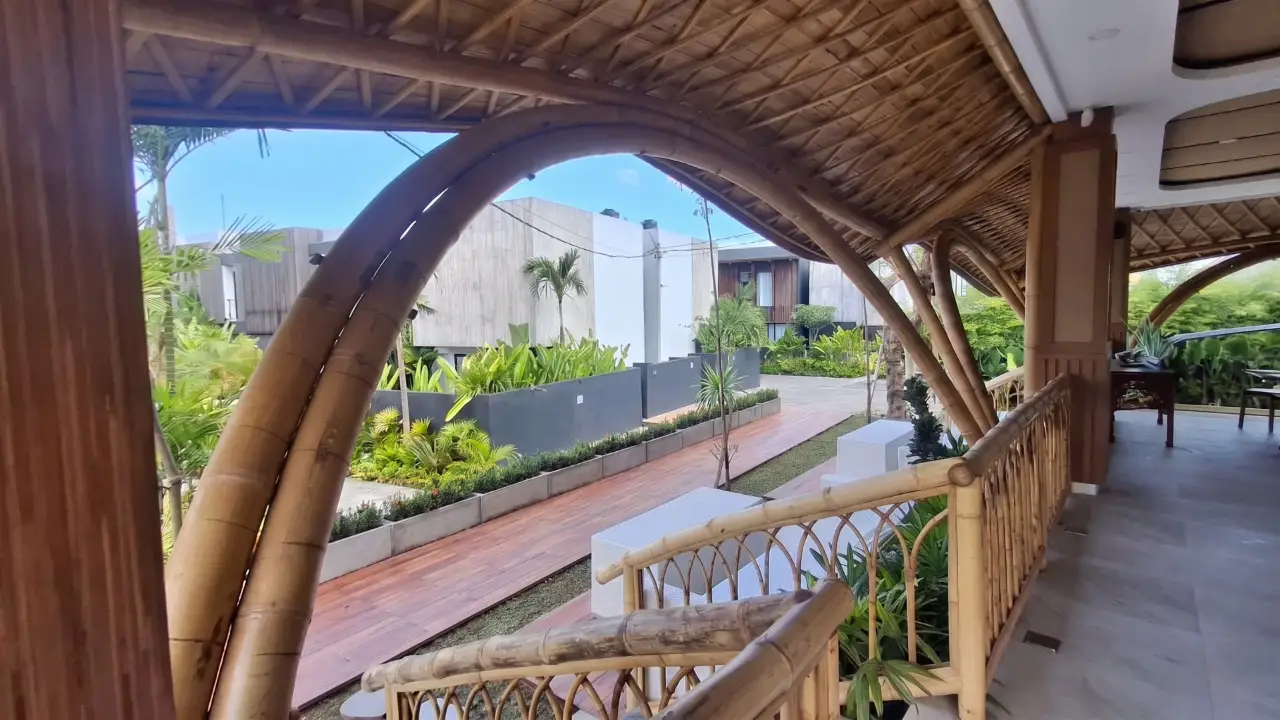
Premium studios apply a zero-waste philosophy. Wood off-cuts from larger builds are crafted into intricate home accessories. This minimizes waste sent to landfill.
More importantly, this investment directly sustains the island’s culture. Every purchase supports indigenous Balinese woodcarvers, stone masons, and rattan weavers.
To see what this looks like in a finished villa, read our overview of bespoke Balinese craftsmanship for luxury interiors.
5. Invisible Technology: How Eco-Smart Systems Run a Bali Villa Autonomously
When we discuss sustainable interior trends Bali 2026, we cannot ignore the role of cutting-edge technology. However, the ultimate luxury is when this technology is entirely invisible.
A premium villa must function as an “Eco-Smart” organism capable of managing its own environmental footprint autonomously. Our guide to invisible smart home automation for Bali villas covers full system specification and installation.
Adaptive Circadian Lighting
Artificial lighting in luxury villas now mimics the natural rhythm of the sun. Smart, centralized systems automatically adjust the color temperature and brightness of hidden LED strips based on the time of day.
This reduces energy waste. It also regulates melatonin levels — improving sleep quality and mental well-being.
Solar-Integrated Glass
Heavy, visually unappealing solar panels are being replaced by advanced Building-Integrated Photovoltaics (BIPV).
New-generation transparent solar cells are seamlessly integrated into skylights, balcony glass, and canopy roofing. They silently generate clean power for the home’s essential electronics without compromising the architectural beauty of the property.
How Does Greywater Recycling Work in Bali Villas?
Water scarcity is a growing concern on the island. To combat this, elite properties feature integrated greywater plumbing systems.
These sophisticated, hidden units automatically collect and organically filter water from showers, bathtubs, and bathroom sinks. This nutrient-rich water is automatically rerouted to irrigate the villa’s vertical gardens and perimeter landscaping. The result: in a high-consumption household, where greywater can exceed 150 liters per person per day (EcoSanRes Fact Sheet 8, Stockholm Environment Institute), that is thousands of liters of mains water displaced every month.
6. Top Materials Driving Sustainable Interior Trends in Bali
Beyond the heavy use of reclaimed timber, earth-based building materials truly define the organic aesthetic of 2026. Replacing synthetic imports with hyper-local resources is the clearest expression of sustainable luxury.
Paras Kerobokan & Volcanic Stone
Paras Kerobokan and similar volcanic stones are sourced from local Indonesian quarries. They are the go-to material for feature walls and bathroom sanctuaries.
They offer excellent thermal mass properties — quietly absorbing ambient heat during the afternoon and releasing it slowly at night. The interior climate stays naturally balanced.
Rammed Earth Construction
This ancient, labor-intensive architectural technique is making a massive comeback in the ultra-luxury sector.
Designers compress local soil, gravel, and a natural stabilizer into wooden formworks. The result is a breathtaking, stratified wall with layered texture. These structures are 100% recyclable, highly fire-resistant, and offer superior acoustic insulation from heavy tropical rain.
Natural Lime Washes
Standard acrylic paints trap moisture, leading to mold, bubbling, and mildew. This is a well-known problem for Bali property owners.
To solve this, designers exclusively use organic lime washes and mineral-based paints. These coatings let concrete and brickwork “breathe” — actively pulling moisture out of walls. The result: a soft-matte, wabi-sabi aesthetic.
For a full comparison of how these materials perform against each other in Bali’s climate — including cost, sourcing, and maintenance — see our guide to the best sustainable materials for Bali villas.
7. The ROI of Sustainable Interior Trends in Bali
Why should an investor care about sustainable interior trends Bali 2026? Beyond the ethical benefits, there is a clear economic case. Villas that utilize passive cooling and high-quality reclaimed materials tend to see:
- Lower Operational Costs: Natural ventilation can reduce monthly electricity bills, which is a massive selling point for long-term tenants.
- Higher Daily Rental Rates: Modern travelers increasingly seek out eco-villa stays for better air quality and natural aesthetics, which supports stronger nightly rates.
- Increased Durability: Reclaimed wood and local stone handle Bali’s salt air and humidity far better than imported synthetics or MDF furniture.
- Resale Value: Green building certification is becoming the norm. Certified properties are better placed as buyers start to expect it.
Targeting zero net carbon output? Our net zero villa Bali guide covers the full specification.
Planning a build or renovation? Our team applies these sustainable interior trends Bali 2026 to real villa projects — from passive-cooling layouts to certified materials. Talk to our interior design team in Bali.
For the materials that hold up best in the tropics, see our guide to mold- and humidity-proof materials for Bali villas.
Frequently Asked Questions (FAQ)
Below are the most common questions from our clients on sustainable interior trends in Bali.
Yes, reclaimed materials and solar technology carry a higher upfront cost than standard construction. However, reduced maintenance and utility costs help offset that premium over time.
Absolutely. In 2026, “Modern Tropical” relies on raw, honest textures. Reclaimed wood, polished concrete, and natural stone provide a warmth that synthetic modernism lacks.
Always ask your interior design studio for proof. For new teak, that means certified plantation timber; for reclaimed wood, a written record of the building it came from. If a supplier cannot show either, treat the claim as marketing.
Retrofitting typically involves three steps: improving airflow with new louver systems, replacing synthetic furniture with sustainable custom pieces, and installing energy-efficient LED and smart home systems.
The two most relevant frameworks for Bali properties are EDGE (Excellence in Design for Greater Efficiencies), administered by the IFC and available through Green Building Council Indonesia, and GBCI’s GREENSHIP rating system. EDGE certification is particularly practical for villa developers — it benchmarks energy, water, and embodied energy savings against a local baseline. The certification can be pursued for new builds as well as renovations. A certified property carries documented proof of its sustainability credentials, which increasingly matters to institutional buyers and premium rental platforms.