Last Updated on September 18, 2026 by Wisnu Arista H.
5 Passive Cooling Techniques for Bali Villas: Reduce Electricity Bills Naturally
In Bali’s luxury villa market, the defining challenge of 2026 is operational efficiency. The era of the all-glass, high-consumption “cool box” is ending, replaced by villas that are designed to breathe with the tropical climate. For villa owners and investors, the single greatest operational expense is often the monthly electricity bill, driven primarily by 24/7 air conditioning.
Good Bali Interior Design Services start with the climate. The most successful luxury properties this year are those that utilize thermodynamic architecture design that manages heat naturally without energy consumption. Applied together, these passive cooling techniques cut how hard the building has to work. The cooling load drops, and the electricity bill follows it down.
What is Passive Cooling in Thermodynamic Architecture?
Passive cooling is a design approach that manages heat gain and encourages natural ventilation without the use of active, energy-consuming systems. Instead of fighting the tropical heat, passive cooling works with the environmental conditions such as wind direction and sun path to create a naturally comfortable interior. This isn’t just a trend; it’s a future-proof investment strategy for Bali’s prestigious properties.
Here are five passive cooling techniques for Bali villas that define sustainable interior trends Bali 2026 and deliver immediate financial results.
1. The Stack Effect: Vaulted Ceilings and Automated Louvers
One of the oldest principles of natural cooling is that hot air rises while cool air sinks. The problem with standard, low-ceiling designs is that the hottest air remains trapped in your living space. In 2026, thermodynamic architecture solves this with the Stack Effect.
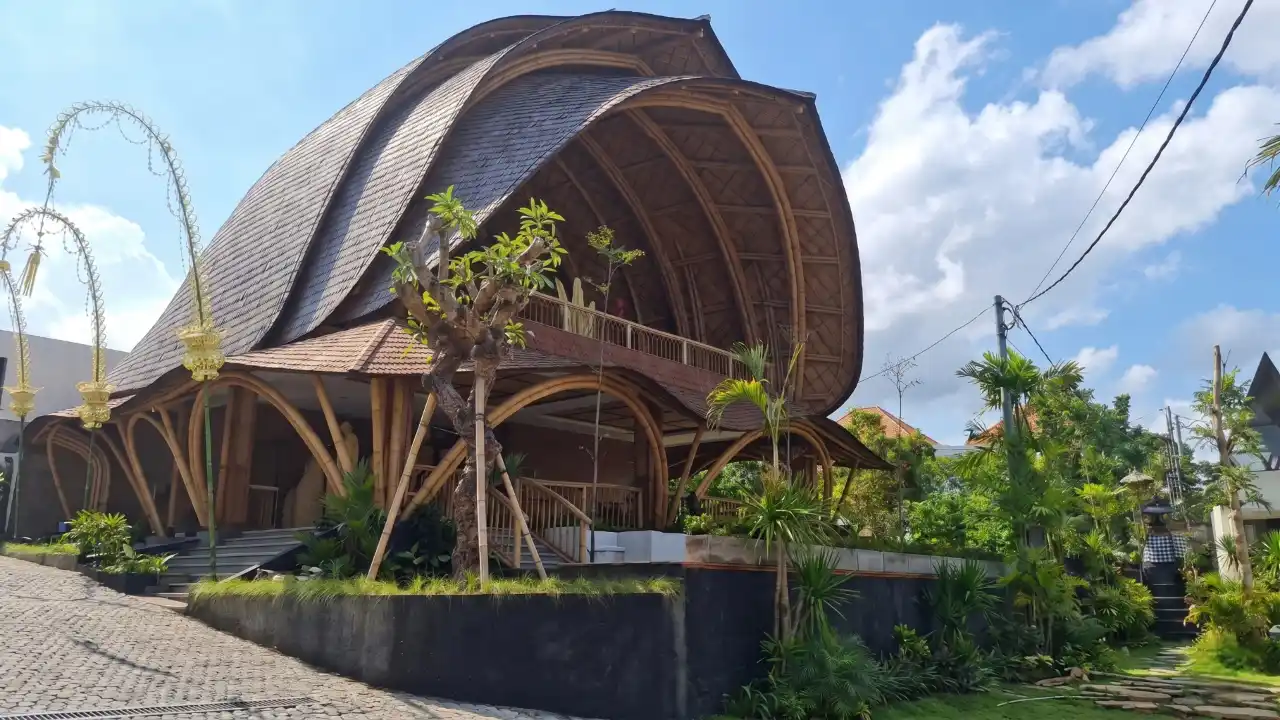
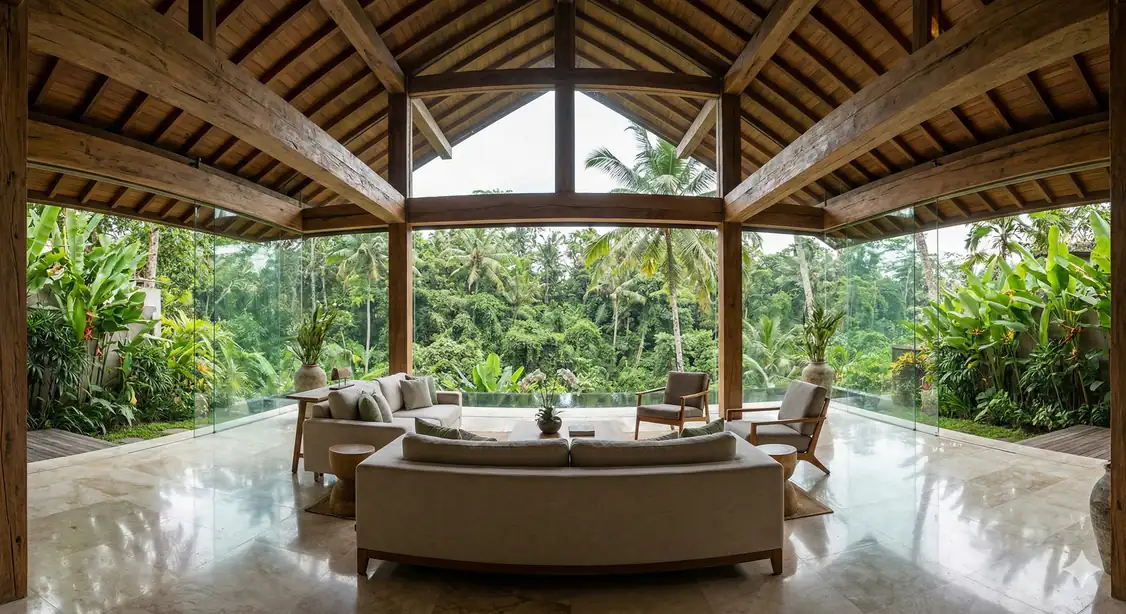
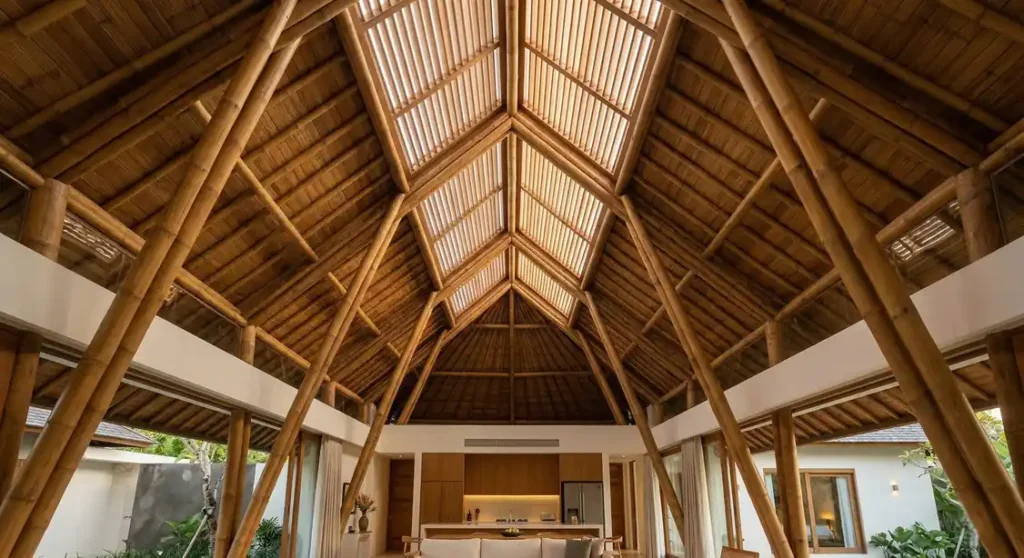
- Implement High-Vaulted Ceilings: By increasing the vertical space, you create a large “buffer zone” for hot air to collect well above your living areas. In Bali, high-pitched, sustainable bamboo or exposed timber truss ceilings are perfect for this, combining style with functionality.
- Integrate Automated Ventilation: At the highest point of the vault, designers place automated louvers or “ventilation spines.” These vents are sensor-driven. They open automatically to release the trapped hot air. This continuous upward draft pulls a constant flow of cooler air in from ground-level openings. It keeps indoor air close to the outdoor shade temperature without any AC.
2. Strategic Cross-Ventilation: Capturing Wind Corridors
The Stack Effect only works if there is a supply of cool air to draw from. The goal of Cross-Ventilation is to create a powerful “wind corridor” through your living spaces. The mistake most developers make is placing windows and doors based only on the view, ignoring the local wind patterns.
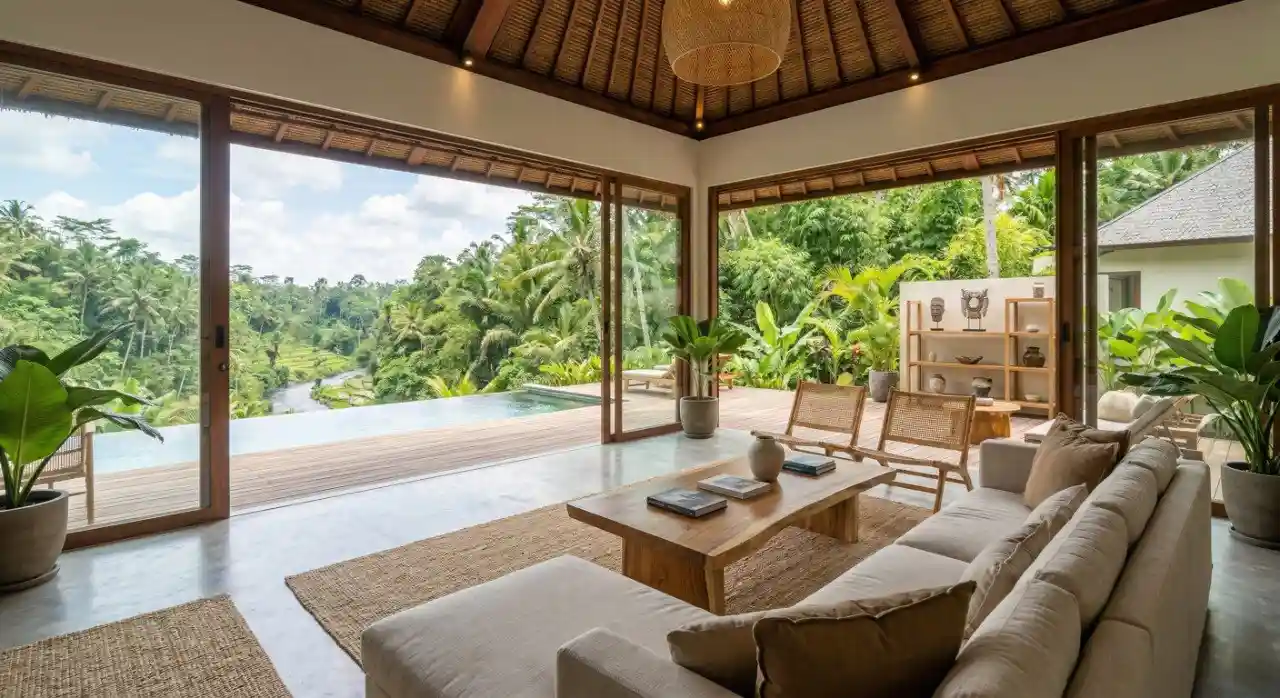
- Prioritize Openings Based on Wind: Analyze the prevailing wind directions on your site (often off the Indian Ocean or down from the central mountains). Design your villa with large, disappearing sliding doors or louvers that align with these currents.
- Create “Pull” and “Push” Dynamics: The window or door that wind enters through is the “push” opening. Place another opening such as a large clerestory window or a landscaped courtyard on the opposite side to create a “pull” effect. This pressure differential is what generates a strong, constant breeze, keeping you comfortable even during peak daytime heat.
3. Deep Roof Eaves: Natural Shading Geometry
Shading is the single most important and easiest method to reduce a tropical villa’s thermal load. The goal is simple: ensure direct sunlight never hits your windows or interior walls during the hottest hours.
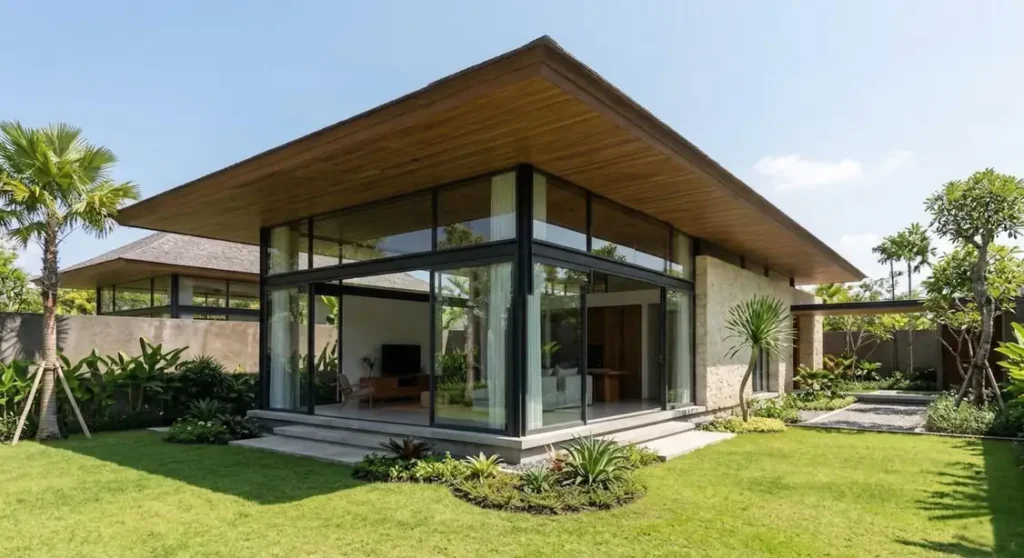
In 2026, deep roof eaves that extend by 2.5 to 3 meters have become a signature of eco-luxury design. Size them with a sun-path analysis for Bali’s latitude. Close to the equator the midday sun sits almost overhead, so the harder job is blocking the low morning and afternoon sun on east- and west-facing walls.
Shading the whole façade does two jobs: it stops solar heat gain through the glass, and it keeps the walls themselves cool. Of all the passive cooling techniques available to villa owners in Bali, deep eave geometry is the most cost-effective at the build stage and the most expensive to retrofit — prioritise it from day one.
4. Utilizing Thermal Mass: Materials that Breathe
Your choice of building and interior materials plays a massive role in passive cooling. In Bali, we are seeing a move toward using traditional, low-impact materials that have high thermal mass.
Materials like paras, the volcanic tuff quarried around Kerobokan and Taro, and micro-cement flooring are naturally cool to the touch. They can absorb heat during the day without dramatically changing temperature, acting like a natural heat sink. Ventilated overnight, they shed that stored heat and start the next day cool again. This material-first approach is one of the most underrated passive cooling techniques among Bali villa developers — and one of the most effective once the property is in operation.
5. Micro-Climate Integration: Landscaping as a Tool
A final technique is to cool the very air that enters your villa. We can achieve this by surrounding your cross-ventilation entry points with naturally cool micro-climates.
- Evaporative Cooling with Water: Place indoor koi ponds or stone water features in the path of your prevailing winds. As the wind moves over the water, evaporation naturally lowers the air temperature, creating a cool, humid breeze. In Bali’s already humid air the effect is modest, so treat water as a supporting tool rather than your main cooling strategy. This is why biophilic design, with sunken lounges and integrated water, is so prevalent in sustainable interior trends Bali 2026.
- Dense Shading with Green Walls: Utilize dense vertical gardens or shaded courtyards at wind-entry points. These green lungs create an immediate temperature drop and filter the air. What reaches the villa is cooler and cleaner. Together, these micro-climate strategies complete the full suite of passive cooling techniques Bali that define the most energy-efficient luxury properties in 2026.
One caution with any evaporative or humid-air technique: it raises moisture near the materials around it. See our guide to mold-resistant materials for what to specify nearby so the cooling does not create a maintenance problem.
Planning a villa, or trying to cut the running costs of one you already own? Our interior design team in Bali can work through the ceiling heights, openings, shading and materials with you. Get in touch and we will look at your plans.
FAQ (Passive Cooling Techniques Bali)
Passive cooling is a design approach that manages heat gain and promotes natural ventilation without active, energy-consuming systems. In Bali, it works by using stack-effect ceilings, cross-ventilation corridors, deep roof eaves, thermal mass materials, and evaporative micro-climates to keep interiors comfortable using the island’s natural wind and temperature patterns.
Well-executed passive cooling design can reduce cooling-related electricity consumption significantly. The biggest savings come where thermodynamic architecture is applied comprehensively — stack effect, cross-ventilation, deep eaves, and thermal mass all working together.
Deep roof eaves combined with cross-ventilation tend to deliver the most immediate effect because they prevent solar heat gain before it enters the building. Stack-effect ceilings provide the best long-term thermal comfort, especially in open-plan living areas.
Yes — in fact, many passive cooling features are considered premium design elements in Bali. High vaulted bamboo ceilings, deep cantilevered eaves, sunken water features, and volcanic stone floors are all both thermodynamically effective and visually striking in the luxury villa market.