Last Updated on September 16, 2026 by Wisnu Arista H.
Biophilic Design Bali: How Wellness Interiors Are Redefining Luxury Villas in 2026
In 2026, high-end real estate on Bali’s Island of the Gods has been radically transformed. The previous decade focused on “Instagrammable” aesthetics. Today’s market is driven by Biophilic Design Bali — connecting occupants more closely to nature.
At Bali Interior Design Services, the most successful villas are now “Wellness Sanctuaries.” Integrating biological patterns creates spaces that lower cortisol, improve cognitive function, and command the highest rental premiums in 2026. This guide covers how to apply these principles — and why they matter for Interior Design in Bali.
The Science of Biophilic Design: Why Bali Villas Lead the Wellness Interior Trend
To understand this shift, we must look at the psychology of the modern traveler. After years of urban congestion and digital fatigue, high-net-worth individuals are seeking “Restorative Environments.”
The argument for biophilic design Bali is that a villa which feels restorative earns a guest’s attachment, and attachment is what brings them back.
Biophilic design is not just about adding “more plants.” It covers the 14 patterns of biophilic design set out by Terrapin Bright Green, from visual connections with nature to complex local geometries, grouped as nature in the space, natural analogues and the nature of the space. In a competitive market like Canggu, Uluwatu, or Ubud, a villa that “breathes” is a villa that stays booked.
1. Visual and Non-Visual Connections with Nature
The first pillar of Biophilic Design Bali in 2026 is erasing the boundary between the jungle and the living room.
Framing the Jungle: Visual Connectivity
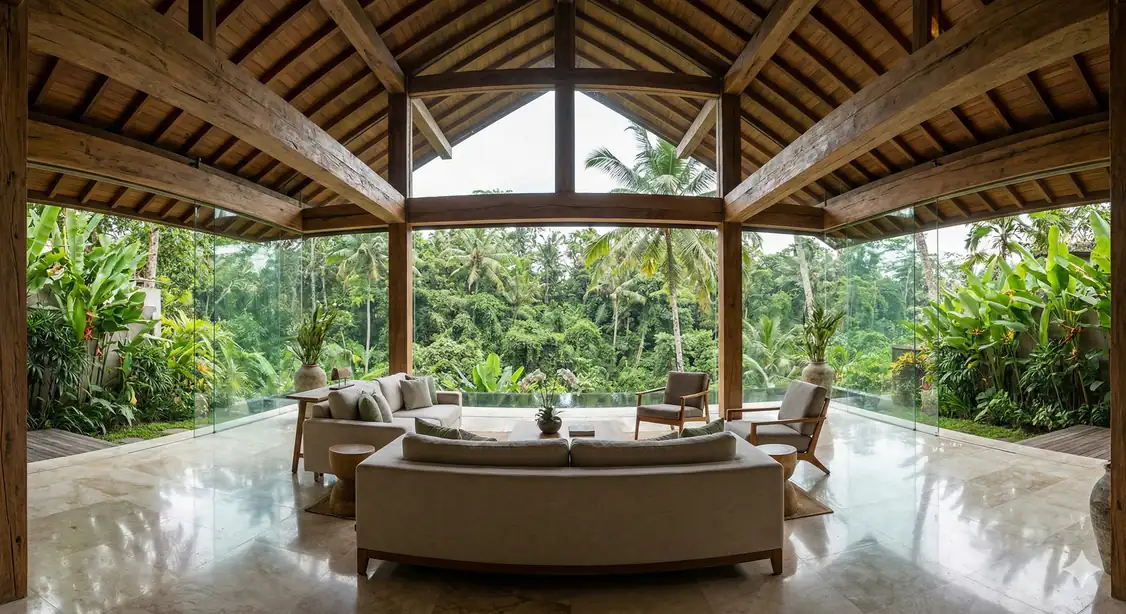
In 2026, we are moving away from standard window frames toward “Invisible Architecture.” Recessed tracks and ultra-clear low-iron glass create openings where tropical flora becomes the interior wallpaper. Terrapin’s review of the research reports stress recovery from these visual connections, including lowered blood pressure and heart rate.
The Auditory Experience: The Power of Water
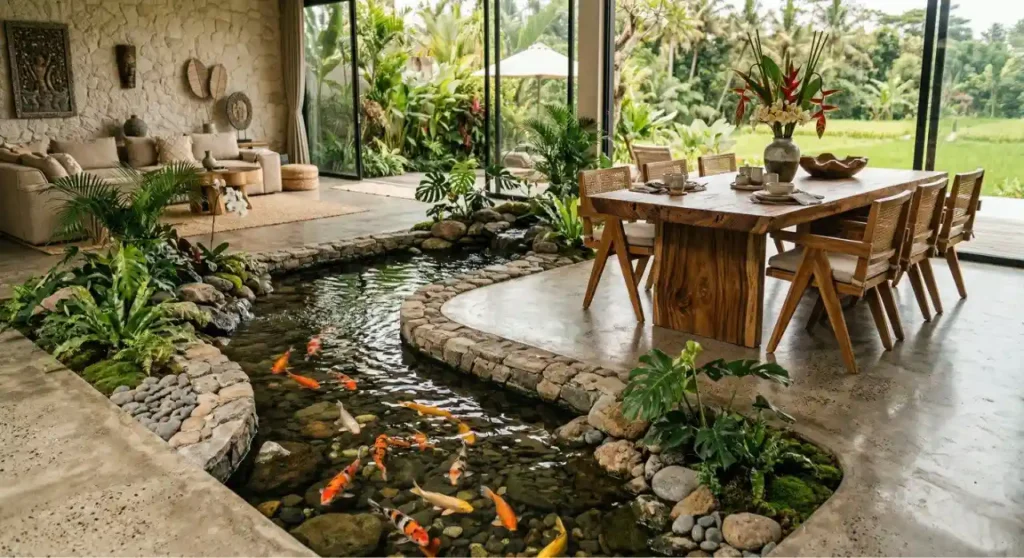
A wellness interior must engage all senses. Consider “Water Spines”—natural stone rills running from an outdoor koi pond through the heart of the villa. This non-rhythmic sound masks white noise and creates a “Zen” acoustic environment — essential for meditation suites and master bedrooms.
2. Material Honesty: The Sensory Power of Reclaimed Elements
In 2026, the “touch” of a home is as important as its look. Synthetic materials and VOC-heavy lacquers are being phased out in favor of “Tactile Sincerity.”
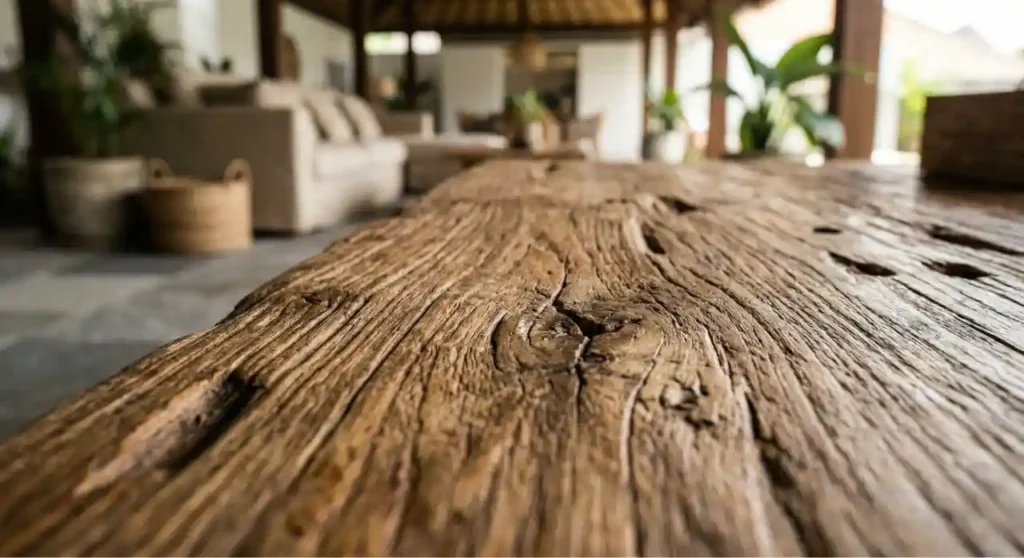
Using reclaimed teak wood and hand-carved volcanic stone provides what scientists call “Non-Rhythmic Sensory Stimuli.” The grain of 100-year-old wood offers complex patterns the human eye finds inherently relaxing. Bespoke furniture from a interior design Bali studio ages gracefully rather than looking tired within a season.
3. Circadian Lighting and Thermal Comfort
Sustainability in 2026 isn’t just about solar panels; it’s about biological alignment.
- Dynamic Light: Specify smart lighting systems that mimic the color temperature of the Balinese sun. Bright blue-toned light energizes in the morning. Warm amber tones in the evening trigger natural melatonin production.
- Thermal Variability: Following our principles of passive cooling, a wellness villa avoids the “stagnant air” of traditional AC. Cross-ventilation creates gentle air movement — subtle temperature shifts that keep the body’s thermoregulation active and healthy.
4. The ROI of Biophilic Design in Bali’s Luxury Villa Market
Investors often ask: “Does biophilic design actually pay off?” In 2026, the case rests on what guests choose. Villas that prioritise wellness and biophilic principles tend to report:
- Higher ADR: Wellness villas in Canggu and Uluwatu command higher nightly rates than comparable non-biophilic properties.
- Increased Occupancy: Long-term residents and digital nomads seek homes that support mental health. This drives longer booking cycles and lower turnover.
- Resale Superiority: Villas built with limestone, bamboo, and reclaimed teak hold their value far better than cheap synthetics.
Biophilic design Bali has shifted from a niche aesthetic to a core investment decision. It pairs naturally with a net zero villa strategy, since both start from working with the climate rather than against it.
5. Creating “Refuge” and “Prospect”
We balance two key biophilic patterns: Prospect (seeing out over distance) and Refuge (feeling safe and sheltered).
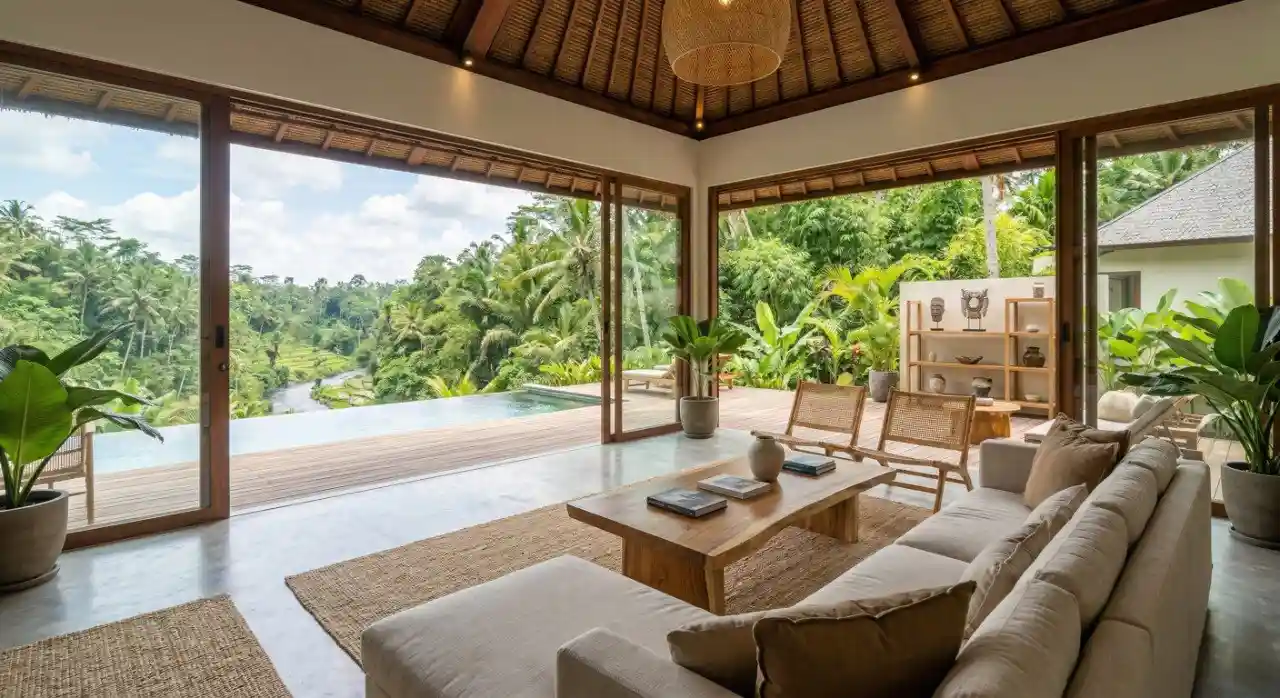
In 2026, master suites feature “Sunken Lounges” or “Reading Nooks” that feature lower ceiling heights and cozy, natural textures. This provides the “Refuge” our ancestors felt in caves. Simultaneously, these rooms open up to vast “Prospects” of the rice fields or ocean. This architectural duality satisfies deep-seated human instincts, resulting in a profound sense of peace.
In practice, a Canggu master suite might have a dropped bamboo ceiling over the bed alcove — a Refuge. A disappearing glass wall then opens to a panoramic Prospect of the rice fields. The occupant experiences both shelter and vastness simultaneously. This is not accidental. It is a deliberate neurological design decision.
Biophilic design is one part of a wider shift. See our full guide to sustainable interior trends in Bali for how it fits alongside materials, energy and passive cooling.
If you want a villa that feels restorative rather than merely photogenic, our Bali interior design studio can work the patterns above into the plan: sightlines to planting, water where it can be heard, materials that age well and lighting that follows the day. Send us your plans and we will show you where the gains are.
Frequently Asked Questions (FAQ)
“Green design” focuses on the building’s impact on the environment (energy, water, waste). “Biophilic design” focuses on the environment’s impact on the human occupant. In 2026, the best Balinese villas combine both.
Start by auditing your light and air. Replace synthetic carpets with natural fibers and install a water feature at the entrance. Then consult a professional interior design Bali team to integrate more visual connections to your garden.
Not necessarily. Local materials — volcanic stone and reclaimed hardwoods — outlast imported finishes in Bali’s salt air and humidity.