Last Updated on October 16, 2026 by Wisnu Arista H.
Bali Interior Design Styles: A Complete Guide for Villas & Homes
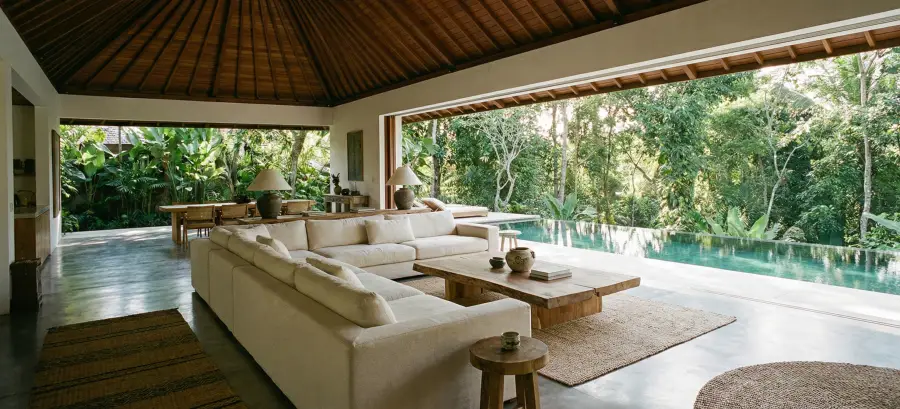
In fact, every Bali interior design style that works shares the same foundation: indoor-outdoor flow, natural materials, humidity-tolerant finishes, and a layout that prioritises shade and airflow. Indeed, the Bali interior design styles range widely, from traditional Balinese to tropical modern, Japandi, wabi-sabi, coastal Mediterranean-tropical, bohemian, and tropical brutalism.
However, each suits a different owner, site, and maintenance appetite. Most real villas borrow from more than one. This guide compares all seven at a glance, then walks through how to choose the right one. For example, where we have built a style ourselves, you will find a link to the full project article.
Bali Interior Design Styles at a Glance
In short, the fastest way to compare Bali interior design styles is side by side. Generally, none is objectively better than the others: each is a different answer to the same tropical brief. Focus on the ‘best for’ column: it points you toward the styles that match how you want your villa to feel and function.
| Style | Feel in one line | Signature materials / elements | Best for |
|---|---|---|---|
| Traditional Balinese | Handcrafted, spiritual, deeply local | Carved timber, thatch (alang-alang), stone, open pavilions | Owners wanting authentic island character |
| Tropical Modern | Clean-lined, open, light-filled | Glass, concrete, teak, large openings | The most common contemporary villa look |
| Japandi | Calm minimalism with warmth | Pale and dark timber, linen, low furniture, restraint | Minimalists; a 2026 trend |
| Wabi-Sabi | Imperfect, weathered, quiet | Raw plaster, patina, natural texture, aged finishes | Lovers of understated, organic interiors |
| Coastal / Mediterranean-Tropical | Breezy, whitewashed, relaxed | White render, arches, rattan, light palettes | Bright, holiday-feel beach villas |
| Bohemian | Layered, warm, collected | Rattan, ikat and songket textiles, earthenware, plants | Owners who like a lived-in, handmade look and will keep rooms ventilated |
| Tropical Brutalism | Raw, bold, sculptural | Exposed concrete softened by greenery and timber | Owners wanting a strong architectural statement |
Use the table to shortlist, then read the summaries below for the two or three that appeal.
What the Best Bali Styles Have in Common
Of course, here’s what most owners miss before picking a style. In Bali, the differences between looks are mostly on the surface, while the foundations overlap. So, every style that succeeds here rests on the same four principles. A style that ignores them fails, regardless of how good it looks in photographs.
The Four Shared Principles
The first is indoor-outdoor flow. Moreover, the boundary between rooms and garden becomes a design feature, not a wall, through open pavilions, sliding systems, or framed sightlines. In addition, the second is natural materials: timber, stone, rattan, and natural fibre, which suit both the aesthetic and the climate.
Overall, the third is humidity-tolerant specification. At the Ngurah Rai weather station near Denpasar, monthly average relative humidity stayed between 77 and 84 percent through 2023 and 2024 (BPS Bali). Materials and finishes must handle that sustained moisture, salt air, and intense sun, or the interior degrades within a year or two.
Finally, the fourth is shade and airflow. Good design builds in passive cooling, deep overhangs, and cross-ventilation from the start. These are the foundations all Bali interior design styles share. Once the fundamentals are right, the aesthetic on top is largely interchangeable.
Traditional Balinese Style
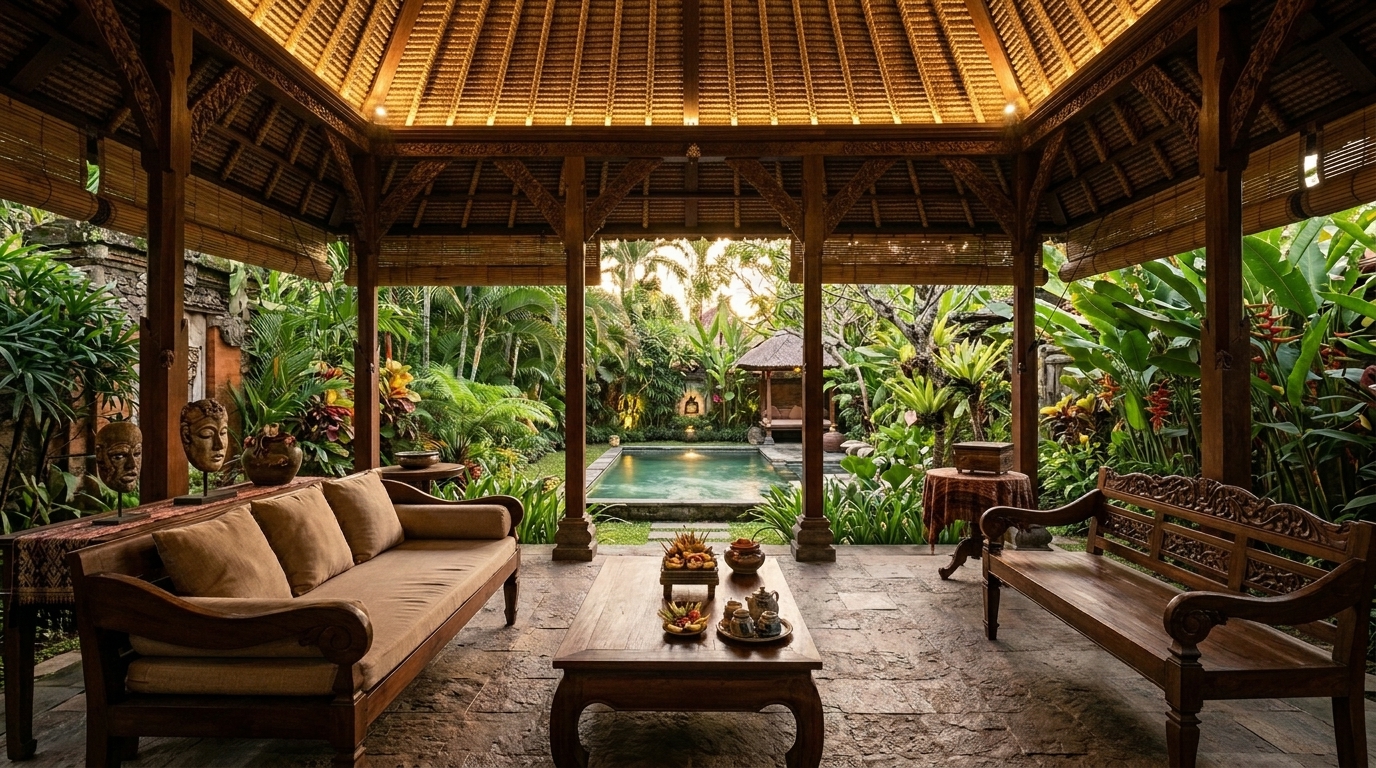
In particular, traditional Balinese design is the island’s own architectural language: handcrafted, rooted in local craft and spirituality. Crucially, it centres on open pavilions that blur the line between inside and garden. Balinese interior design grows out of the island’s own building tradition. Its core is open pavilions, carved timber, natural stone and alang-alang thatch, all opening onto the garden. In most villas built today it is adapted rather than copied. The materials and garden-facing layout stay, with cleaner lines and modern comfort added.
Its hallmarks are carved timber, natural stone, thatched roofs, and a deep connection to the surrounding landscape. It suits owners who want their villa to feel authentically of Bali rather than imported. It is also the most spatially committed of the Bali interior design styles. The open-pavilion layout and thatched rooflines need to be built in from the foundation stage, not retrofitted. For how it is adapted in today’s villas, see our guide to Balinese interior design style.
Tropical Modern / Contemporary
In fact, Tropical modern is the most widely used contemporary villa look in Bali. Indeed, it combines clean lines, open plans, large openings, and a light palette. Modern materials, including glass, concrete, and teak, keep the look grounded without feeling clinical. This is the style for owners who want something current, bright, and low-fuss that still feels tropical.
It works well for new builds that prioritise airflow and indoor-outdoor living from the start. Its open layouts naturally support passive cooling, and its restraint makes it the easiest style to combine with others. A tropical-modern base readily absorbs Balinese craft, wabi-sabi texture, or Japandi calm without losing coherence. For a deeper look at this style, see our guide to tropical modern interior design in Bali.
Japandi in Bali
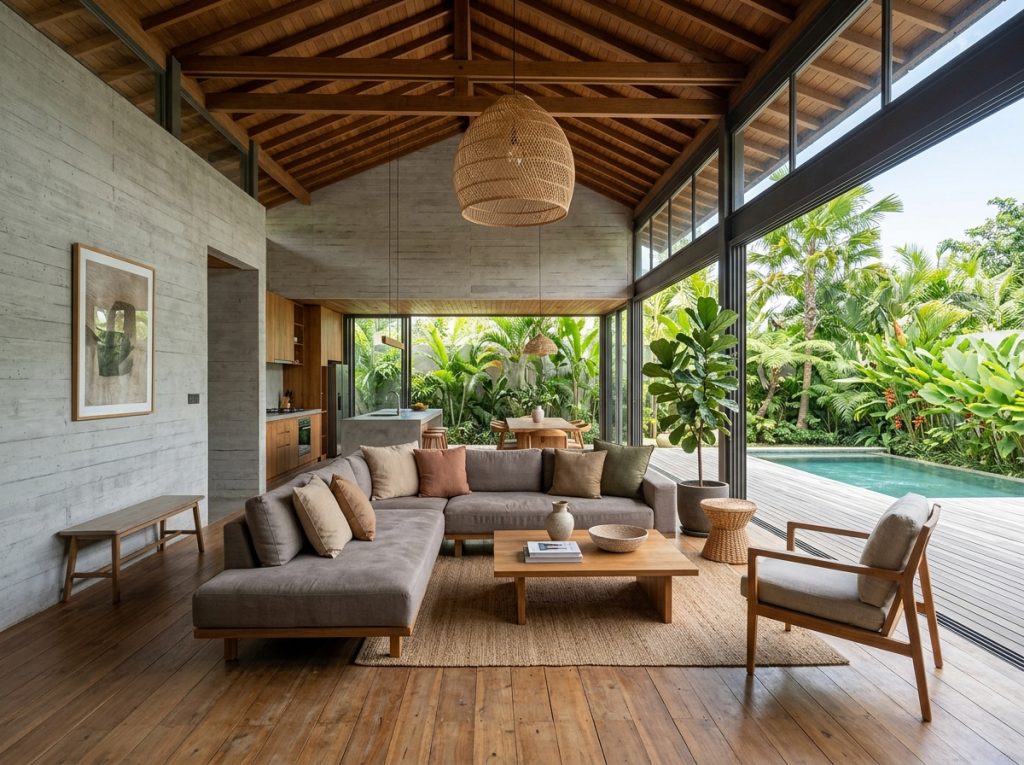
Japandi fuses Japanese minimalism with Scandinavian warmth: spare, calm, and functional, but soft rather than stark. Overall, in a tropical setting it translates into low natural-timber furniture, muted palettes, and linen textures. Generally, a deliberate sense of restraint runs through it, where every object earns its place. It is one of the standout Bali interior design styles for 2026.
Of course, industry trend forecasts consistently name it a top emerging residential aesthetic, and we see it in a growing share of villa briefs on the island. It appeals to owners who find full Balinese ornamentation too busy but want more warmth than pure minimalism.
As a result, its quiet material palette sits comfortably with humidity-appropriate natural finishes. That makes it one of the more practical “minimal” styles for the tropics. The caveat: timber and textiles must suit the climate, not just the look. Our full guide to Japandi interior design in Bali covers the materials, palette and room-by-room detail.
Weighing Japandi against the island’s traditional look directly? Our Japandi vs Balinese interior design comparison lines up materials, upkeep, and spatial fit side by side.
Wabi-Sabi
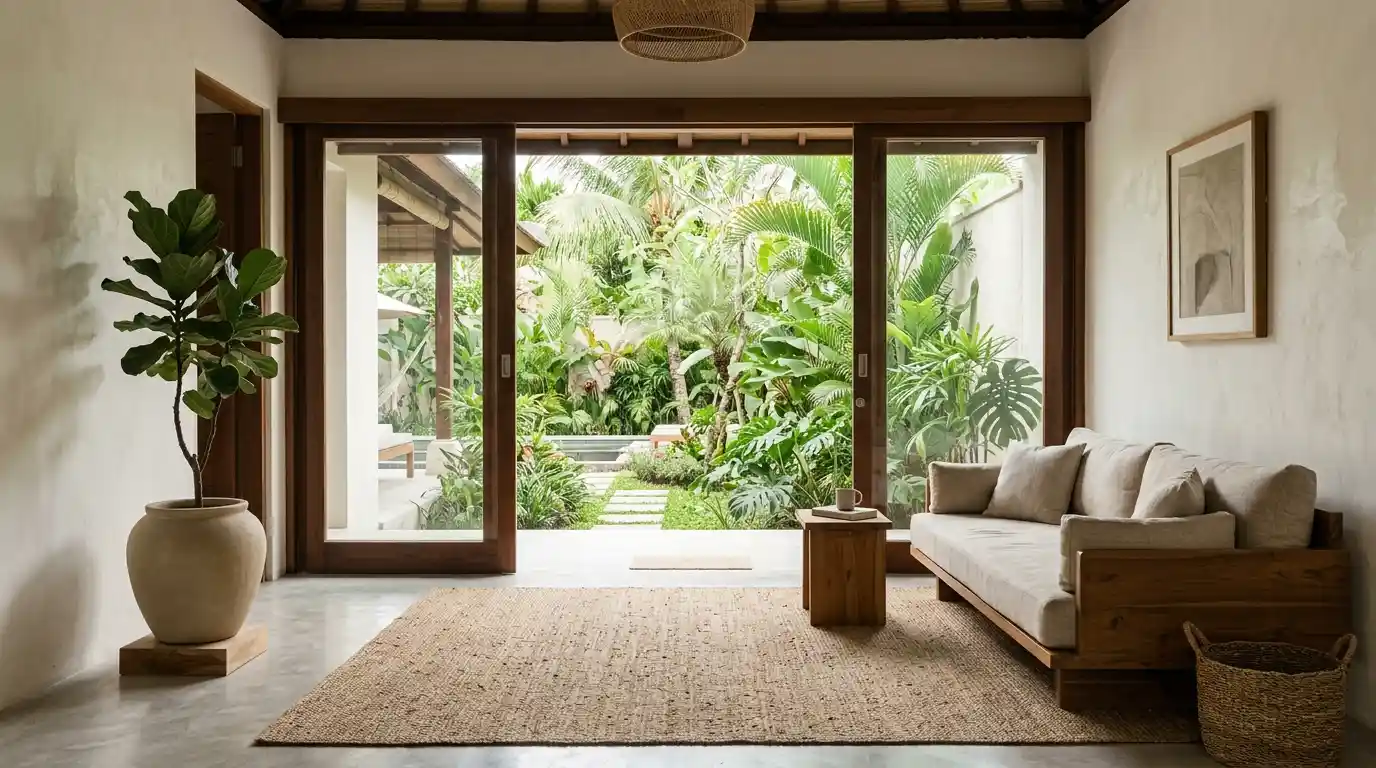
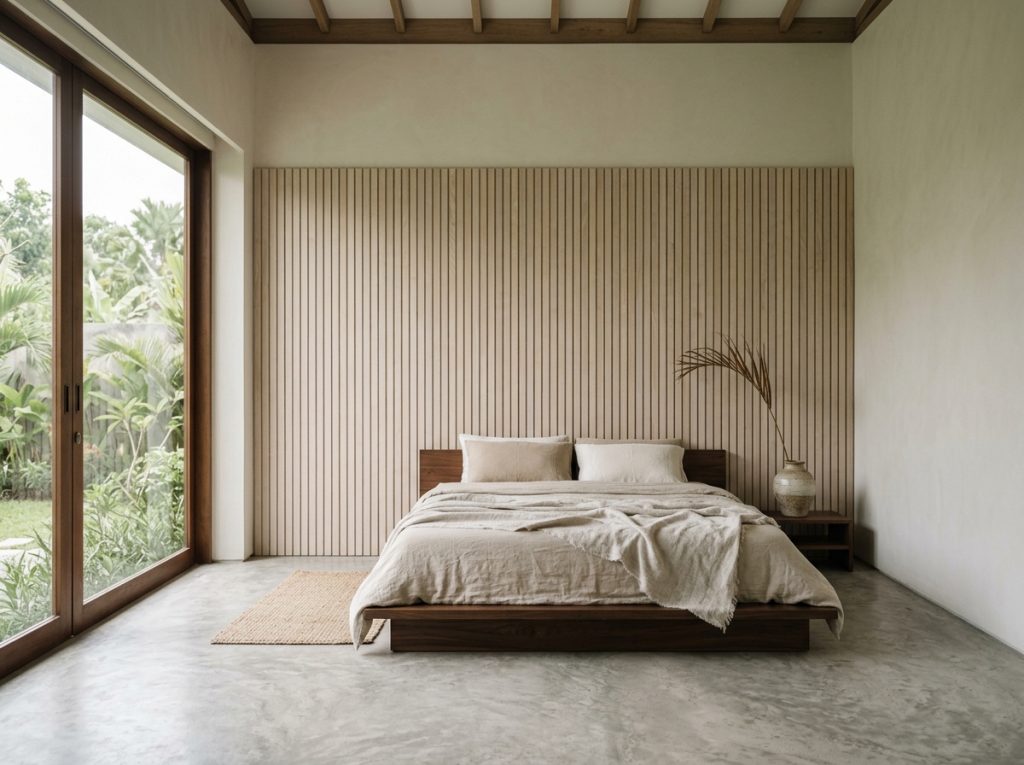
Wabi-sabi is the art of finding beauty in imperfection and age: weathered surfaces, raw plaster, natural patina, and texture over polish. It overlaps with Japandi but leans further into the organic and the imperfect, celebrating materials as they age rather than hiding that. It suits owners drawn to quiet, understated interiors with a handmade feel.
One thing worth knowing: in Bali’s climate, wabi-sabi materials age faster than in drier environments. Raw plaster can develop genuine patina within months, which is exactly the point. The key is a breathable sealer, not one that fights the process. For how this plays out in a Bali villa specifically, see our article on wabi-sabi interiors.
Coastal / Mediterranean-Tropical
This style marries the breezy, whitewashed feel of the Mediterranean with tropical materials and indoor-outdoor living. For example, think white render, arches, rattan, and light, relaxed palettes. The result is bright and holiday-like, a natural fit for beach-adjacent villas that want to feel airy and informal. It suits the south and south-west coast of Bali particularly well. Consistent sea breezes and lower rainfall there support lighter-coloured finishes without the mildew risk those finishes face on wetter, hillside sites. See how we approach it in our Mediterranean-tropical villa style article.
For an in-depth look at the coastal-Mediterranean approach, including materials, site selection, and climate details, see our coastal interior design Bali guide.
Bohemian
Bohemian interiors layer woven rattan, handmade textiles, earthenware and plants so a room feels collected rather than bought as a set. Bali has a longer claim to the look than most places, from the 1930s Ubud artist circle to the backpackers who reached Kuta in the early 1970s. The catch is the climate: nearly every boho staple is a natural fibre, so it needs airflow, washable covers and treated cane to last. Our guide to bohemian interior design in Bali covers where each piece is made.
Tropical Brutalism
Tropical brutalism takes raw, sculptural concrete and softens it with greenery, timber, and the play of tropical light. The result is bold and architectural, a look that has become a distinctive Bali statement. It suits owners who want something strong and contemporary rather than soft or traditional. However, getting the balance right is everything: the rawness must read as intentional, not unfinished. For a real-project view of how it is done, see our guide to tropical brutalism.
How to Choose the Right Style for Your Bali Villa
In fact, most style mistakes happen at this exact stage. Choosing between Bali interior design styles comes down to matching the look to your villa and your climate. It must fit how you actually want to live, not just what photographs well.
Start with Site, Climate, and Maintenance
Start with the site and climate. Every style on this list works in Bali. Each needs adapting: materials and finishes must suit humidity, salt air, and sun regardless of the aesthetic on top. Next, weigh your indoor-outdoor goals and how much you want the boundary between rooms and garden to dissolve. Some styles lean into that more than others.
Then be honest about maintenance tolerance. Raw plaster and weathered finishes carry a very different upkeep profile than sealed modern surfaces. The right choice depends on how much maintenance you are willing to do.
Most successful villas mix styles rather than following one to the letter. Common pairings: a tropical-modern shell with wabi-sabi textures, or a Balinese frame with Japandi restraint. Overall, the key is a consistent material palette and a single point of view. Without guidance, this is exactly where choices go wrong.
But here’s the part most guides skip. Start from the fixed constraints and work inward: site and orientation come first because they cannot change. Next come climate-appropriate materials, and then the aesthetic layer on top, the most flexible of the three.
Owners who start with the aesthetic and work backwards often find their chosen look fights the site or the climate. The result either compromises the style or fails to last. Settling the foundations first means the style you love fits the site and climate, rather than fighting both.
Private Home or Investment Villa?
It also pays to factor in how you will use the villa. A private home can lean fully into a personal aesthetic, including higher-maintenance finishes like raw plaster or patinated timber. In contrast, a rental or investment villa is a commercial decision. It needs broad appeal, durability against constant turnover, and finishes that photograph well and hold up. That tends to favour tropical modern or a clean Balinese-modern blend over the more demanding looks.
So, matching the style to the villa’s purpose, not just your taste, is one of the decisions owners most often get wrong on their own.
This is where working with a designer earns its place: not to impose a style, but to adapt the one you love. The goal is a look that lasts in the climate and holds together as a whole. Our Bali interior design service is there for owners who want that guidance. We help you choose and adapt a style that fits the villa and how you live.
New Build or Renovation?
A new build gives you full latitude. The structural decisions that define a style, such as open plans, deep overhangs, and specific rooflines, can be resolved before a single wall goes up. A renovation works within existing constraints. Some Bali interior design styles adapt well to existing structures: tropical modern and wabi-sabi both read convincingly within a standard room layout.
Traditional Balinese and tropical brutalism are harder to retrofit convincingly. They tend to read as surface dressing when the building’s bones do not support them. Knowing this before you commit saves significant cost and disappointment.
Ready to Choose Your Style?
So, the best next step is a conversation about your villa: your site, your climate, and the styles you are drawn to. Book a free design consultation and we will help you choose a Bali interior design style that works for the villa and feels like yours.
FAQ: Bali Interior Design Styles
There is no single best style: the right one depends on your site, climate, and taste. What all Bali interior design styles share is the same need for tropical adaptation: indoor-outdoor flow, natural materials, and humidity-tolerant finishes. Traditional Balinese, tropical modern, and Japandi are among the most popular starting points.
Tropical modern is the most widely chosen of the Bali interior design styles today. It is clean-lined, open, and light-filled, pairing modern materials with warm timber. Traditional Balinese remains popular for owners wanting authentic island character. Japandi is rising quickly as a 2026 trend among owners who want calm minimalism with warmth.
Yes, and most successful villas do. A tropical-modern shell with wabi-sabi textures, or a Balinese frame with Japandi restraint, can work beautifully. The key is a consistent material palette and a single point of view so the mix reads as intentional. This is where a designer’s eye helps most.
Across every style, the durable choices are similar: kiln-dried teak, dense natural stone, porcelain and ceramic, and properly treated natural fibres, finished with tropical-rated oils or lacquers. The style sets the look; the materials underneath must suit humidity, salt air, and sun regardless of the aesthetic.
You can choose a style yourself, especially for a single-room or low-risk project. A designer earns their place on larger projects. They adapt the style for the climate, mix styles coherently, and catch the material and layout mistakes that are expensive to fix. The bigger the project, the more that guidance pays off.