Last Updated on October 1, 2026 by Wisnu Arista H.
Wabi Sabi Interior Design Bali: 2026 Guide
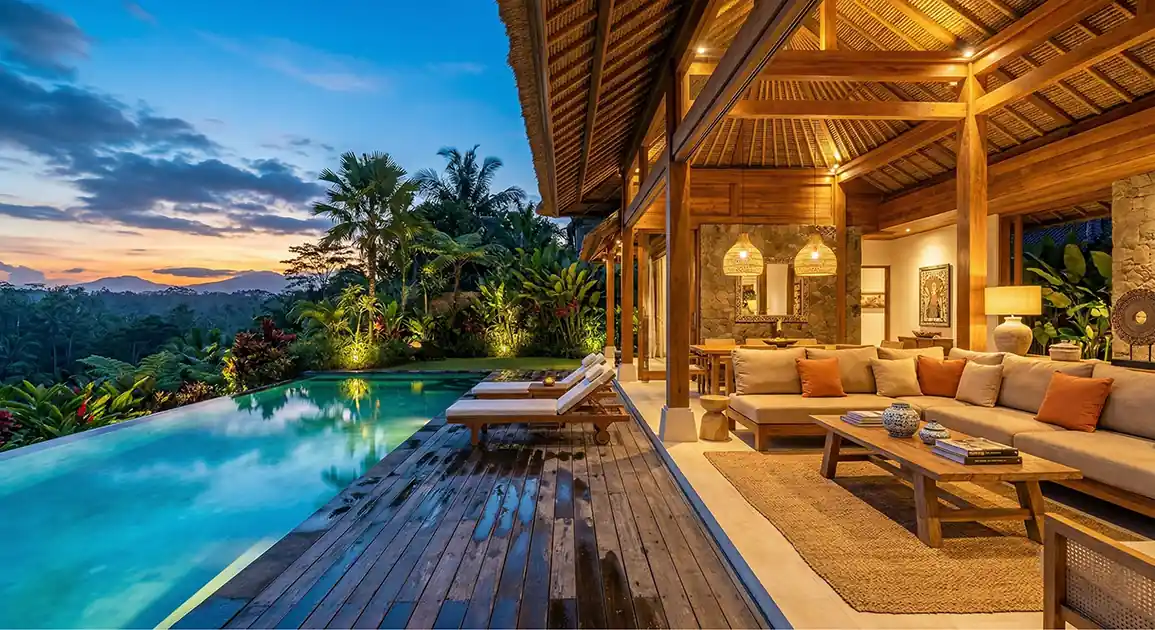
Are you a property investor or an expat looking to build a deeply calming retreat on the Island of the Gods? In a highly competitive rental market, creating a space that feels like a grounding sanctuary is the ultimate key to attracting premium guests.
In this comprehensive guide, we will explore the world of Wabi Sabi interior design Bali. You will learn exactly how to blend Japanese Zen philosophy with tropical island living to create a breathtaking luxury villa.
For our design team, luxury is no longer defined by shiny gold fixtures or perfectly symmetrical, sterile rooms. Today’s high-end travelers crave authenticity, raw textures, and a profound connection to nature. Let’s dive into the core elements, material choices, and architectural secrets of this dominant 2026 aesthetic.
What is Wabi Sabi Interior Design Bali?
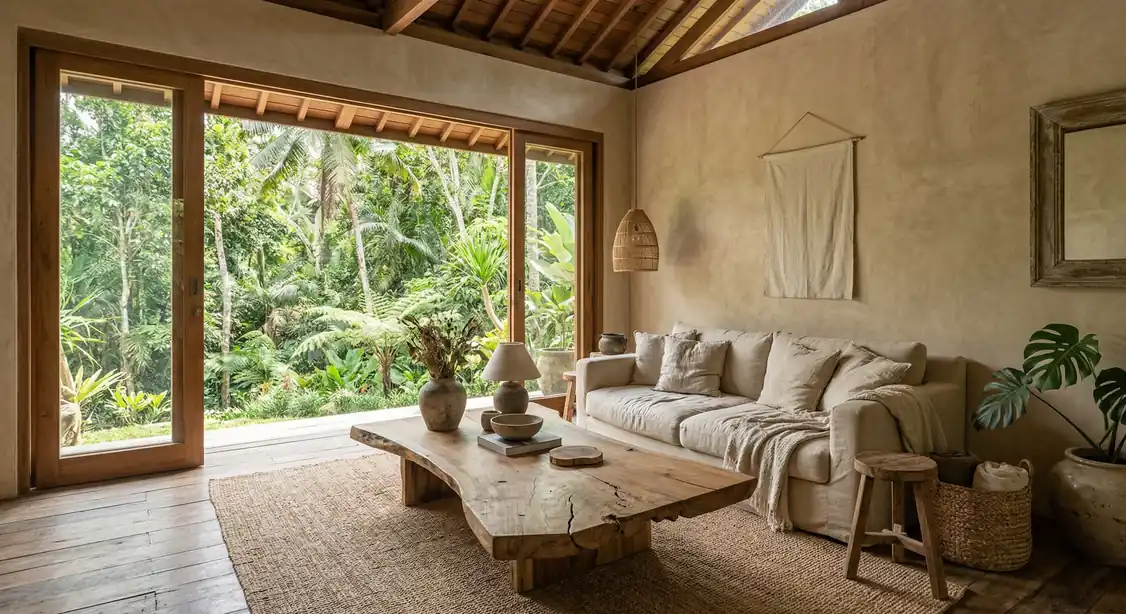
Wabi Sabi interior design Bali is a hybrid architectural style that fuses the Japanese philosophy of finding beauty in imperfection with Southeast Asian tropical elements. It heavily features raw, unfinished materials like microcement, aged teak wood, and organic linens, paired with open-air layouts to create a deeply grounding, minimalist sanctuary.
By embracing this aesthetic, property developers can craft uniquely emotional spaces that stand out on luxury booking platforms.
The Rise of Tropical Minimalism and Zen Architecture
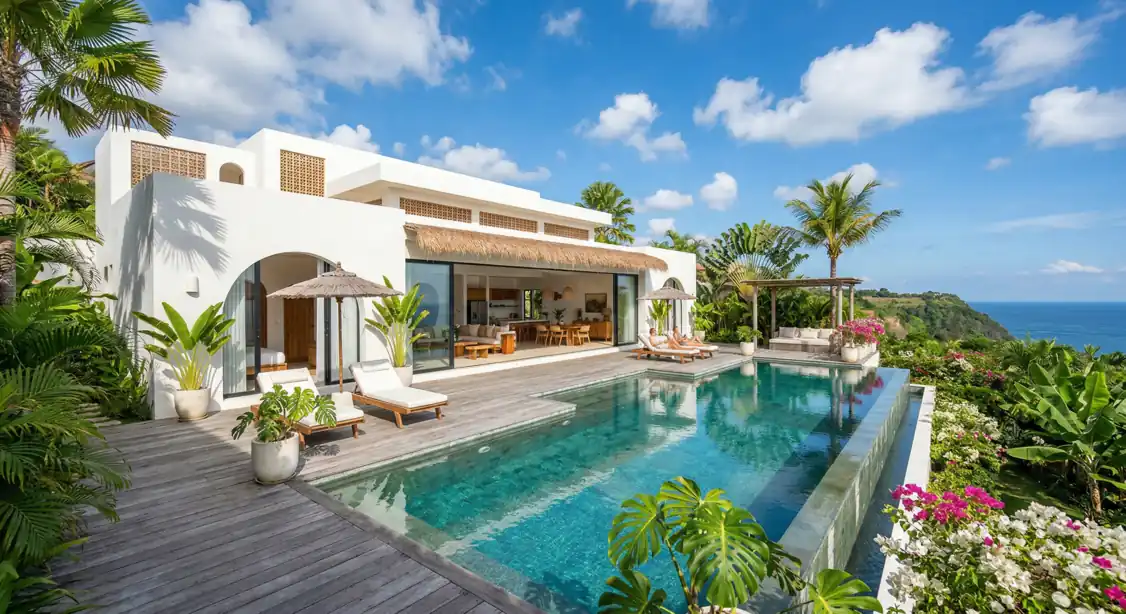
If you examine the most successful, fully-booked villas in areas like Ubud or Bingin, you will notice a distinct shift away from cluttered traditional decor. Wabi sabi has become one of the clearest directions in designing a luxury villa in Bali today. The modern traveler is overstimulated and seeks spaces that offer profound psychological relief.
Tropical minimalism achieves exactly this. By stripping away unnecessary ornamentation and focusing strictly on form, function, and texture, the architecture itself becomes a form of meditation.
Interestingly enough…
This minimalist approach does not mean the villa feels “cheap” or empty. Instead, it places a massive spotlight on the high-quality craftsmanship of a few, carefully curated bespoke items.
Why Does Imperfect Beauty Suit a Bali Villa?
Standard luxury design considers a scratch on a highly polished marble table a costly flaw. In contrast, the Wabi-Sabi philosophy celebrates natural weathering, asymmetrical shapes, and the organic aging of materials as part of the property’s unique story. This approach can ease long-term maintenance for villa owners. The property is designed to age gracefully in harsh tropical conditions.
Core Elements of the Authentic Wabi-Sabi Aesthetic
To execute this deeply emotional aesthetic well, you must balance visual restraint with rich, tactile experiences. Here are the fundamental elements you must incorporate into your build.
1. Microcement and Lime-Wash Walls
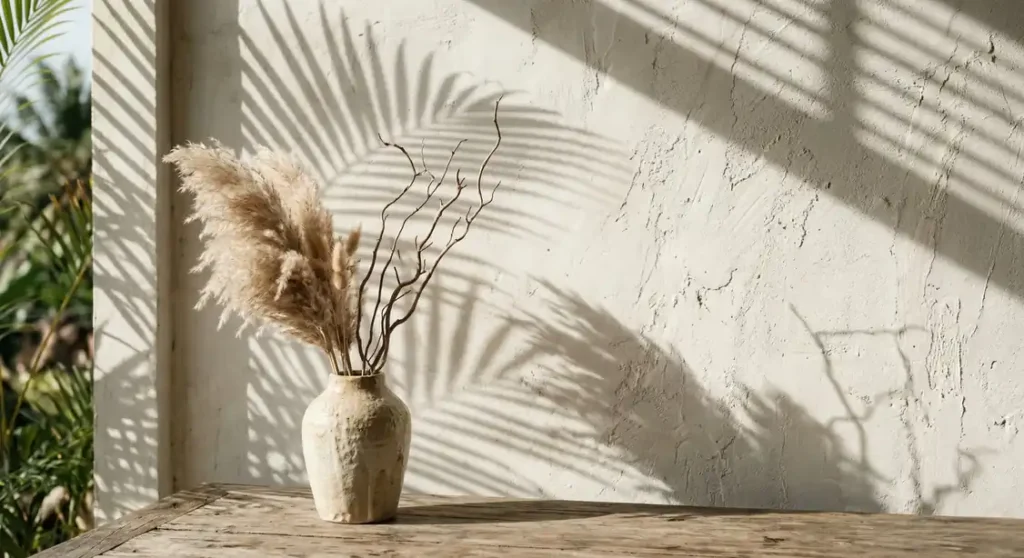
Forget standard flat paint. The foundation of this style relies on highly textured walls. Earth-toned microcement or traditional lime-wash provides a cloudy, matte finish that plays beautifully with the shifting natural sunlight throughout the day.
2. Organic, Muted Color Palettes
The color scheme should mimic nature entirely. Think of the colors of dried palm leaves, wet river stones, terracotta clay, and aged driftwood. Bright, artificial colors are strictly avoided.
3. Asymmetrical and Low-Profile Furniture
Sofas and beds are often kept very low to the ground, emphasizing a connection to the earth. Furniture features organic, imperfect curves rather than sharp, manufactured 90-degree angles.
How to Use Microcement in Humid Climates?
Microcement is an incredibly versatile material for island properties. Because it is seamless (meaning no grout lines), it is exceptionally easy to clean and prevents the mold buildup commonly found in traditional tiled bathrooms. However, to survive the high humidity, it must be expertly mixed and sealed with top-tier polyurethane coatings by experienced local artisans.
Sourcing Raw Materials for Your Sanctuary
The success of Zen architecture relies entirely on the quality of the raw, natural elements you choose. You cannot fake this look with synthetic, mass-produced items from a standard retail store.
You must utilize reclaimed woods, heavily textured natural stones, and unbleached cotton or linen fabrics. To keep the property structurally sound and still beautiful, read our guide to the best sustainable materials for Bali villas.
Wabi-Sabi vs. Modern Mediterranean: Which Yields Higher ROI?
Property developers often debate between Modern Mediterranean and Wabi-Sabi, the two most dominant styles of 2026. Here is how the two compare, to help you decide which aesthetic fits your investment portfolio:
| Investment Factor | Modern Mediterranean | Wabi-Sabi Tropical |
| Target Demographic | Influencers, Party-goers, Digital Nomads | Wellness Retreats, Honeymooners, Slow Living |
| Maintenance Level | Medium (White walls need upkeep) | Very Low (Ages gracefully) |
| Overall Vibe | Bright, Clean, Social, Photogenic | Earthy, Grounding, Private, Meditative |
Hiring a Professional for Your Zen Project
Executing “imperfect beauty” is ironically one of the most difficult architectural tasks. If the raw materials are not balanced correctly, the space will look like an unfinished construction site rather than a million-dollar luxury retreat.
This is exactly why partnering with a verified expert is critical. You need a team with a profound understanding of restraint, texture, and local material sourcing. For the material sourcing and the finish work, we recommend consulting with a leading interior designer in Bali.
A professional team handles the logistics of sourcing massive, live-edge reclaimed wood tables. It also brings in the specific artisans who hand-trowel your microcement walls.
Final Thoughts on Building Your Island Retreat
Wabi-sabi is not the only bold departure from the traditional villa look. See how tropical brutalism takes the opposite route with raw concrete.
A luxury tropical bathroom can carry the same wellness sanctuary feeling into a single room.
Mastering Wabi Sabi interior design Bali is about creating a profound emotional experience for anyone who steps through the door. By prioritizing raw textures, natural imperfections, and deep integration with the surrounding tropical environment, you create a timeless property that stands completely apart from the competition.
Planning a Wabi-Sabi Villa in Bali?
Our design team plans wabi-sabi interiors for Bali villas, from the wall finishes and the warm lighting plan to the custom furniture. Book a design consultation to talk through your plot and how each room should feel.
Frequently Asked Questions (FAQ)
While the aesthetic looks raw and simple, achieving it correctly requires high-quality, bespoke materials and specialized artisan labor (like custom plastering). Therefore, the initial building cost is comparable to, or slightly higher than, standard luxury builds. However, weathered finishes can make long-term upkeep easier.
Absolutely. Hidden integration holds the key. High-end tropical minimalism often features state-of-the-art climate control, architectural lighting, and integrated sound systems. Designers completely conceal these behind wood panels or place them flush within the microcement ceilings.
Avoid harsh, cool-white downlights at all costs. This style demands warm, ambient lighting (2700K or lower). Use concealed LED strip lights to wash the textured walls, paired with oversized, asymmetrical paper or rattan pendant lamps to create soft, moody shadows at night.