Last Updated on October 5, 2026 by Wisnu Arista H.
Best Sustainable Materials for Bali Villas: 2026 Guide
Are you an expat or property investor planning to build your dream island home? If there is one thing that can quickly turn a tropical dream into an expensive nightmare, it is choosing the wrong building and furnishing elements for the climate.
In this comprehensive guide, we will uncover the best sustainable materials for Bali villas. You will learn exactly what to source, what to avoid, and how to ensure your property remains stunning and structurally sound for decades to come.
The truth is…
Southeast Asia’s climate is notoriously unforgiving. Intense UV rays, heavy monsoon rains, and extreme humidity levels will completely destroy standard, mass-produced retail furniture. Let’s dive into the eco-friendly, highly durable options that will protect your investment and elevate your property’s aesthetic.
What Are Sustainable Materials in Tropical Architecture?
Sustainable materials in tropical architecture refer to locally sourced, highly durable, and eco-friendly building elements designed specifically to withstand high humidity, intense sunlight, and heavy rainfall. In Indonesia, this primarily includes Grade-A teak wood, fast-growing bamboo, natural rattan, and locally quarried stones, which together reduce the project’s carbon footprint while maximizing longevity.
When architects and designers in Bali talk about sustainable materials for Bali villas, they mean resources that hold up under year-round humidity, salt air, and UV exposure. Looking good on a mood board is not enough.
By using these materials, developers can lower long-term maintenance and protect the property’s value.
Why Tropical Climates Destroy Low-Quality Furniture
Many first-time property developers make a critical mistake. They import expensive furniture from Europe or buy cheap, mass-produced items made from MDF (Medium-Density Fiberboard).
In Bali’s humidity, these materials often warp, swell, or become infested with termites. When you are targeting the luxury rental market, you simply cannot afford to have peeling veneer or moldy cabinets in your guest bedrooms.
Interestingly enough…
The secret to longevity is not fighting the environment, but working in harmony with it. This is why local, organic elements usually outperform imported synthetics here.
How Does Humidity Affect Indoor Wood?
High humidity causes porous woods to absorb moisture from the air, expanding and contracting constantly. This movement cracks paint, snaps hinges, and creates the perfect breeding ground for toxic mold. To combat this, choose dense hardwoods that naturally produce their own protective oils. See our dedicated guide to mold-resistant materials for exactly which finishes stop this before it starts.
Top Sustainable Materials for Bali Villas: What Actually Lasts
To make an investment last, select sustainable materials for Bali villas that are proven to handle the climate, not just look good on paper. Let’s break down the top choices and what makes each one worth the investment.
1. Solid Grade-A Teak Wood (Kayu Jati)
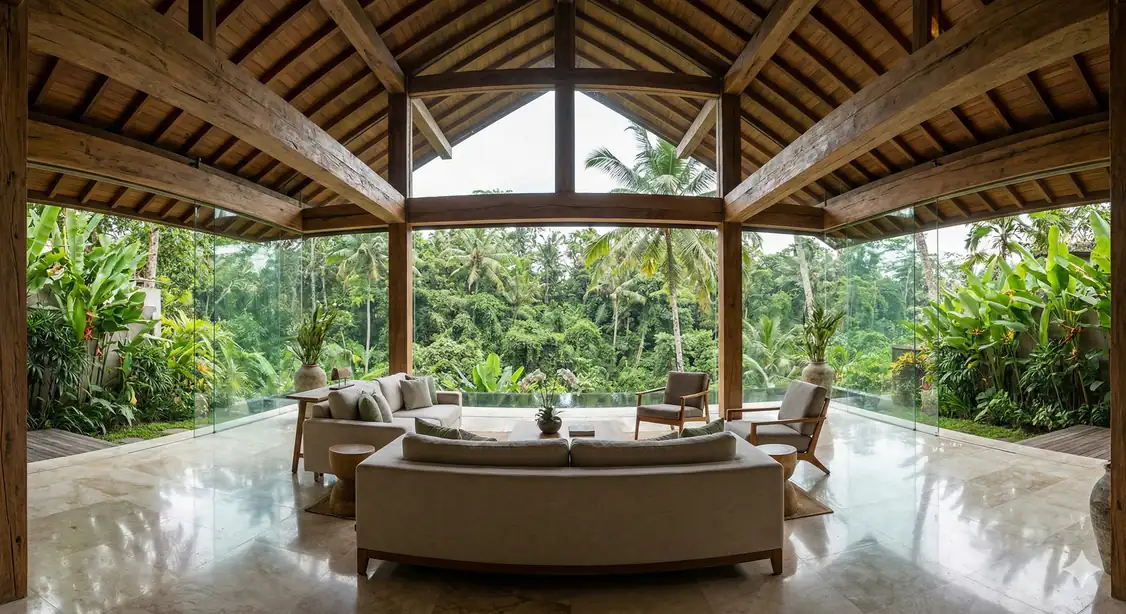
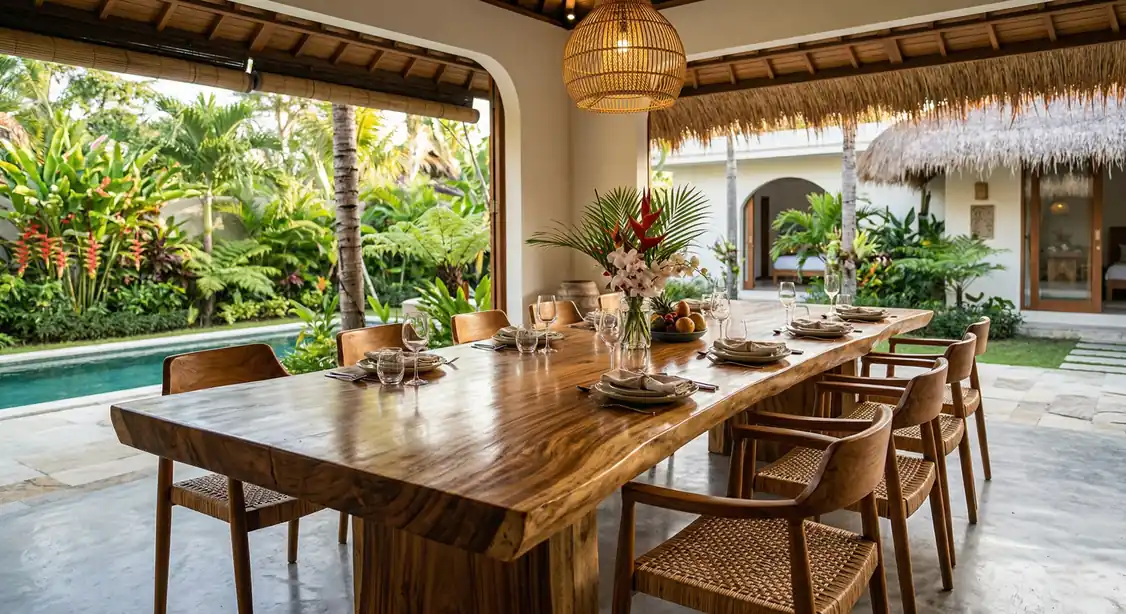
Teak is the absolute gold standard for both indoor and outdoor use. Thanks to its incredibly dense grain and naturally occurring rubber and oils, it is highly resistant to rot, fungi, and termites. Grade-A teak (Tectona grandis) carries a Janka hardness rating of about 1,070 lbf. That is mid-range for a tropical hardwood. The reason to specify teak is its oils and dimensional stability, not raw hardness.
Not all teak is equal, though. See our comparison of reclaimed vs. new teak before you specify.
2. Natural Rattan and Bamboo
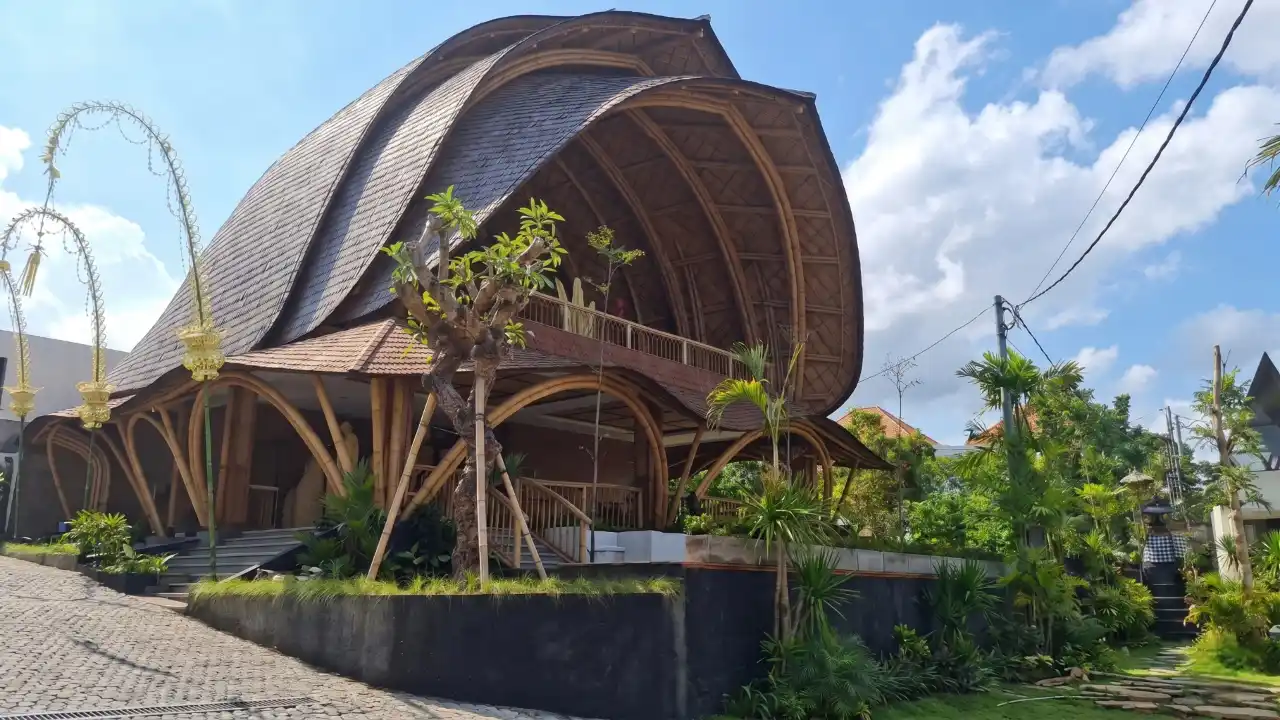
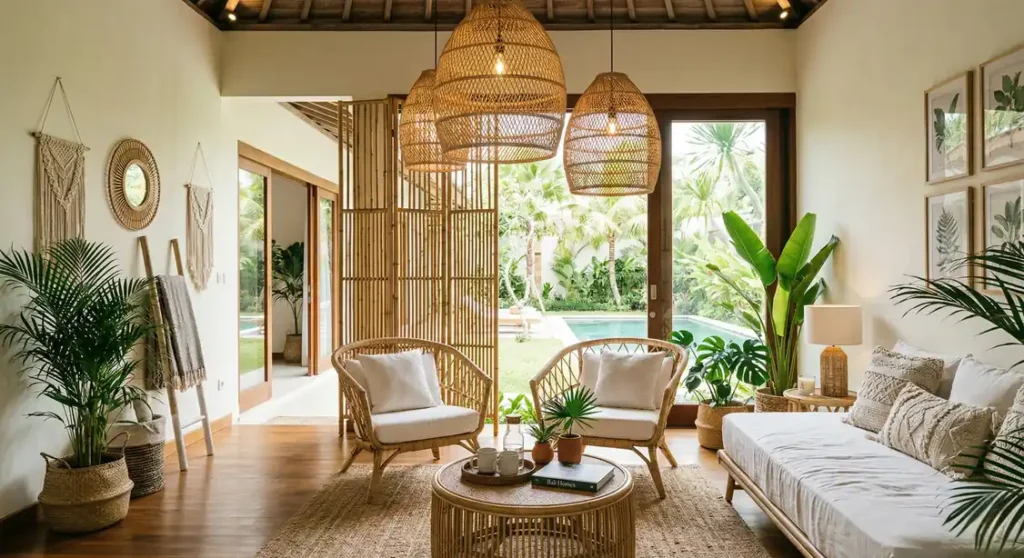
These fast-growing, renewable resources are not just eco-friendly; they bring that highly sought-after “boho-chic” aesthetic to your space. They are exceptionally lightweight, flexible, and perfect for statement light fixtures, room dividers, or relaxed patio seating areas.
For a built example, see the interiors and furniture we designed for Lokalé. It is the bamboo lobby of a commercial luxury villa complex in Pererenan, finished in Bali’s sustainable style.
3. Polished Concrete and River Stone
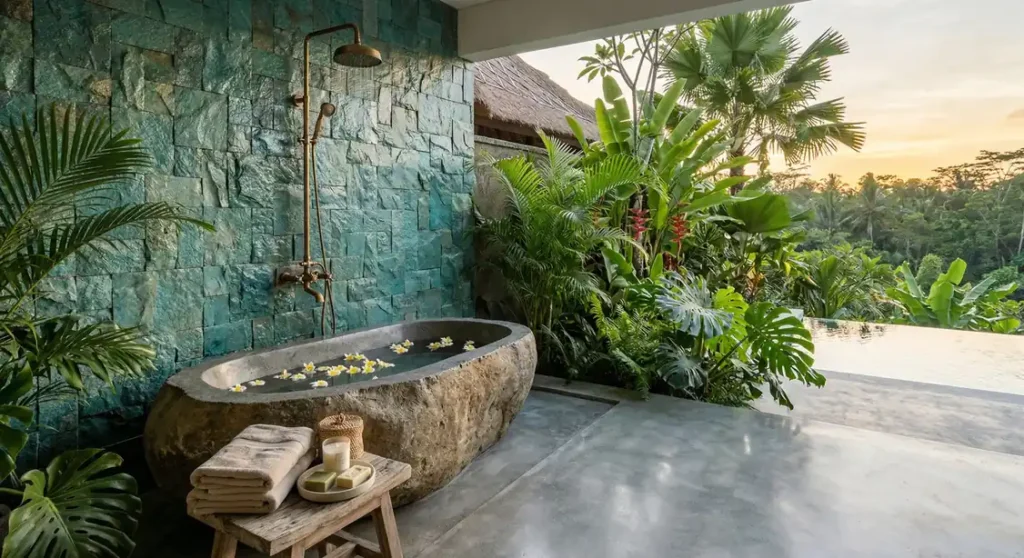
For flooring and bathroom fixtures, polished concrete and natural river stone offer a sleek, organic look. These materials stay naturally cool underfoot, reducing the need for constant air conditioning. Furthermore, local stones like Batu Sukabumi are perfect for pools, offering a stunning natural green hue and excellent slip resistance.
| Material Type | Best Used For | Durability in Tropics | Eco-Friendliness |
| Grade-A Teak Wood | Decks, Dining Tables, Bed Frames | Extremely High | High (If sustainably sourced) |
| Natural Bamboo | Roof Structures, Decorative Panels | High (If treated) | Very High (Fast-growing) |
| Batu Sukabumi | Swimming Pools, Wet Areas | Extremely High | High (Locally quarried) |
To see how these eco-friendly elements are shaping the future of island real estate, explore our complete breakdown of sustainable interior trends in Bali for 2026.
The Role of a Professional in Sourcing
Knowing what materials to use is only half the battle. Knowing where to get them without paying the “foreigner tax” is the real challenge. The local supply chain can be difficult to navigate, and the difference between low-grade and high-grade wood is often invisible to the untrained eye.
This is exactly why partnering with an experienced interior designer in Bali is your smartest financial move. A local expert has established relationships with reputable artisans in Jepara and local stone quarries. They supervise the interior fit-out, checking the grade of the timber and stone before it goes into your interiors.
If you are still in the early stages of planning your property’s overall layout, do not miss our comprehensive expert guide to designing luxury villa Bali. Our parent company, Bali Best Buy, makes the furniture in its own workshop, so you can see how a piece is built before you commit to it.
The Material Decision That Protects Your Investment
Choosing sustainable materials for Bali villas is not just an aesthetic preference. It is the foundational decision that determines whether your property appreciates or deteriorates. Prioritize local hardwoods, natural stones, and renewable bamboo, and you build something that needs less maintenance and keeps its appeal to guests for years.
Want the right choices from the start? Our interior design studio in Bali can source and specify them for your interior design and fit-out.
Planning a Villa Interior in Bali?
Send us your plans and the rooms you are furnishing. We will suggest the timber, stone and natural fibres for each space, and the finishes that keep them looking right in Bali’s humidity. Book a design consultation to start.
Frequently Asked Questions (FAQ)
Yes. When properly harvested, dried, and treated with non-toxic boron solutions, bamboo carries a high tensile strength for its weight and is frequently used for large roof structures in eco-resorts across Bali.
Grade-A heartwood teak is naturally termite-resistant due to its high oil content. For outdoor furniture, treat it periodically with quality teak oil or a tropical sealant to prevent weathering and maintain its color.
With caution. Marble is highly porous and absorbs moisture, soap, and cosmetics easily in humid climates, which leads to permanent staining if it is not sealed every few months. Polished concrete or dense local terrazzo are often the better choice for low-maintenance luxury.