Last Updated on September 19, 2026 by Wisnu Arista H.
Mold-Resistant Materials for Bali Villas: What Lasts (and What Fails)
The most effective mold-resistant materials Bali villas can rely on are Grade-A kiln-dried teak, dense natural stone such as andesite, porcelain and ceramic, properly treated natural fibres, and tropical-rated finishes. The materials that fail first are MDF and particleboard, untreated softwood, cheap veneers, and standard steel hardware. The gap between those two lists is simple. One interior ages well; the other warps, blooms with mold, or corrodes within a year or two.
This guide breaks down what lasts, what to avoid, and why. The view is from a studio that specifies materials at the design stage and builds furniture in-house.
| ✅ Use These | ❌ Avoid These |
|---|---|
| Grade-A kiln-dried teak | MDF / particleboard |
| Andesite / dense volcanic stone | Untreated softwood |
| Porcelain / glazed ceramic | Cheap veneers |
| Properly treated rattan and natural fibres | Standard (non-marine-grade) steel hardware |
| Tropical-rated finishes (penetrating oils, marine-grade lacquers) | Standard interior finishes designed for dry climates |
Why Bali’s Humidity Destroys the Wrong Materials
Bali’s climate attacks interiors in three ways at once. Relative humidity averages 80–85% year-round, driving moisture into anything porous or poorly sealed. Near the coast, salt-laden air accelerates corrosion on metals. And the equatorial sun degrades finishes and fades materials faster than in temperate climates.
The result is predictable. Composite woods absorb moisture and swell. Untreated timber warps and feeds mold. Standard metal fittings rust. Porous surfaces grow algae and mildew where air does not move. None of this is bad luck — it is the wrong material meeting conditions it cannot handle. Choosing materials that suit those conditions is what prevents it.
Mold-Resistant Materials for Bali Villas
Each one below is chosen for how it performs in a tropical interior.
Grade-A Kiln-Dried Teak: Best Timber for Bali’s Humidity
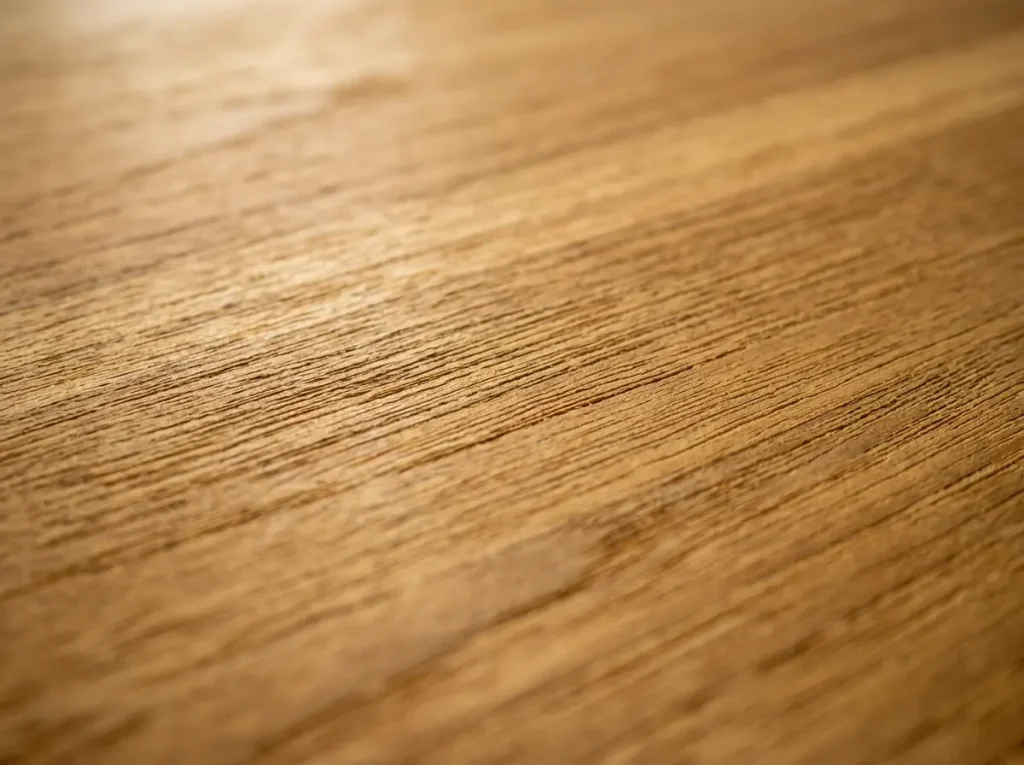
Teak is the benchmark for tropical timber. Its natural oils resist water, rot, and insects, and a dense, mature grain holds its shape in humidity. Research on teak heartwood extracts, tested as a natural wood preservative, found they inhibit decay fungi (Brocco et al., Journal of Cleaner Production, 2017).
Grade and drying are the two things that matter. Grade-A heartwood (the dense inner timber, low in knots) performs far better than sapwood. Kiln drying brings the moisture content down, keeping the piece stable once it reaches a humid room. Specify legally sourced plantation teak — sustainably grown and properly documented . Reclaimed teak is a valid alternative when the supplier can document the source structure. Avoid vague “old” or reclaimed timber claims that nobody can verify.
Natural Stone: Humidity-Resistant Options for Bali
Stone is inert and does not warp, but not all stone behaves the same in humidity. Andesite (locally known as Batu Candi) is hard, low in porosity, and well suited to wet and high-humidity areas. Terrazzo is durable and easy to maintain. Paras is the soft Balinese volcanic tuff that carvers use widely in traditional work. Beautiful but porous, it needs proper sealing and maintenance to last; left raw, it readily grows algae and mold. If you want the look with the least upkeep, lean toward andesite or sealed terrazzo.
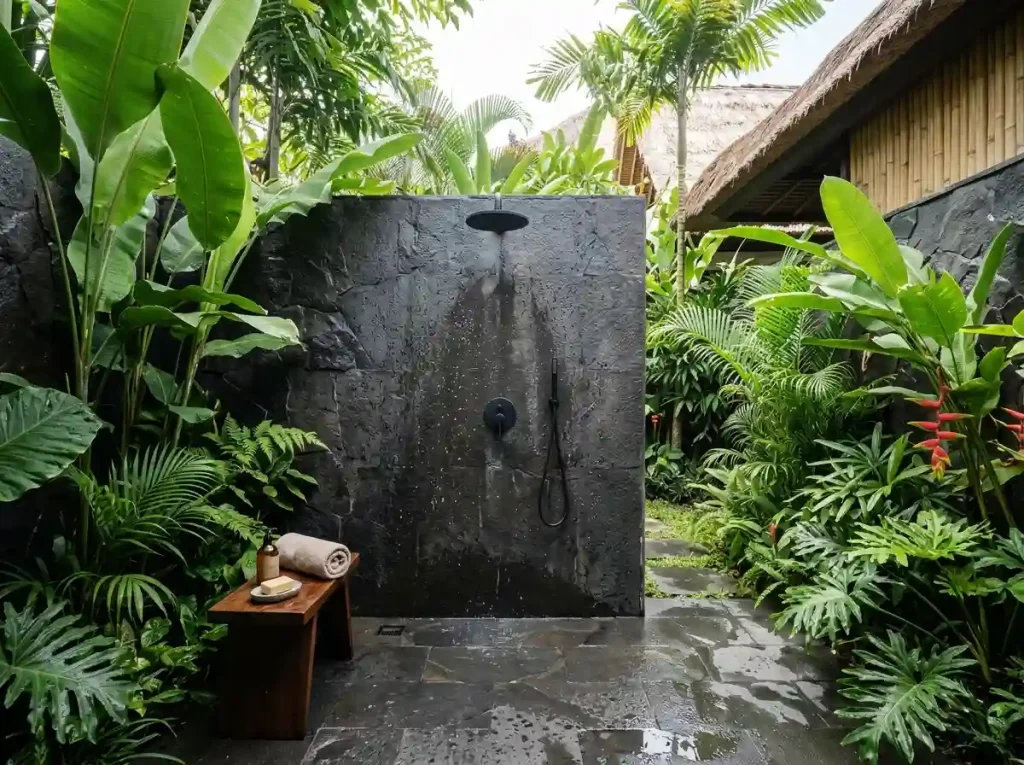
Ceramic and Porcelain: Moisture-Proof Surfaces for Bali Interiors
Porcelain sits close to non-porous, making it one of the most humidity-proof surfaces available. It is an excellent default for floors, bathrooms, and wet areas. Ceramic performs similarly when properly glazed. Both shrug off the moisture that destroys composite materials. Low-maintenance by nature, they are the safe default for high-exposure zones.
Treated Rattan and Natural Fibres: What to Specify in Bali
Natural fibres add the texture a tropical interior needs, but being organic, the key word is: treated. Properly treated and sealed rattan and natural fibres resist the mold and brittleness that claim untreated versions within a season. Used correctly and maintained, they last; bought cheap and untreated, they are among the first to fail.
Tropical-Rated Finishes: Protecting Materials in Bali’s Climate
The finish is as important as the material under it. Natural penetrating oils suit teak and other hardwoods, while marine-grade lacquers add moisture and UV protection where exposure is high. Specify a finish rated for tropical conditions, not a standard product designed for a dry, temperate home.
Materials to Avoid in Bali’s Humid Climate
Some materials are simply the wrong tool for this climate, and they tend to fail in a predictable order.
MDF and particleboard fail first and worst. They act like a sponge, swelling and delaminating as they absorb moisture — and once they go, nothing repairs them. Untreated softwood is next — it warps, and its low density makes it vulnerable to both moisture and pests. Cheap veneers lift and peel as the glue line gives way in humidity.
Standard steel hardware and fittings corrode, especially near the coast; the fix is marine-grade (316) stainless or properly coated alternatives. The common thread is that all of these are products designed for dry interiors, sold into a tropical one. Saving money on them upfront usually means paying for replacement within a year or two.
Specifying Mold-Resistant Materials at the Design Stage
Here is what the cleaning-company guides miss. Mold and material failure are far cheaper to prevent than to fix. Prevention happens at the design stage, not after handover. Specifying the right materials before you order or build removes the problem at its source.
That is the advantage of specifying materials as part of the design rather than buying them piecemeal. Pick the right material for the room and climate — with the right finish — and it never becomes a maintenance burden. We specify at the design stage and produce furniture in-house, and we match every material and finish to the space from the start. That is the most reliable mold-proofing approach.
Our Bali interior design service specifies for the climate from the first concept.
Our broader approach to sustainable interior trends in Bali covers how material choices fit the bigger picture.
Protect Your Villa From the Start
For the wider picture on what holds up in this climate, see our guide to the best sustainable materials for Bali villas.
Humidity is only half the battle. passive cooling techniques reduce how much moisture builds up in the first place.
For any build or renovation, the cheapest mold prevention is choosing the right materials before you order anything. Book a free design consultation with our team and we will help you specify an interior built to last in Bali’s climate.
Frequently Asked Questions
The mold-resistant materials Bali interiors rely on most are porcelain and glazed ceramic, dense natural stone such as andesite, Grade-A kiln-dried teak, and properly treated natural fibres. These either do not absorb moisture or are specifically treated to resist it. Porous, untreated, or composite materials are the ones that grow mold fastest.
Furniture warps or molds because it absorbs ambient moisture from the humid air. Composite woods like MDF swell and delaminate, and untreated or poorly dried timber expands, warps, and feeds mold. Pieces made for dry, temperate climates were never tested against sustained tropical humidity, so they fail far faster here.
Yes. Teak’s natural oils resist water, rot, and insects, and its dense grain holds shape in humidity. Grade-A heartwood, kiln-dried to a stable moisture content, is the standard to specify. Lower grades with more sapwood perform worse. Choose legally sourced plantation teak, or reclaimed teak whose source structure is documented. Avoid unverifiable “old-growth” claims.
Avoid MDF and particleboard, untreated softwood, cheap veneers, and standard (non-marine-grade) steel hardware. These swell, warp, delaminate, or corrode in humidity and near salt air, and once they fail, nothing repairs them. All of them target dry interiors and tend to need replacing within a year or two here.
Yes, and that is the most effective approach. Specifying the right materials up front — matching each material and finish to its location and exposure — prevents mold and material failure at the source. It is far cheaper and more reliable than treating mold or replacing failed materials after handover is complete.