Last Updated on September 18, 2026 by Wisnu Arista H.
Instagrammable Villa Design in Bali: Interiors Built to Be Photographed
An Instagrammable villa design Bali is one built to photograph well: a clear focal point, layered texture and plenty of light. In a rental market, that is not vanity — it is a booking engine. Guests scroll listings in seconds. The most photogenic villas win the click. This guide covers the design moves that make an interior camera-ready, and how to keep that space genuinely comfortable to live in. For the wider rental picture, see our guide to designing a rental villa for bookings.
The data backs this up. In a Carnegie Mellon study of 13,000 listings, homes that switched to verified professional photos took about 17.5% more bookings, and that uplift starts with the design decisions made long before a photographer arrives.
What Makes a Villa Interior Instagrammable?
Photogenic design has little to do with spending more. It is about contrast, depth and one clear subject. A camera rewards a single strong focal point per frame, supported by natural light and layered texture. Busy rooms with no focus photograph as clutter. A calm room built around one hero element reads instantly as design. So give every key space one thing the eye lands on first — a sculptural headboard, a stone bathtub, a framed garden view. That element becomes the anchor, and everything else in the frame quietly supports it.
The Hero Shot: Designing One Unmistakable Frame
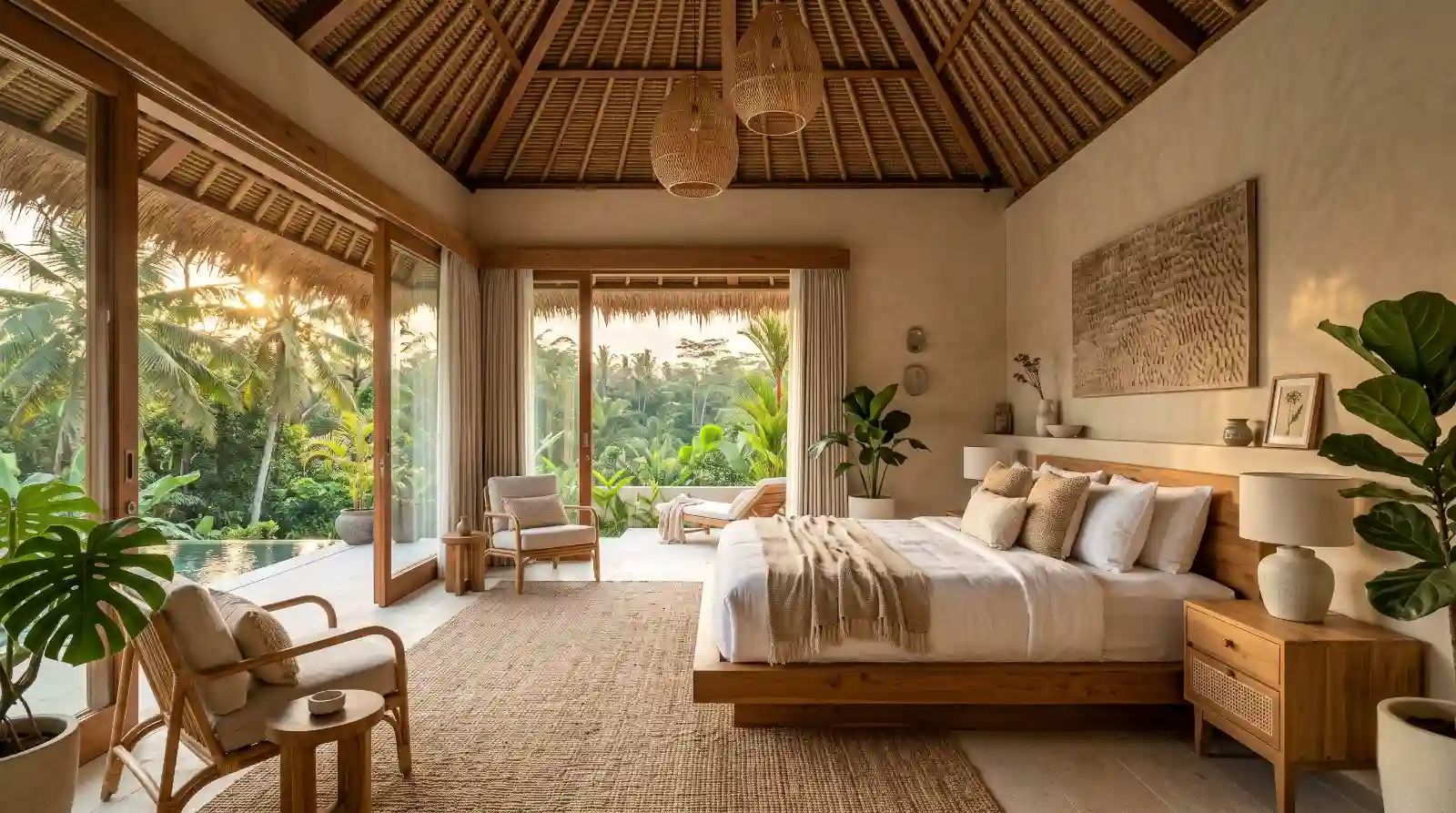
Every listing lives or dies on one hero image. Its only job is to stop the scroll. So design at least one space to be unmistakable at thumbnail size. Start with the room that has the best light and view. Then build one deliberate focal point into it — a statement bed, a feature wall, an open-air bathroom. Frame it so the eye travels straight to that subject and the foreground stays clean. The test is simple. The shot should read in an instant, even on a small phone screen. Design that moment on purpose, rather than hoping a photographer stumbles onto it later.
Materials, Texture and Colour That Photograph Well
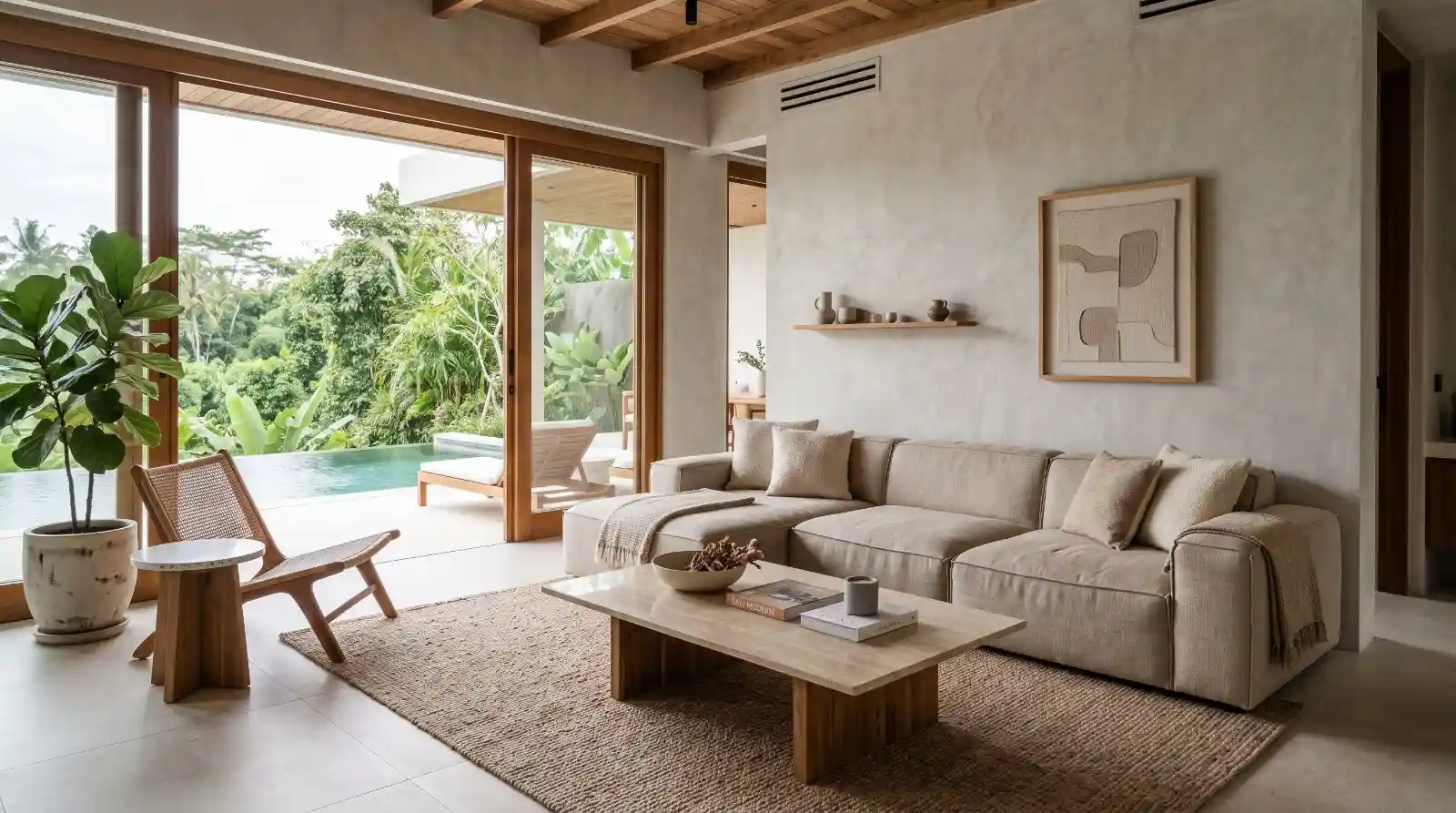
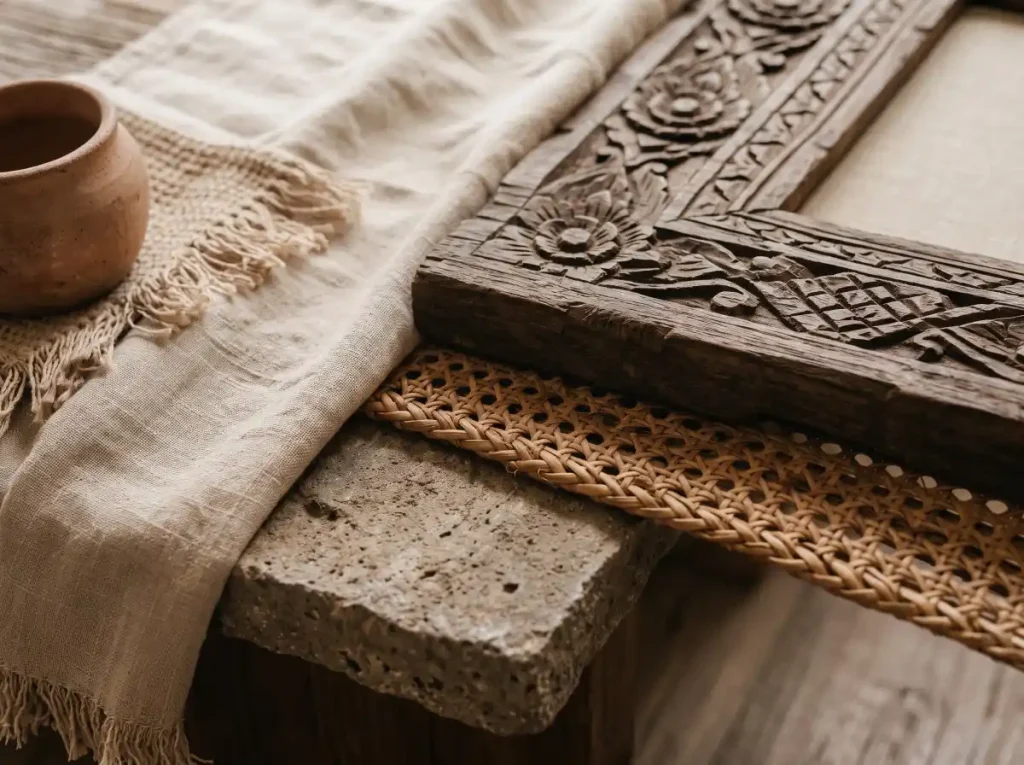
The palette starts with natural materials. Timber, rattan, stone and linen all add the depth a camera picks up, and matte finishes outperform high gloss, which throws glare. Keep the scheme calm and earthy so one accent colour can stand out; too many bright tones compete until the image flattens. The real trick is to layer texture rather than pattern. A rough stone wall against smooth timber gives a photo genuine depth, and one oversized plant brings life to almost any frame.
Where you can, favour the real thing over the fake. Hand-carved timber, woven rattan and Balinese stone read as authentic and tactile, a sense of place generic flat-pack furniture cannot fake. One rule worth knowing before a shoot is that the camera is far less forgiving of fake materials than the eye is in person. Natural, sustainable bamboo photographs beautifully, its grain and slight irregularity reading as warmth, while synthetic ‘plastic rattan’ looks cheap the moment it is shot.
Light and Framed Indoor-Outdoor Views
Light is the single most important ingredient in any interior photo. Design for soft, natural daylight wherever you can, with large openings, a skylight and pale walls that let it travel deep. Time of day matters just as much. Soft morning and late-afternoon light flatters almost any space, while harsh midday sun carves shadows that hide detail.
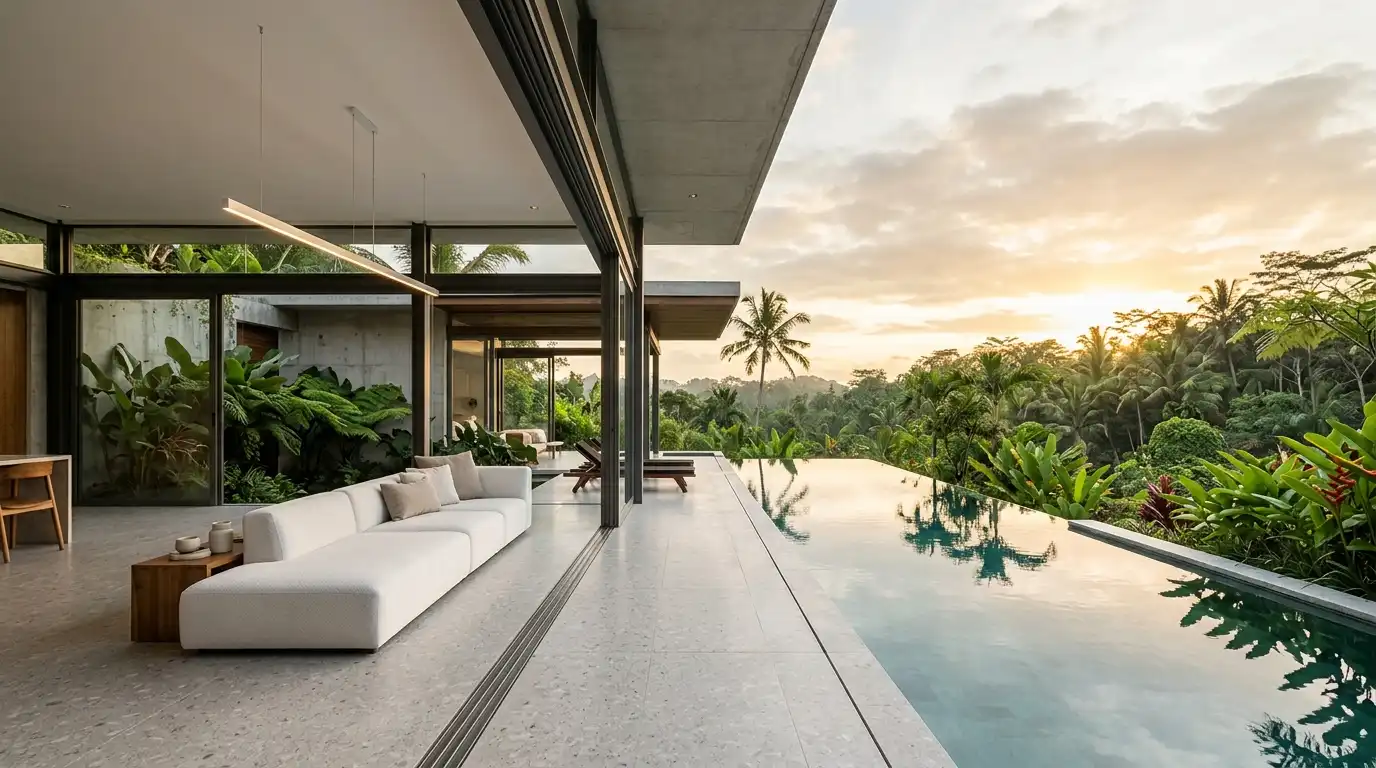
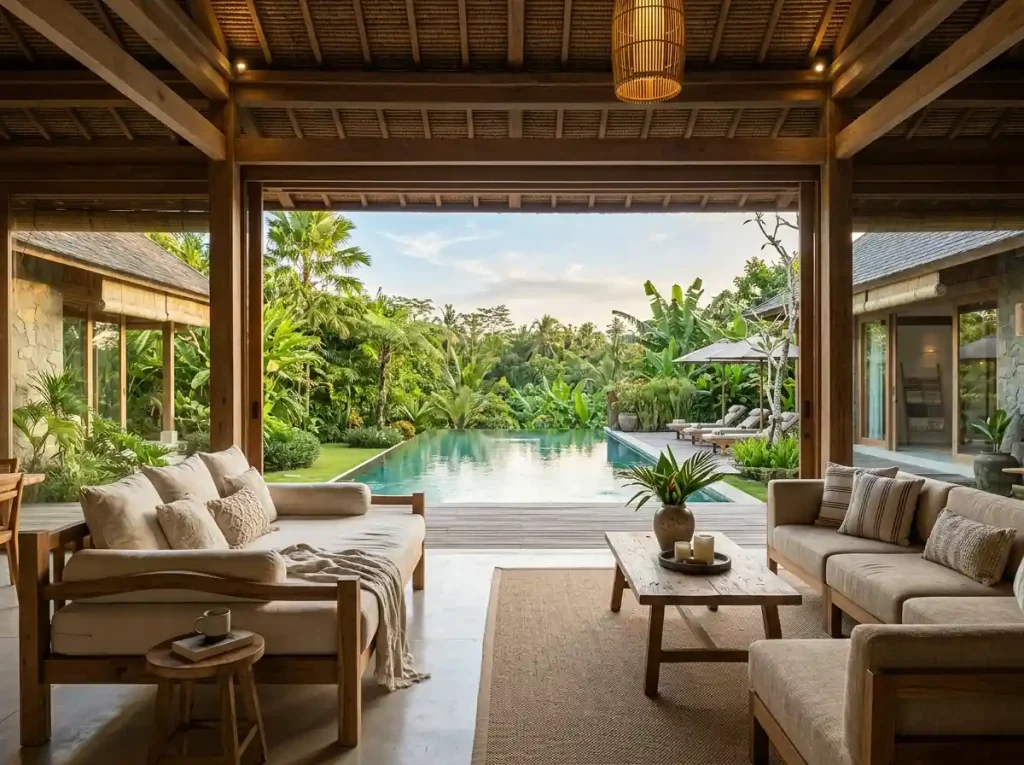
Then frame the indoor-outdoor view. Bali’s greatest asset is the view out, and the move that pays off most is to frame it like a picture. Position the bed, sofa or tub to face the garden or pool, and specify sliding doors that fully retract so the view becomes part of the room. This is the shot that instantly says ‘Bali’ to a scrolling guest, which is why a framed view so often ends up as the hero image.
Features Guests Photograph Again and Again
A handful of features earn their place in listing photos again and again. Build a few of these in from the very start:
- A statement headboard or four-poster bed against a calm wall
- An open-air or stone bathtub framed by greenery
- A pool or daybed with a clean, uncluttered view
- A reading nook, swing or hanging chair with character
- A single oversized plant or a green living wall
- A textured feature wall in timber, stone or rattan
Common Mistakes That Ruin Instagrammable Villa Photos
Most villas that photograph badly are let down by the same few habits. Clutter is the usual culprit — too many objects in a frame read as mess, not character. Poor lighting comes next, because dark rooms and harsh overhead bulbs flatten depth and mood. Scale trips people up too: undersized furniture leaves a room looking sparse in a wide shot. Then there is the trap of chasing a trend over comfort, where a viral feature wins one photo yet frustrates every guest who lives with it. Strong photos follow strong design, never the other way round. So fix the room first, then point a camera at it.
Designing for Photos Without Killing Liveability
None of this matters if the villa only works in photographs. A space that looks staged but lives badly earns lukewarm reviews. The real craft is balancing the hero moments with genuine comfort. Keep storage generous so clutter stays off the surfaces. Choose durable, easy-clean materials that survive guest after guest. And make sure the bed framing that beautiful view is actually comfortable to sleep in. The most photogenic interiors are, in the end, simply well-designed rooms — they photograph well because they work well. If you want that balance engineered in from the start, our Bali interior design service shapes the photogenic moments around how the villa will really be used.
Frequently Asked Questions
An Instagrammable villa interior has one clear focal point, natural texture and good light. It uses a calm palette so a single hero element stands out. Framed indoor-outdoor views and authentic Bali materials help too. In short, it is a well-designed space that photographs cleanly.
The strongest performers are a statement bed, an open-air or stone bathtub, and a framed pool or garden view. A textured feature wall and a large plant also photograph well. Each one gives a photo a single clear subject the eye lands on first.
Pick the room with the best light and view. Build one strong focal point into it, such as a feature bed or wall. Keep the foreground clean, and frame the view like a picture. Design the shot deliberately, rather than hoping a photographer finds it later.
A calm, earthy palette with one accent colour photographs best. Natural materials like timber, rattan, stone and linen add warmth and depth. Matte finishes avoid glare, and layered textures read richer than busy patterns. Greenery adds an easy, photogenic pop of colour.
Yes, and it should be. The most photogenic interiors are simply well-designed rooms. Keep storage generous, choose durable materials, and make sure a bed that faces the view is comfortable to sleep in. A villa that only looks good in photos earns poor reviews.
Yes. Guests scroll listings quickly and book on the strength of the photos. A photogenic interior wins more clicks and gets shared on social media. That visibility supports bookings and repeat stays, which is why design is a core part of rental performance.