Last Updated on September 22, 2026 by Wisnu Arista H.
Bali Living Room Ideas: The Natural Material Secret
When searching for the perfect Bali living room ideas, most people focus entirely on the aesthetics—the flowing white curtains, the oversized plants, and the earthy tones. However, there is a hidden layer to creating a well-designed tropical sanctuary.
The secret to a flawless Bali living room does not lie in generic resort decorations. It lies entirely in the strategic use of natural materials. In a harsh tropical climate characterized by intense humidity, monsoonal rains, and relentless UV rays, selecting the right materials is the difference between a home that ages beautifully and one that deteriorates within a year.
These are the foundational principles behind any successful Bali living room ideas project. If you want to build a living space that feels grounded, authentic, and highly durable, you must look beyond the surface. This guide reveals the foundational materials you need, including the ultimate secret centerpiece that ties every high-end tropical living room together.
Why Do Natural Materials Define Bali Living Room Ideas?
Natural materials define Bali living room ideas because they breathe with the tropical climate, age beautifully under humidity and UV exposure, and create the tactile warmth that synthetic alternatives cannot replicate. In Bali’s residential design, material choice is what separates a living room that lasts decades from one that shows visible deterioration within the first few years.
Key reasons natural materials work in Bali interiors:
- Sustainability — local sourcing reduces import emissions and supports Bali artisans
- Climate compatibility — teak, stone, and limewash adapt to humidity instead of fighting it
- Aging gracefully — patina and weathering add character rather than damage
- Tactile depth — varied texture creates visual interest in a neutral palette
- Health and air quality — breathable materials prevent moisture buildup and mold
This material-first approach is what separates great Bali living room ideas from generic resort decor.
The Secret Centerpiece: Custom Teak Wood Sofas
Among all Bali living room ideas, the choice of seating frame matters more than any other single decision. Here is the ultimate insider secret that separates authentic luxury homes from generic holiday rentals. The most important natural material in your living room isn’t the flooring or the wall plaster; it is the structural foundation of your main seating area.
You cannot achieve a high-end tropical aesthetic with an imported, mass-produced couch. The heart of the room demands a custom sofa built specifically for the climate. See our guide to custom furniture and local procurement in Bali for how that process works.
The Superiority of Custom Teak Wood Frames
Why do so many expat homes have sofas that smell musty or begin sagging within the first year or two? The culprit is usually cheap plywood frames and synthetic foam that trap moisture.
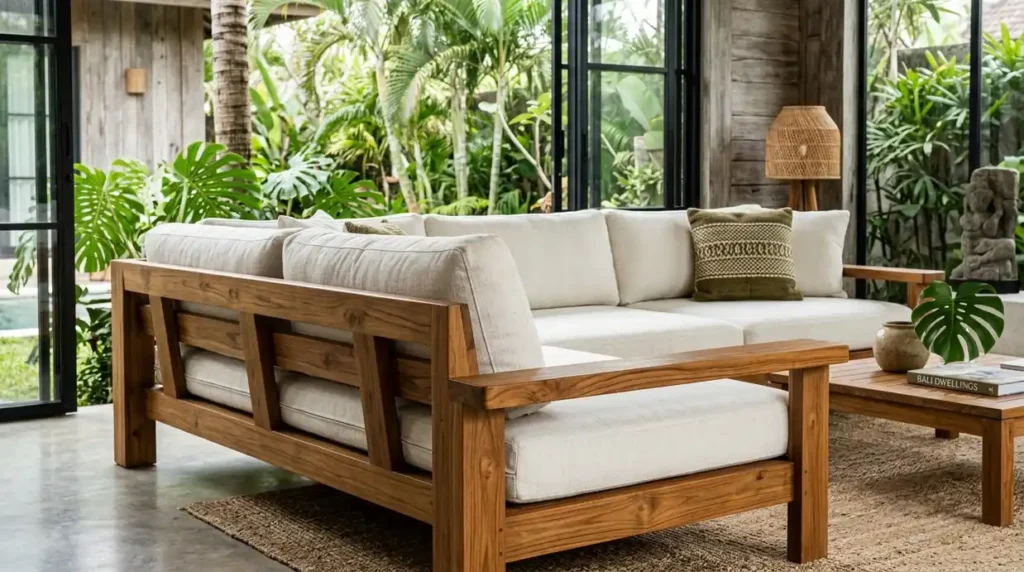
For a well-designed Bali living room, the structural frame of your sofa must be crafted from kiln-dried, legally certified teak wood from sustainable Indonesian forestry sources. Teak is the most reliable choice for tropical furniture. The Indonesian government’s regulated forestry certification (SVLK) verifies that the timber was legally harvested and traced through the supply chain, which is the proof to ask a supplier for. It naturally produces its own protective oils, making it inherently resistant to termites, rot, and high humidity. By investing in custom teak wood furniture, you are grounding your living room with a piece that is exceptionally durable in tropical conditions.
Why Modular Flexibility is Essential
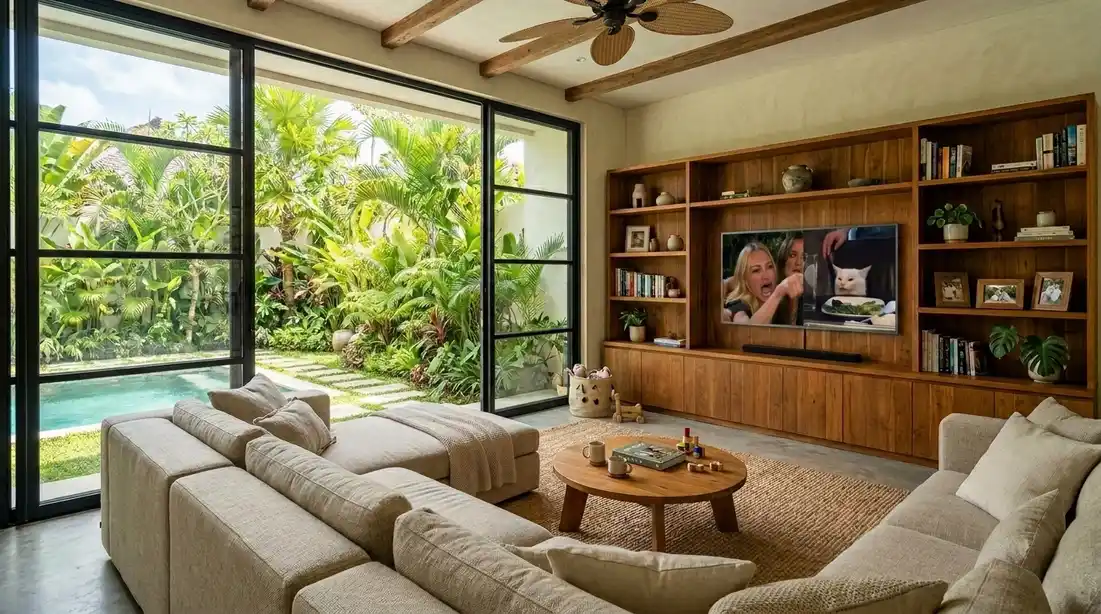
Tropical living is all about flow and adaptability. A custom modular sofa allows you to reconfigure your living room based on your daily needs. You can arrange it into a massive U-shape for hosting a large gathering, or separate the modules to open up the floor plan when you want the ocean breeze to flow straight through the house.
Surviving Humidity with Performance Fabrics
A teak wood frame provides a structural foundation built to last decades, but what about the upholstery? The secret is to avoid delicate raw cottons that absorb moisture. Experienced residential designers often specify performance outdoor fabrics (like Sunbrella) for indoor living rooms. These advanced materials mimic the luxurious feel and natural look of organic linen but are highly water-resistant and mildew-resistant, and easy to clean.
For homeowners who want this engineered properly, our Bali interior design studio handles the sourcing and kiln-drying verification as part of every residential brief.
Key Natural Elements for Your Tropical Living Room
Once your seating is anchored, these supporting Bali living room ideas complete the aesthetic.
Grounding the Space with Natural Stone
Avoid standard ceramic tiles. To create an authentic tropical atmosphere, your flooring should feel connected to the earth.
- Terrazzo: Poured, matte terrazzo flooring stays naturally cool underfoot and provides a seamless, expansive look that makes the living room feel larger.
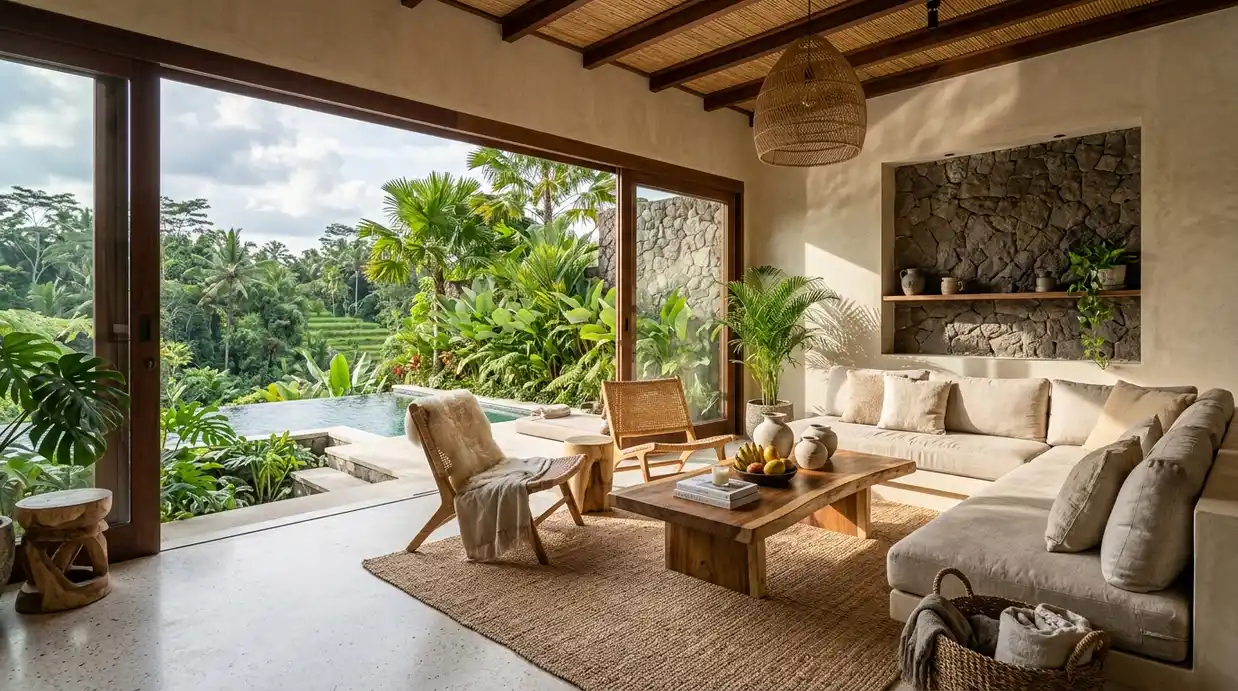
- Lava Stone & Sandstone: Using rough-hewn volcanic rock or Palimanan stone for a feature wall adds incredible depth and acoustic dampening to the room.
Reclaimed Teak Coffee Tables
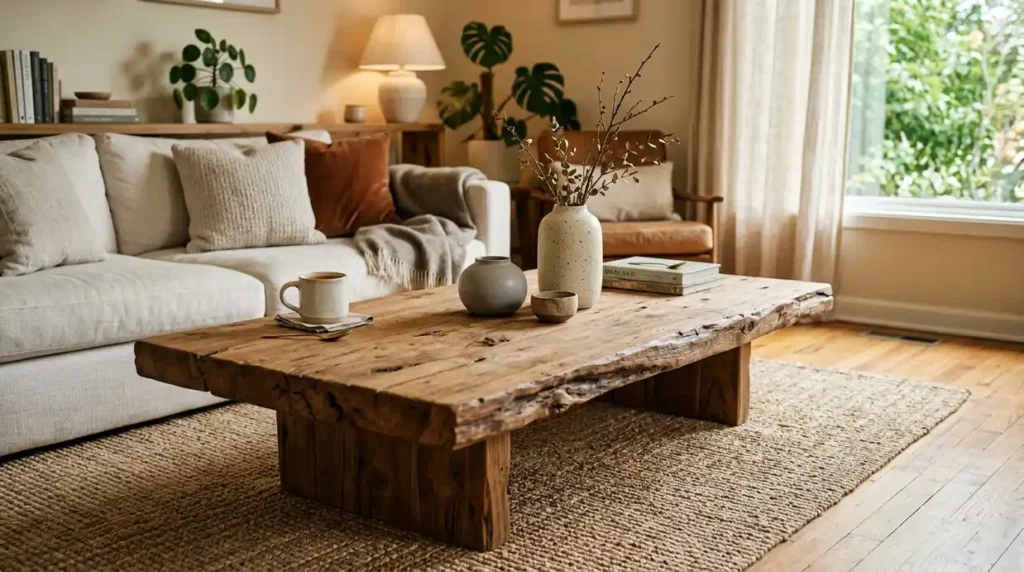
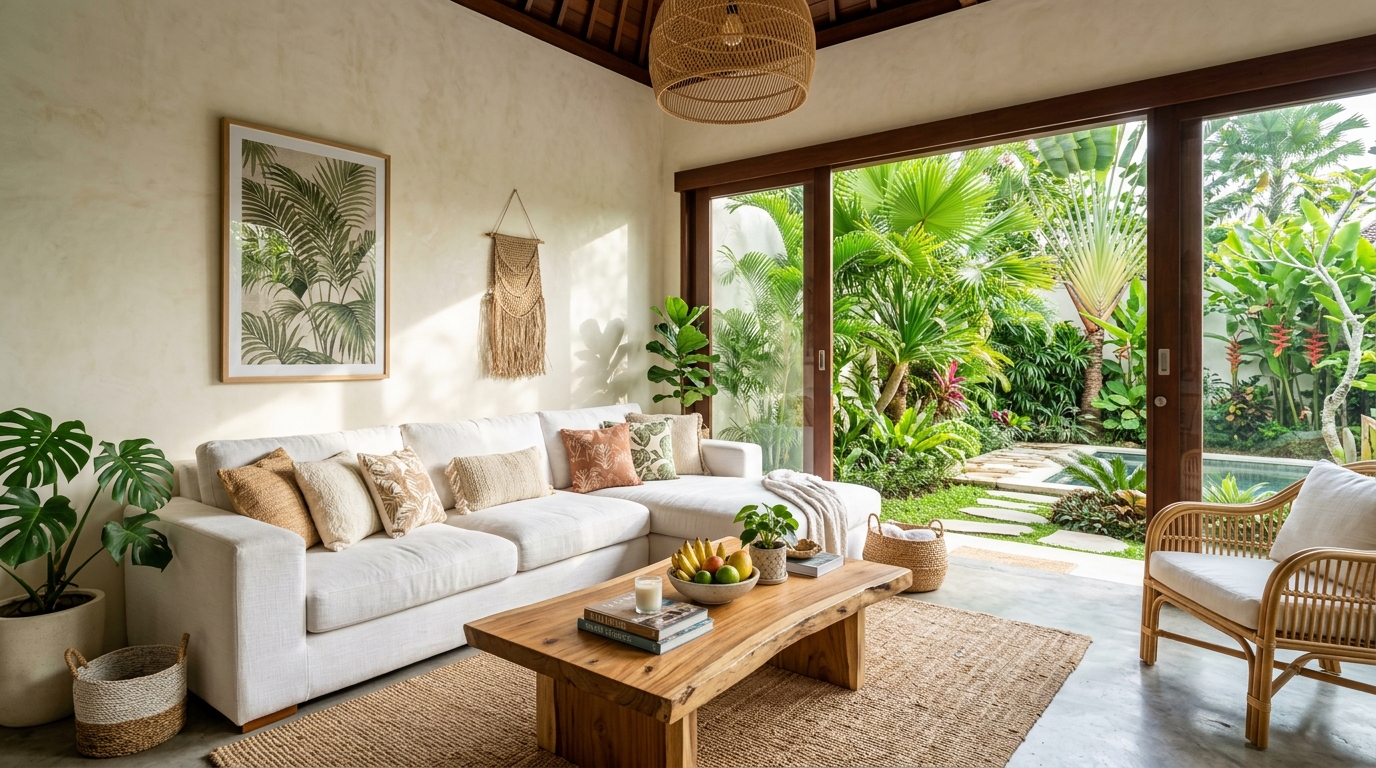
Complement your main seating area with a raw-edge, reclaimed teak coffee table. Using reclaimed timber not only adds a layer of sustainable design to your home but also provides distinctive character. The natural grain patterns, knots, and slight imperfections embody the Wabi-Sabi philosophy, proving that natural materials become more beautiful as they age.
Breathable Limewash and Clay Plasters
Standard acrylic paints can trap moisture behind the walls, leading to bubbling and peeling. Instead, coat your living room walls in natural limewash or clay plaster. These traditional finishes are highly breathable and naturally alkaline, which inhibits mold growth. Visually, limewash adds a stunning, cloudy texture that interacts beautifully with the changing natural light throughout the day.
Organic Linen and Rattan Accents
Soften the heavy teak wood and stone elements with lightweight, woven textures. Use organic linen for your sheer curtains; they will catch the cross-breeze and create a dynamic sense of movement in the room. Introduce rattan and bamboo through statement ceiling pendants or woven accent chairs to add a layer of traditional Balinese craftsmanship without overwhelming the modern layout.
Blending Indoor and Outdoor Flow
The most distinctive of all Bali living room ideas is the dissolution of the wall between inside and outside.
If your architecture permits, install fully retractable glass doors. Run the exact same natural stone flooring from the interior of your living room straight out to the edge of your pool deck. When the materials are continuous, the mind perceives the outdoor garden as an extension of the indoor living space.
Place oversized indoor plants like mature Monsteras or Bird of Paradise in handcrafted terracotta pots to visually pull the landscaping inside. This seamless indoor-outdoor flow is a defining quality of tropical residential design.
Ready to Transform Your Tropical Space?
Gathering ideas is the first step, but executing them well requires access to the island’s best artisans and material suppliers. Sourcing genuine, properly dried teak wood and engineering custom furniture that fits your layout perfectly is not a DIY project.
If you are designing a permanent residence and want to ensure your living room is built to last, you need a complete planning framework. Read our complete guide to home interior design Bali to learn how to handle climate-resilient materials, spatial zoning, and full residential fit-outs. For ideas covering every room, not just the living room, see our Bali home interior design ideas.
FAQ — Bali Living Room Ideas
To design a Bali style living room, you must prioritize a seamless indoor-outdoor flow and an earthy color palette. Use natural, breathable materials like limewash for the walls, matte stone for the floors, and anchor the space with custom teak wood furniture. Ensure the layout maximizes natural light and cross-ventilation.
Teak wood (Kayu Jati) is universally considered the best wood for tropical furniture. Because of its high natural oil content and tight grain, it is highly resistant to extreme humidity, rot, and termite infestations, making it the most reliable structural material for custom sofas and dining tables.
Maintaining natural materials in a tropical climate requires consistent airflow. Keep spaces well-ventilated to prevent moisture buildup. For woods like teak, apply natural oils periodically to prevent drying. For fabrics, use high-grade performance materials that resist mold and are easy to wipe down after unexpected spills.