Last Updated on September 18, 2026 by Wisnu Arista H.
Boutique Hotel Lobby Design Bali: The First Impression That Pays
Let’s be blunt. When you are investing in boutique hotel lobby design Bali this year, you are not just decorating a waiting room with some nice tropical plants. You are engineering the exact moment your guest decides if their premium room rate was actually worth it.
The hospitality market in areas like Canggu, Ubud, and Uluwatu is fiercely competitive. A guest decides how they feel about your entire property within seconds of walking off the street. If your lobby feels chaotic, hot, or smells like the exhaust from the traffic outside, the illusion of luxury is instantly shattered. They will spend the rest of their stay looking for flaws to justify a bad review on Booking.com.
Amateur developers view the lobby as a significant, air-conditioned expense. Experienced hospitality architects design the lobby as a multi-sensory transition zone, a psychological anchor, and a highly lucrative profit center. Here is the operational playbook for building a boutique lobby that drives your Average Daily Rate (ADR) significantly higher.
What makes boutique hotel lobby design Bali properties more profitable?
The most profitable boutique hotel lobbies function as a multi-sensory transition zone that immediately lowers guest stress. It eliminates traditional standing front desks in favor of lounge-style check-ins, utilizes hidden BOH routing for luggage storage, and integrates premium F&B elements like a specialty espresso bar to turn dead space into a daily profit center. Here is how the lobby approach for commercial interior design in Bali works:
Key elements of a high-ROI hotel lobby:
- Sensory Transition: Positive air pressure, acoustic baffling, and signature scents.
- Lounge Check-In: Removing physical barriers between staff and high-paying guests.
- The Profit Center: Integrating a premium coffee or cocktail bar.
- Invisible Luggage Routing: Preventing the “luggage graveyard” aesthetic.
- Automated Mood Lighting: Shifting from daytime energy to evening exclusivity.
The Sensory Transition: Escaping the Island Chaos
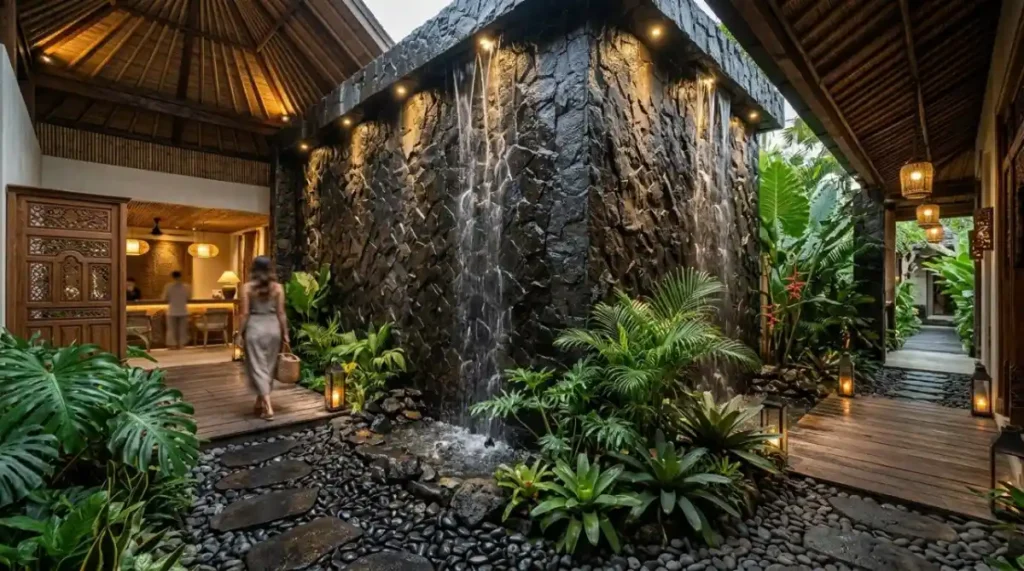
Bali is beautiful, but the streets are loud, hot, and aggressive. Your lobby must act as a sanctuary from that chaos.
When a guest steps out of their airport taxi, they are likely exhausted, sweating, and overwhelmed by the scooters. The physical threshold of your front doors must trigger an immediate drop in their blood pressure.
- Acoustic Defense: You cannot have the sound of honking traffic bleeding into your reception. We use heavy architectural glass, dense perimeter landscaping, and internal water features (like a cascading indoor stone waterfall) to create “white noise” that naturally drowns out the street.
- Olfactive Branding: Your lobby cannot smell like the humid street outside. You must engineer “Positive Air Pressure” in your HVAC system so cold, heavily filtered air pushes out when the doors open. Inside, that air should be subtly laced with a signature scent—like sandalwood, lemongrass, or ocean salt—pumped directly through the AC vents. Scent is the detail guests remember without noticing it.
Destroying the Traditional Check-In Desk
The traditional, oversized wooden reception desk is dead. It is an outdated corporate relic that creates a physical and psychological barrier between your staff and your guests.
Making an exhausted tourist stand in a line with their heavy bags while a receptionist stares down at a computer screen is terrible hospitality.
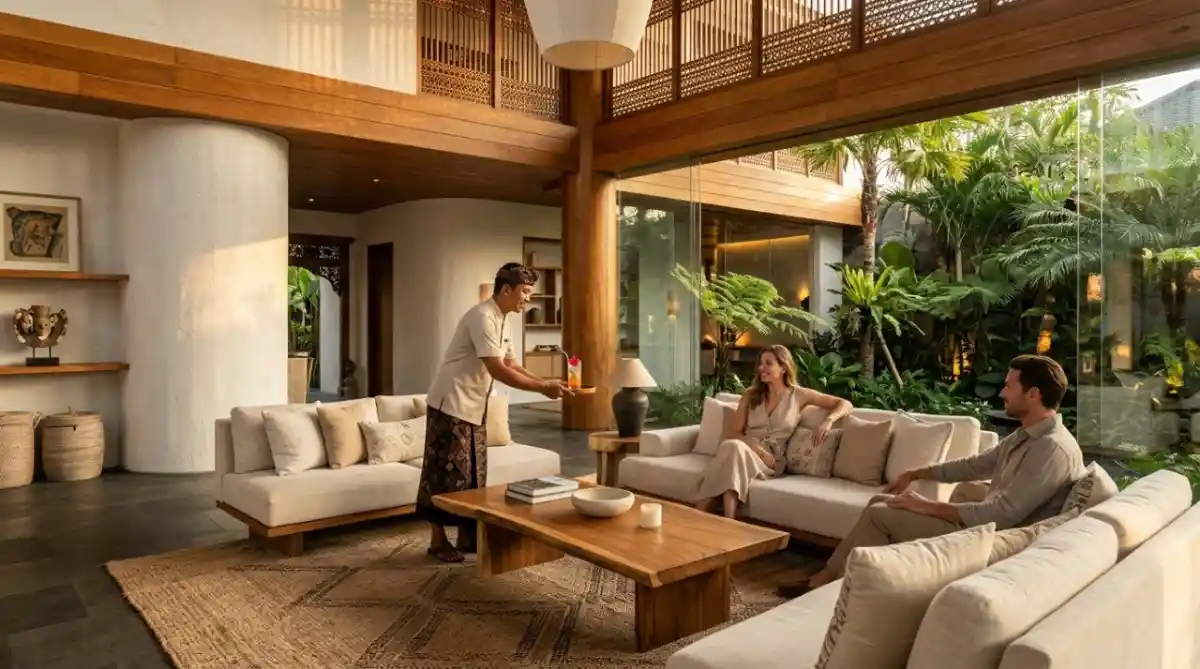
In well-run 2026 boutique hotels, we design Lounge Check-Ins. The space looks like a private luxury lounge. The guest is immediately escorted to a plush, low-slung velvet sofa, handed an ice-cold scented towel, and given a bespoke welcome cocktail. The staff brings the iPad to the guest.
This requires designing highly ergonomic, hidden waiter stations for the front office staff. The printers, keycard encoders, and passports are managed in a concealed Back of House (BOH) office directly behind the lounge wall, out of the guest’s sightline. For a small-footprint example, see our Micro Hotel Lobby in Kayu Tulang, Canggu. It is a design-stage project where one 40 m² room works as reception, lounge and stair hall.
The Luggage Graveyard Problem
This is a massive operational blind spot for amateur hotel investors. Every boutique hotel lobby plan must include a dedicated, architect-designed Back of House luggage room.
Guests often arrive at 11:00 AM, but check-in isn’t until 2:00 PM. Guests check out at 12:00 PM, but their flight isn’t until 9:00 PM. Because of this, they leave their suitcases in the lobby.
If you do not design a large, secure, and discreetly hidden luggage storage room, your high-end aesthetic lobby will constantly look like a messy airport baggage claim. Stacking cheap backpacks and massive suitcases next to your custom terrazzo pillars destroys the luxury aesthetic. You must architecturally map out the “Luggage Flow”—allowing bellboys to whisk bags away through concealed doors before the guest even sits down for their welcome drink.
Turning Dead Space into a Profit Center
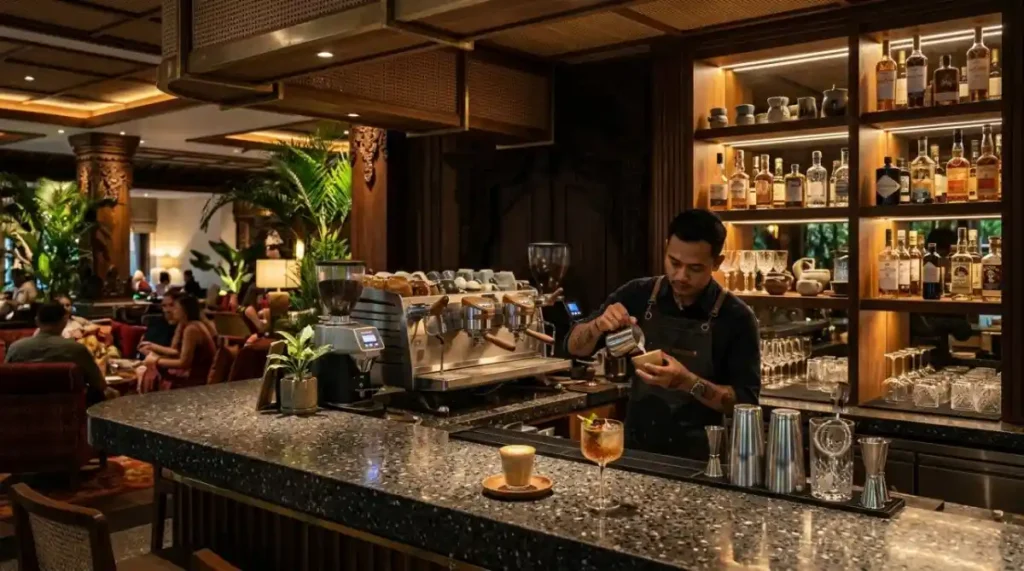
A massive, beautiful lobby that only serves as a check-in point is a massive drain on your OpEx (paying for commercial AC to cool an empty room).
You must turn your lobby into a revenue-generating destination. We design integrated, high-end F&B concepts directly into the reception flow.
Instead of a boring water dispenser, build a sculptural, brutalist concrete espresso bar. Partner with a premium local roaster. During the day, it serves high-margin specialty coffee to your guests and attracts digital nomads from the street. At 5:00 PM, the lighting shifts, the coffee equipment is hidden behind sliding slatted wood panels, and the space transforms into a moody, high-end cocktail and wine bar. You are suddenly monetizing your lobby from breakfast to last orders.
To pull off this level of operational design, your mechanical, electrical, and plumbing (MEP) infrastructure must be properly engineered. Running commercial espresso machines and hiding oversized HVAC ducts requires specialist engineering.
Your lobby is the psychological anchor of your entire hotel. Work with an experienced interior designer Bali to engineer it to command respect, and your room rates will follow.
The same first-impression thinking applies to other commercial entry points, and our guide to retail interior design shows how it plays out on a shop floor.
It shapes coworking space design too, where one entrance has to welcome members and day-pass visitors alike.
Frequently Asked Questions
A traditional standing front desk creates a physical and psychological barrier between staff and guests, making the experience feel transactional and corporate. Well-designed boutique hotels utilise “Lounge Check-Ins,” where guests sit on comfortable sofas with a welcome drink while staff process the check-in via tablets. This elevates the perceived luxury and justifies higher daily room rates.
The biggest cause of lobby clutter is the “luggage graveyard”—bags left by guests arriving early or leaving late. You must architecturally design a large, secure, and fully concealed BOH (Back of House) luggage storage room with concealed access doors, ensuring bags are removed from the guest’s sightline immediately upon arrival.
Yes. A lobby should never just be an air-conditioned waiting room. By integrating a premium profit center—such as a high-end specialty espresso bar that transitions into a moody cocktail lounge at night—you monetize the square footage. This keeps guests spending money on-site and attracts outside foot traffic, drastically increasing your revenue per square meter.