Last Updated on September 18, 2026 by Wisnu Arista H.
Retail Interior Design Bali: Engineering High-Converting Boutiques
Let’s cut through the aesthetic noise. If you are investing in retail interior design Bali in 2026, you need to understand that your store is not an art gallery. It is a physical conversion funnel.
Take a walk down Jalan Kayu Aya in Seminyak or the scorching, chaotic strips of Batu Bolong in Canggu. There are hundreds of beautiful, minimalist boutiques selling luxury linen, artisan jewelry, and high-end swimwear. Yet, half of them are completely empty, struggling to make their high monthly rent. Why? Because they designed a space that looks beautiful on Instagram but completely fails at retail psychology.
Amateur investors design stores to hold inventory. Elite commercial interior designer Bali design stores to manipulate foot traffic, trigger impulse purchases, and drastically increase the Average Order Value (AOV).
What makes a highly profitable retail store layout?
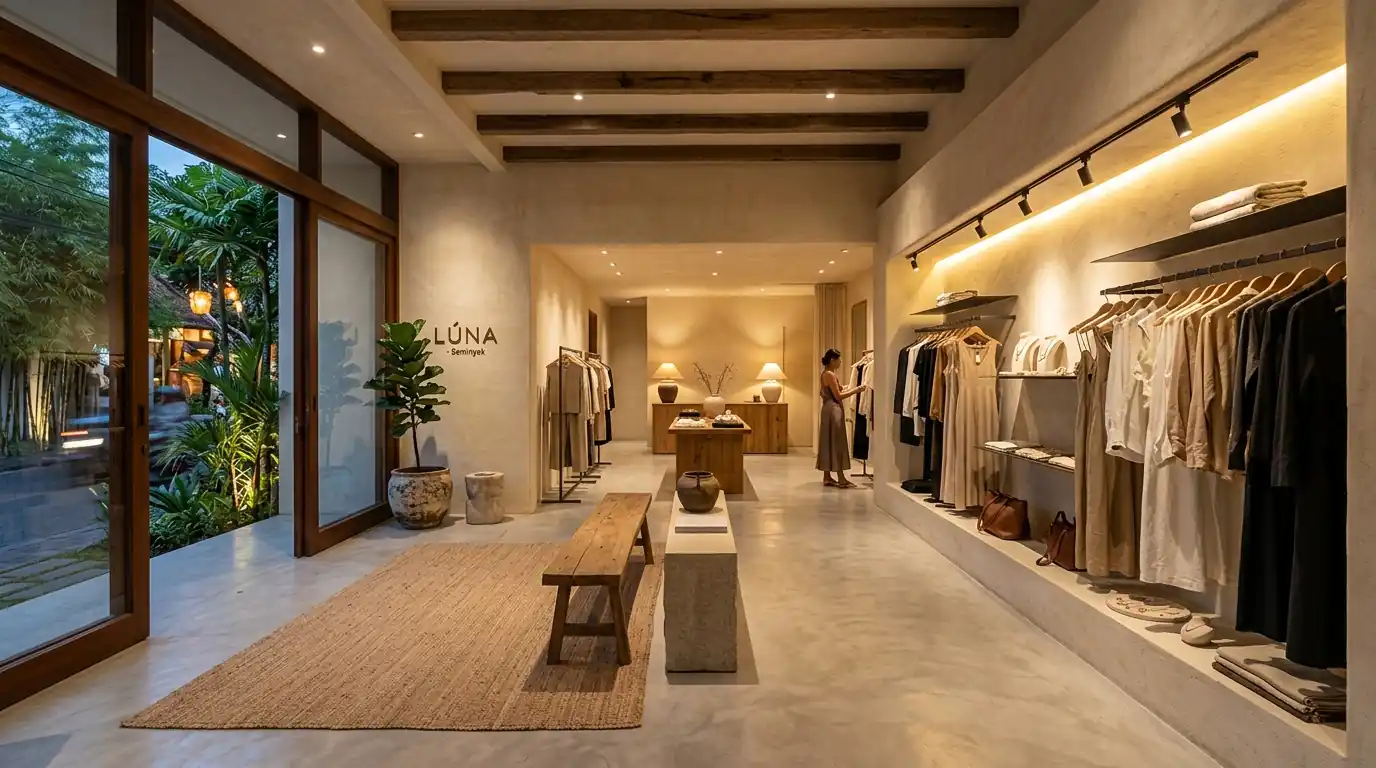
The most profitable retail interior design layout utilizes a counter-clockwise traffic flow, starting with a clear Decompression Zone at the entrance. It immediately guides customers to a “Power Wall” on the right side to showcase high-margin inventory, utilizes high-CRI lighting to elevate perceived product value, and features climate-controlled fitting rooms to maximize physical conversion rates.
Key elements of a high-converting boutique:
- The Decompression Zone: A 10-foot open space for psychological adjustment.
- The Right-Turn Rule: Placing hero products on the right-hand Power Wall.
- High-CRI 3000K Lighting: Making textures and jewelry colors pop.
- Front-Lit Fitting Rooms: Flattering illumination where the final decision is made.
- Husband Seating: Comfortable lounge areas to increase shopper dwell time.
Retail Interior Design Bali: The Physics of the Decompression Zone
This is the most critical and most misunderstood square footage in your entire store. In retail interior design Bali, getting this zone wrong is the single most common — and most expensive — mistake first-time boutique investors make.
The “Decompression Zone” is the first 10 to 15 feet of space immediately inside your front door. In Bali, this zone is absolutely vital. A tourist is walking off the street—they are sweating from the 32-degree tropical heat, dodging aggressive scooters, and overwhelmed by the noise. When they step through your doors, their brain needs 3 to 4 seconds to physically and psychologically adjust to the cool AC, the new lighting, and the scent of your store.
During this adjustment period, they are legally blind to your products.
If you place your highest-margin items, expensive jewelry displays, or critical promotional signage right at the front door, the customer will walk straight past it without even registering it exists. You must leave this entrance zone completely open and uncluttered. Let them cool down, catch their breath, and transition into a buying mindset before you hit them with your merchandise.
The “Right-Turn” Rule and The Power Wall
Retail architecture in retail interior design Bali is basically the study of human predictability. Retail designers have planned around the “invariant right” ever since Paco Underhill named it: the tendency of shoppers to drift right on entering. Treat it as a rule of thumb rather than a law, and check it against how your own customers actually move.
You must lean into this deeply ingrained biological habit. Your layout should actively guide the customer into a counter-clockwise loop around your boutique.
Because they turn right, the first wall they see on their right-hand side is known as your “Power Wall.” This is the highest-converting real estate in your entire business. This is not where you put basic t-shirts or discounted items. The Power Wall is strictly reserved for your highest-margin hero products, your most visually striking visual merchandising (VM) displays, and your newest collections.
Retail Interior Design Bali: Lighting is Your Best Salesperson
The fastest way to bankrupt a retail brand is to use cheap, flat lighting.
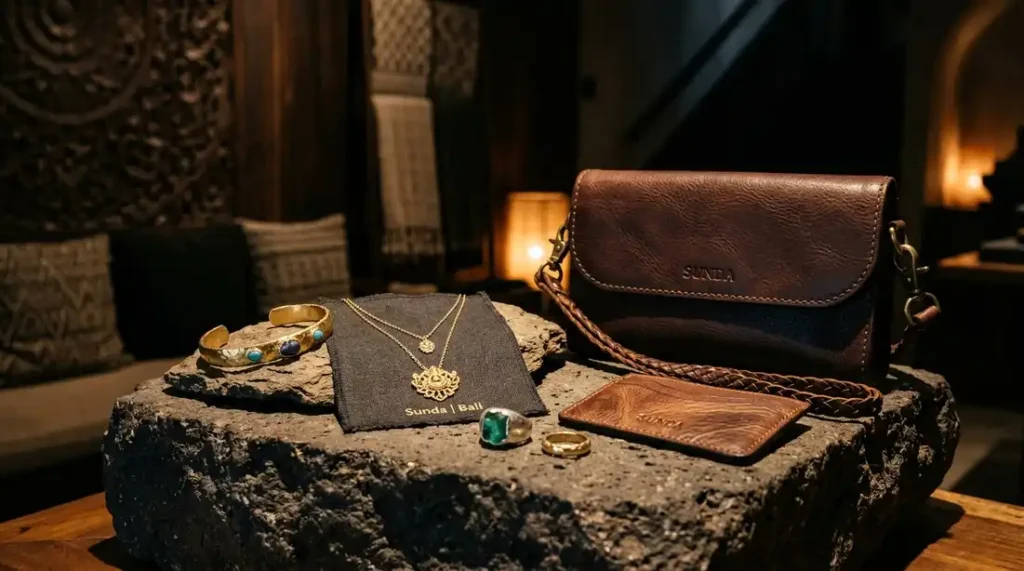
If you are selling a silk dress or a silver ring but light it with basic, low-quality LED panels, it will look like market stock. The key technique in high-end retail is High CRI (Color Rendering Index) lighting.
Standard lighting makes colors look dull and washed out. You must specify lighting fixtures with a CRI of 95 or higher. This mimics natural sunlight, pulling out the rich, vibrant textures of fabrics and making jewelry catch the light brilliantly.
Furthermore, you have to nail the Color Temperature. Do not use 6000K cold-white lights; your boutique will feel like a sterile hospital or a cheap minimart. For luxury fashion and lifestyle brands, you need 3000K to 3500K warm-white lighting. It feels premium, inviting, and highly flattering to the human skin tone.
The Fitting Room: Where the Decision is Made
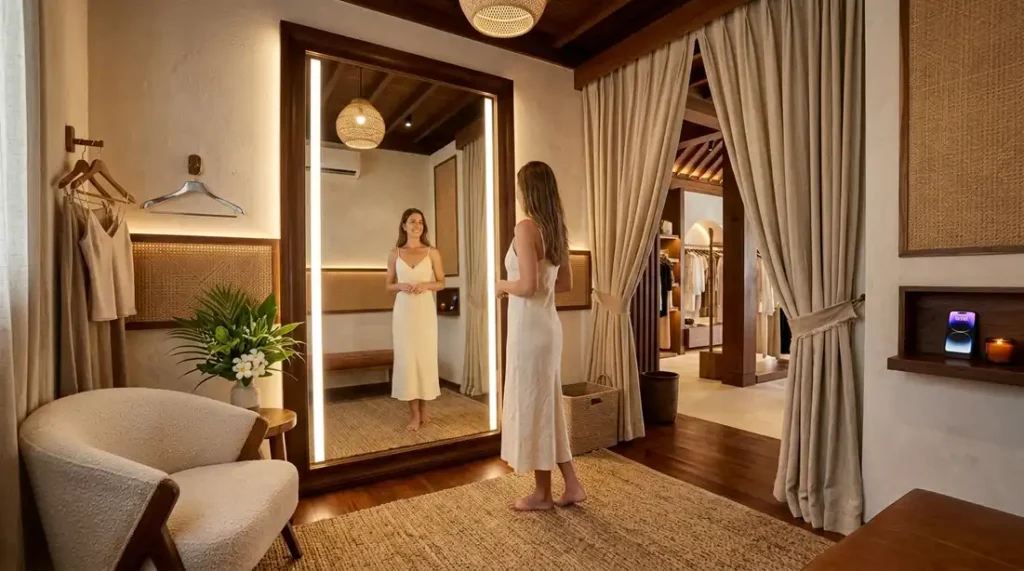
In retail interior design Bali, the fitting room is the highest-converting square meter in the entire boutique. The customer does not decide to buy the dress on the shop floor — they decide in the mirror. Yet, investors constantly treat fitting rooms as an afterthought, shoving them into a cramped, dark corner at the back.
If a customer feels hot, claustrophobic, and ugly in your fitting room, they will leave the clothes on the hook and walk out.
- Flattering Illumination: Never use harsh overhead lighting in a fitting room. It creates aggressive, dark shadows under the eyes and chin. You must install vertical, front-lit illumination running down the sides of the mirror. This blasts the customer with soft, flattering, shadow-free light, making them look incredible in your garments.
- Climate Control: Trying on clothes in the tropics is exhausting. You must have dedicated AC vents directly inside or pointing into the fitting rooms to keep the customer cool while they change.
- The Luxury Textures: Ditch the cheap wooden doors. Use massive, heavy, velvet or heavy-linen curtains that pool on the floor, paired with thick, sound-absorbing rugs. The physical weight of the materials subconsciously signals luxury.
The Tactical “Husband Seating” Strategy
This is a quiet operational secret among top-tier retail consultants. If a woman is shopping, but her partner (who has been dragged along in the Bali heat) is standing awkwardly in the corner looking at his watch, she will feel rushed. She will buy one item and quickly leave.
You have to neutralize the impatient partner.
Build an exceptionally comfortable, deeply shaded lounge area near the fitting rooms or the back of the store. Equip it with plush seating, dedicated AC directly overhead, free high-speed Wi-Fi, and built-in phone charging ports. When the partner sits down and gets lost in their phone, the shopper feels completely relaxed. Her “dwell time” doubles, and your Average Order Value increases significantly.
HVAC and Olfactive Branding (Scent Marketing)
Sight is important, but scent triggers memory and emotion faster than any other sense.
If you are selling high-end organic linen in Pererenan, your store cannot smell like the motorcycle exhaust from the street outside. Elite retail interior design Bali integrates “Olfactive Branding” directly into the central HVAC system. You pump a signature, subtle scent—like sandalwood, sea salt, or bergamot—through the AC vents.
However, this only works if your mechanical engineering is flawless. If your store does not have “Positive Air Pressure,” the street smells will constantly leak through the front doors every time a customer walks in.
Before you start picking out aesthetic clothing racks or custom terrazzo counters, your commercial infrastructure has to be bulletproof. Navigating Bali’s commercial MEP (Mechanical, Electrical, and Plumbing) requirements for retail spaces is brutal. Make sure you fully understand the heavy engineering required by studying our definitive 2026 playbook for commercial interior design in Bali.
Your boutique’s layout is not just an aesthetic choice. It is a highly engineered machine designed to capture attention and extract revenue. Design it to win.
A hotel lobby sells the same first ninety seconds before a guest checks in. See our guide to boutique hotel lobby design for the hospitality version of this same engineering.
Planning a boutique fit-out in Bali? Tell us what you are working with, and we will map the layout, lighting and fittings around how your customers actually move: see our interior design services.
Frequently Asked Questions About Retail Store Design
The decompression zone is the first 10 to 15 feet inside your front door. It is the physical space where a customer adjusts to your store’s AC, lighting, and layout after coming off the street. Because shoppers are visually overwhelmed here, you must never place high-margin items or critical promotions in this area; leave it open and uncluttered.
Cheap lighting makes expensive products look cheap. Luxury boutiques must use High CRI (Color Rendering Index) lighting of 95 or higher with a warm color temperature (3000K). This mimics natural sunlight, pulling out the vibrant textures of organic fabrics and making jewelry catch the light brilliantly, which subconsciously justifies premium pricing.
Fitting rooms are where the final purchasing decision is made. Never use harsh overhead lighting, which creates aggressive shadows. Use soft, vertical front-lit LED strips alongside the mirrors to flatter the customer. Additionally, integrate dedicated AC vents and heavy luxury curtains to make the space feel premium and physically comfortable.