Last Updated on August 22, 2026 by Wisnu Arista H.
Interior Designer vs Architect vs Contractor in Bali: Who to Hire (and When)
Short answer: they do different jobs, and most villa projects need all three. An architect handles structure, permits, and the building shell; an interior designer handles layout, materials, and how the space looks and lives; a contractor physically builds it. The order you engage them in depends on whether you are building new or renovating. Knowing which is which — and who to bring in first — is the difference between a project that runs smoothly and one that stalls on miscommunication. Here is what each role actually does, who to hire first for your situation, and where you genuinely do not need all three. We work as an interior design studio with in-house furniture production, so coordinating these roles is the part we see go wrong most often.
What Each Role Actually Does
The confusion usually comes from overlap: all three touch the same villa, but they own different decisions. The simplest way to keep them straight is by what each one is responsible for delivering.
| Role | Focus | Delivers | When you need them |
|---|---|---|---|
| Architect | Structure, permits, the building shell | Structural drawings, permit documents, the building envelope | New builds, extensions, or any structural change |
| Interior Designer | Layout, materials, furniture, how it lives | Spatial plans, material and finish specs, furniture, the lived experience | Almost any project — new build or renovation |
| Contractor | The physical build | Construction, trades, on-site execution | Whenever physical building or installation happens |
In short: the architect makes sure it stands and is legal, the interior designer makes sure it works and feels right to live in, and the contractor makes it real. On a full villa they hand off to each other in sequence — which is exactly why the order matters.
Why this trips up foreign owners more than it would at home comes down to the Bali context. Structural work here typically involves permits that take time, the trades and material supply chains are local and best navigated by someone who already knows them, and instructions often cross a language barrier between an overseas owner and an on-the-ground team. Each of those adds a coordination cost that does not exist when you are renovating in your home country — and each is a reason the order you engage these roles, and how well they communicate, matters more here than the roles themselves. Getting the sequence wrong is what turns a six-month project into a twelve-month one.
Who to Hire First (By Project Type)
There is no single right answer — the correct first hire depends on what you are actually doing.
Building a New Villa From Scratch
Start with the architect. Structure, siting, and permits come first, and the interior designer’s work depends on the floor plan and openings the architect sets. Bringing the interior designer in early — while the plans are still flexible — is ideal, because layout and material decisions are cheaper to make on paper than after walls are up. The contractor comes once there is something approved to build.
Renovating an Existing Villa
Start with the interior designer, in most cases. If the renovation is cosmetic or spatial but not structural, the designer can lead and bring in a contractor directly. You only need an architect if you are moving structural walls, changing the roofline, or altering the building envelope — anything that affects how the building stands or what permits it needs.
Furnishing or an Interior-Only Refresh
You likely need only the interior designer, and possibly a few trades for installation. No architect, no main contractor. This is the lightest-touch project, and the one where bringing in the full team would be over-engineering it.
When You Need an Architect vs Just an Interior Designer
Not every project needs an architect — and assuming it does can add cost and time you do not need.
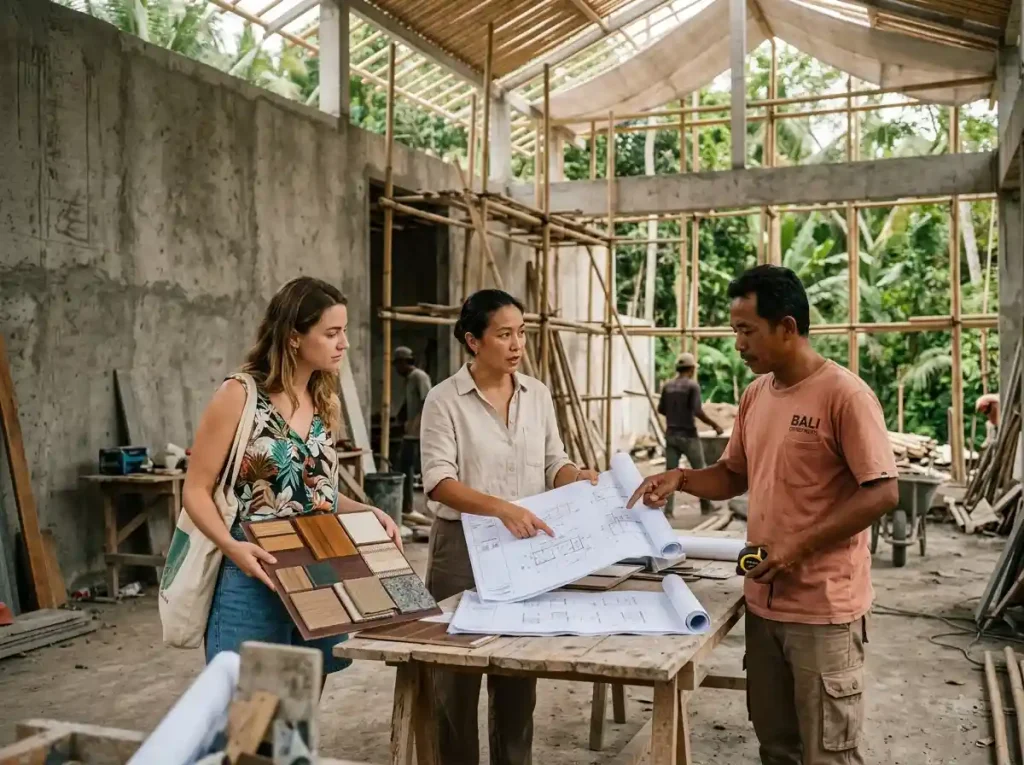
The dividing line is structural. If your project changes how the building stands — new construction, removing or moving load-bearing walls, altering the roof or footprint — you need an architect, and usually permits. If your project works within the existing structure — new layout within the same walls, materials, finishes, furniture, lighting — an interior designer can lead it without one. When you are unsure, the honest test is simple: are you changing the building, or what is inside it? The first needs an architect; the second usually does not.
How They Work Together (And Where the Gaps Appear)
When these roles sit with three separate companies, coordination is where projects slip. The architect’s plan, the designer’s intent, and the contractor’s build have to align — and every handoff between separate parties is a point where information gets lost, responsibility gets blurred, and the owner ends up as the unwilling project manager in the middle.
Coordination still matters, but the fix is not to collapse every role into one company. On our projects, design and furniture manufacturing sit under one roof: layouts, material specifications, and the joinery and loose furniture that fill the space are resolved together rather than negotiated across separate contracts. Construction stays with your architect and contractor. What changes is that our interior design service in Bali hands over intent already translated into buildable, production-ready detail, so the gap between the drawing and the delivered room closes before it becomes a site problem.
Not Sure Which You Need?
The fastest way to know which professionals your project actually requires is to talk through the specifics. Book a free design consultation and we will tell you honestly what your project needs — and what it does not.
For a full walkthrough of how a project unfolds — from first brief to handover — see the interior design process in Bali.
FAQ — Interior Designer vs Architect in Bali
Not always. You need an architect if your project is structural — a new build, an extension, or moving load-bearing elements. You need an interior designer for layout, materials, and furnishing. Many renovations need only the designer; full builds usually need both, working in sequence.
For a new build, the architect first — structure and permits set the framework the designer works within, though bringing the designer in early saves rework. For a renovation within existing walls, the interior designer usually leads and engages the others as needed. The project type decides the order.
Yes, when the work is non-structural. If you are reconfiguring layout within existing walls, selecting materials, or furnishing, an interior designer can lead the project and bring in trades directly. You only need an architect once the work affects the building’s structure, roofline, or footprint, which usually also triggers permits.
A designer decides what gets built and specified — layout, materials, finishes, how the space works. A contractor executes the physical build. The designer makes the decisions; the contractor carries them out. On well-run projects the two work closely, but they are different roles and should not be treated as interchangeable.
Partly. An integrated design studio brings design and in-house furniture production under one roof, so layout, specification, and the pieces that fill the room are handled by one accountable team. Civil construction still sits with your contractor, and complex structural work still needs an architect, but there are far fewer separate contracts and handoffs to manage.