Last Updated on October 1, 2026 by Wisnu Arista H.
Commercial Interior Design Bali: The 2026 Playbook
Let’s get straight to the brutal business reality. In Bali’s ruthless hospitality market, getting the interiors wrong is one of the costliest mistakes an F&B operator can make.
You may hire a Michelin-trained chef, import top mixologists from Singapore or London, and pour budget into influencer marketing. If your venue does not captivate guests the moment they walk through the door, you will not survive your first year of operations.
This is why getting your interior design in Bali right, specifically for commercial spaces, matters so much. It is one of the most critical upfront investments an F&B operator can make.
Designing a commercial space is a completely different beast than designing a private luxury holiday villa. A villa is built for passive comfort and low occupancy. A commercial venue is a high-volume machine built for psychological impact, operational efficiency, brutal wear-and-tear, and ultimately, printing money.
In 2026, your venue’s architecture and aesthetics must act as your most effective marketing channel. So here is the practical blueprint for building hospitality venues that will outperform competitors across the island.
The Aesthetic ROI: Why Design is Your Pre-Paid Marketing Budget
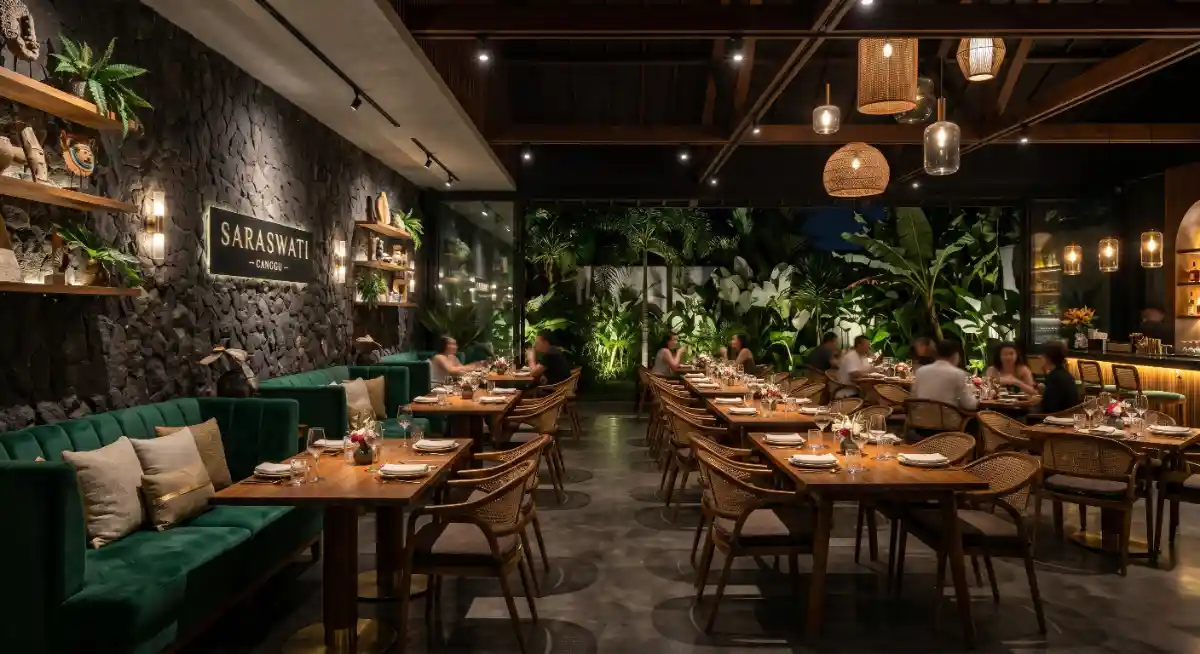
People no longer go to cafes, restaurants, or beach clubs just to eat food and drink coffee. They go to capture content, elevate their social status, and buy into a highly curated lifestyle.
If your space is not visually arresting from multiple angles, you are essentially invisible. The modern tourist and the lucrative expat crowd will move on. A viral venue in 2026 is not cheap neon signs, generic plastic flower walls, or boho-chic macrame from the 2018 era. The market has matured far beyond that.
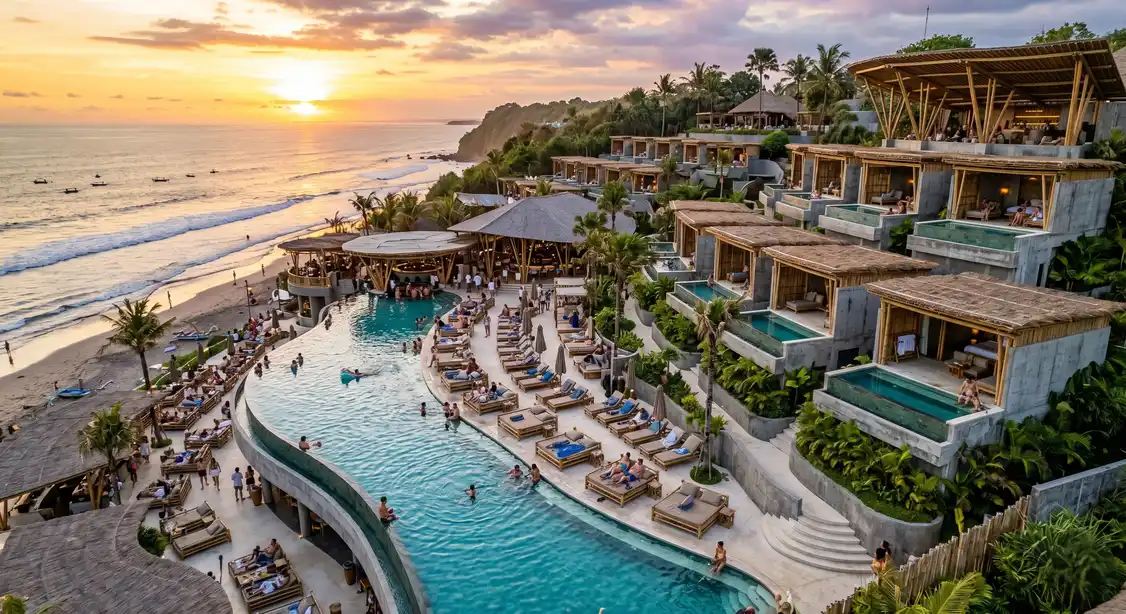
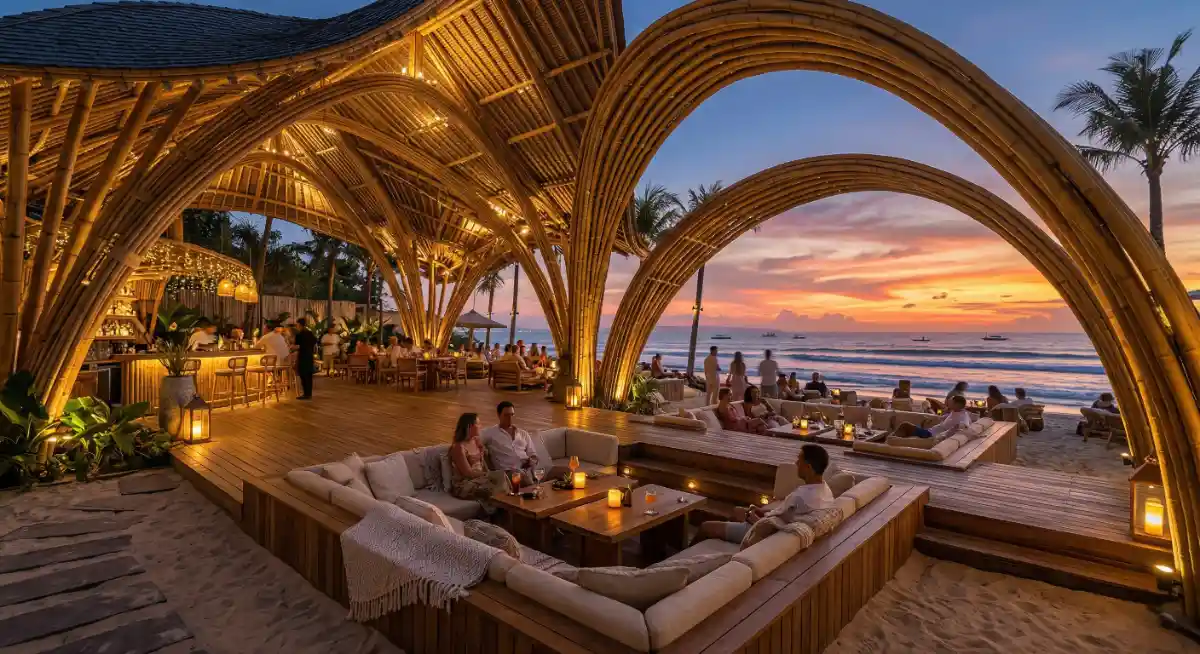
Today, high-end commercial spaces are utilizing extreme, bespoke architectural focal points that force people to pull out their phones. Think massive indoor cascading waterfalls that passively cool the air. Or brutalist board-formed concrete arches framing the Indian Ocean. Or custom 3D-printed bamboo ceilings spanning entire multi-level dining rooms. This holds true across every venue type, from beach club design in Bali to boutique hotel lobbies. The architecture must earn its place as the brand’s loudest marketing asset.
When your interior design in Bali is breathtaking, original, and highly photogenic, your customers do the heavy lifting for you. They post it on Instagram. Then review it on TikTok. They tag their friends. Your Customer Acquisition Cost (CAC) drops with every post.
That is the true definition of Aesthetic ROI. You are not just paying for a fit-out. You are prepaying your global marketing budget for the next five to ten years.
The 3 Pillars of Commercial Interior Design in Bali
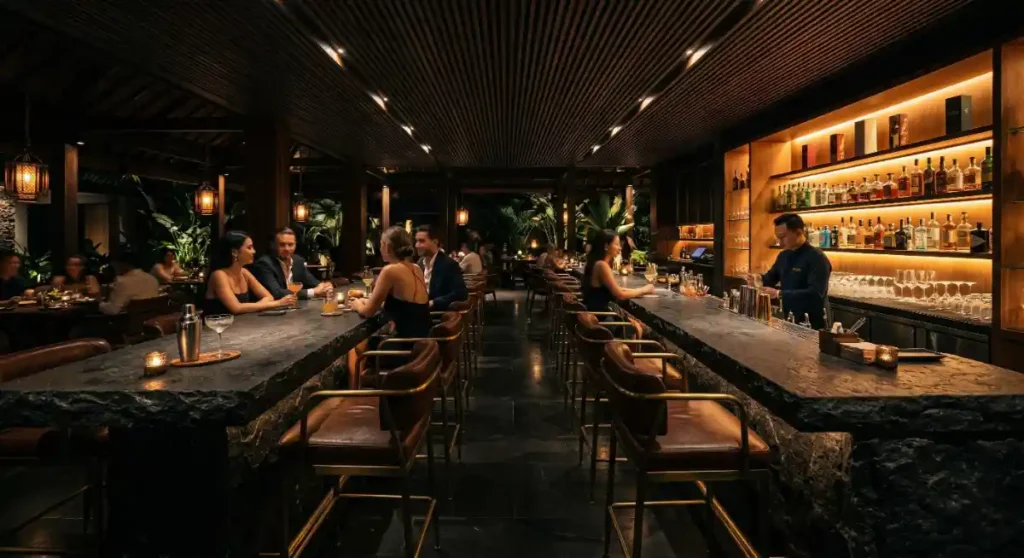
You are building a high-traffic machine. Treat a commercial build like a residential project and the venue falls apart within six months. This is especially visible in restaurant interior design in Bali. Acoustic failure is the most overlooked and most costly design mistake.
Here is what separates amateur pop-ups from high-performing hospitality venues:
Why Does Acoustic Engineering Make or Break a Restaurant in Bali?
This is an underrated reason why restaurants fail, and most owners never even realize it until the negative TripAdvisor reviews start pouring in complaining about the “terrible vibe.”
If you build a stunning, minimalist venue using nothing but glass windows, polished concrete floors, and exposed steel beams, you have just accidentally created a massive echo chamber. When the venue fills on a Friday night, every sound bounces violently off the hard surfaces. Clinking cutlery, espresso machines, DJ bass, shouting guests: all of it ricochets.
The ambient noise becomes unbearable. Guests cannot hear their dates. They will get headaches, eat their food quickly, leave early, and never return.
Elite commercial designers aggressively integrate invisible acoustic dampening from day one.
- The Ceiling: hidden acoustic plaster (like Ecophon Fade or BASWAphon) that looks exactly like normal painted drywall. It achieves an NRC rating of up to 0.90, absorbing up to 90% of sound energy that hits it.
- The Walls: Installing strategic wood-slat paneling backed with high-density acoustic foam to absorb high-frequency sound waves.
- The Soft Furnishings: Massive fabric art installations, thick window drapery, and upholstered dining chairs. These soften the room’s energy while keeping the vibe vibrant.
This is the non-negotiable baseline. No acoustic engineering means no repeat business, regardless of how good the food is.
What Materials Should You Use for a High-Traffic Commercial Interior in Bali?
A private luxury villa hosts a family of four. A commercial beach club in Seminyak hosts thousands of wet, sandy, and intoxicated tourists every single week.
Soft residential fabrics, delicate Carrara marble, and standard ceramic tiles have no place in a high-volume bar. You need commercial-grade durability that meticulously mimics the look of high-end luxury. Cheap out on CapEx during the build and the OpEx will bankrupt you through constant repairs.
- Commercial Flooring: Ditch standard ceramics immediately. Use scratch-resistant microcement, heavy-duty epoxy terrazzo, or flamed granite. All three provide essential anti-slip safety even when covered in spilled drinks or rain.
- Heavy-Duty Woodwork: Specify heavily sealed, marine-grade teak or Kayu Ulin (ironwood). It must survive spilled cocktails, extreme tropical humidity, and daily chemical cleaning by staff.
- Performance Upholstery: Do not use pure linen or velvet for commercial seating. For indoor upholstery, specify performance fabrics like Crypton. For outdoor furniture Bali and semi-open areas, use Sunbrella. For highest-traffic seating, use commercial-grade faux leather rated for heavy commercial traffic on the Wyzenbeek scale, not a residential rating. All three repel red wine and resist UV fading in the tropical sun.
- The Metal Threat: Bali’s salty ocean air is brutal. If your designer specifies standard mild steel for exterior fixtures, it will rust fast in salt air. You must insist on 316 Marine-Grade Stainless Steel or heavy powder-coated aluminum for any metal exposed to the elements.
Coastal sites outside Bali push the same material choices further. For an exposed island site, see our guide to restaurant furniture in Lombok.
Hotels on the same coast face the same problem at a larger scale. For guest rooms and lobbies, see our guide to hotel furniture in Lombok.
How Do You Design Lighting That Shifts a Bali Venue from Daytime to Evening Revenue?
Your venue needs to sell avocado toast and matcha lattes at 10:00 AM, and premium cocktails at 10:00 PM. The same lighting setup will not work for both. In a commercial venue, the lighting system is not a finishing touch. It is a revenue tool. It shifts consumer psychology from high-turnover daytime to high-spend evening mode. Nailing that daytime trade is the core of café interior design in Bali.
Commercial lighting is a highly specialized science that directly affects consumer psychology and how much they spend. You need a centralized, automated smart-lighting system on industry-standard protocols like DALI or KNX. It must shift automatically with the sun.
- Daytime Optimization: Maximize natural sunlight through massive skylights and open facades. This creates a fresh, energetic atmosphere that drives high table turnover through lunch.
- The Sunset Transition: As the sun dips, the system must seamlessly transition into a moody, sexy, and intimate lounge atmosphere. This slows down the guests, encouraging them to order a second bottle of wine.
- Precision Illumination: Use hidden LED floor washes to guide foot traffic safely. Add warm 2700K to 2400K narrow-beam pin lights aimed at the center of each table. They illuminate food without blinding guests. Complete the setup with heavily backlit bar displays that turn premium liquor bottles into glowing art pieces.
The Golden Ratio of Commercial Interior Design Bali
A beautiful dining room is entirely useless if the kitchen cannot physically push out the food fast enough to feed the seats.
Amateur investors always make the same fatal mistake. They maximize the dining area (Front of House / FOH) to cram in as many customers as possible. The kitchen and storage (Back of House / BOH) ends up the size of a shoebox.
The industry rule of thumb for restaurants is the 60/40 Rule.
- 60% of your total square meterage is dedicated to the FOH (Dining, Bar, Reception, Restrooms, and Instagram zones).
- 40% MUST go to the BOH: Commercial Kitchen, Cold Prep Areas, Hot Line, Dish Pit, Dry Storage, Walk-in Chillers, Staff Lockers, and Manager’s Office.
Squeeze the BOH to 20% and the operation collapses. Service times stretch out. Food goes out cold. Staff bump into each other constantly and turnover skyrockets in a cramped, miserable environment. Commercial interior design Bali is fundamentally about spatial math and protecting the operational workflow.
Zoning and The Operational Blueprint
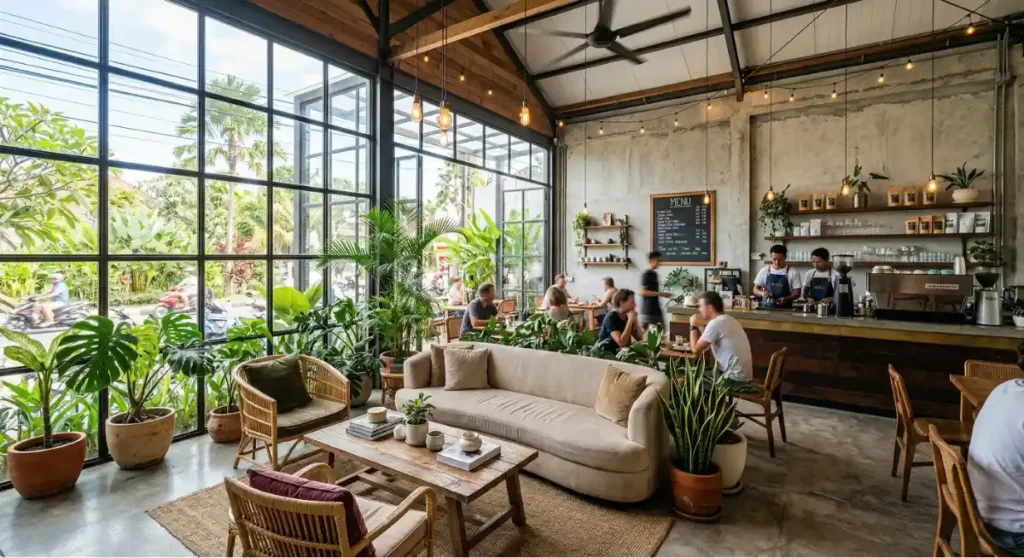
Once the FOH/BOH ratio is locked, the next phase is operational zoning. This means mapping the Customer Journey against the Staff Journey so these two paths never collide.
- The Waiter Stations (POS): Are POS systems, water jugs, and cutlery hidden from the guests’ direct sightline? They must also be easily accessible to staff. Every extra step a waiter takes across the dining room costs you time and lowers your table turnover rate.
- The Pass: Is the kitchen pass positioned for maximum speed? Can the expediter see the dining room floor to gauge the pace of the meal?
- The Restroom Psychology: Are the restrooms easily accessible but acoustically and visually isolated from the VIP dining areas? Nobody wants to eat a signature steak next to the bathroom door.
- The “Content” Zones: In 2026, you must specifically zone areas for photos. If your best architectural feature sits next to the kitchen door, influencers will block your waiters. Designate specific, highly aesthetic “dead zones” purely for content creation so the operational flow remains uninterrupted.
- Eliminating Dead Zones: Every single square meter of your venue costs you monthly rent. This revenue-per-square-meter discipline applies across all venue types, from coworking space design in Bali to beach clubs. Every zone must justify its footprint. Dead zones bleed money. If customers avoid a section because of bad lighting, a drafty vent or proximity to the kitchen doors, that lost floor area shows up in the monthly takings.
Navigating Bali’s Commercial MEP Codes
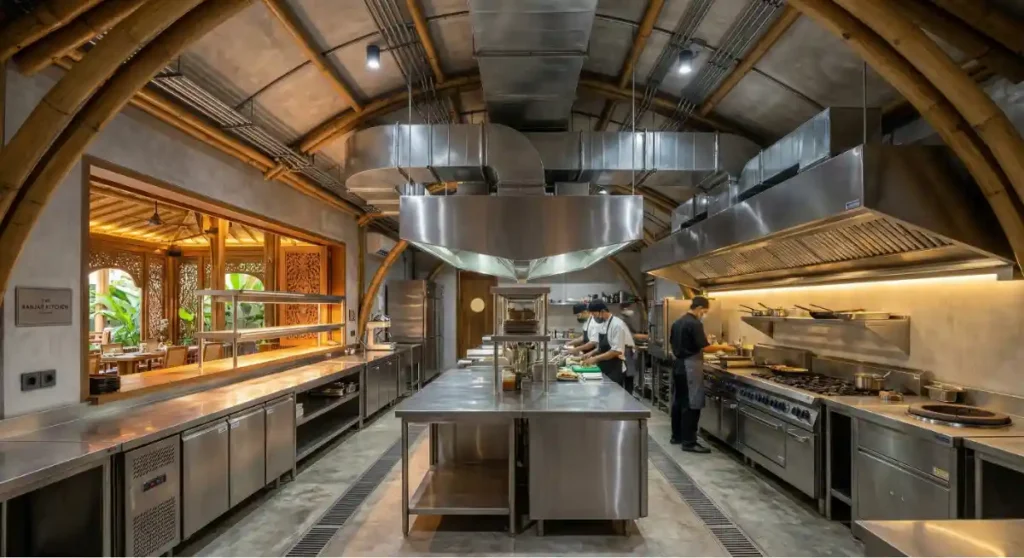
This is where the Pinterest dream meets the dirt. In a commercial venue, MEP is the skeleton of the build. It must be fully engineered before the visual concept is locked, not retrofitted around it. Before you pick out paint colors or decorative pillows, you have to engineer the heavy guts of the building. MEP stands for Mechanical, Electrical, and Plumbing. In Bali, this is the hardest part of any commercial build.
- Industrial Plumbing & Waste Management: Commercial venues require massive grease traps buried deep in the foundation. Without them, the local sewage system backs up and shuts down the business. Furthermore, eco-conscious regulations now demand greywater recycling systems to handle the massive water output of a commercial kitchen.
- Three-Phase Power & Voltage Stability: Bali’s power grid fluctuates wildly. You require heavy-duty, three-phase electrical panels. More importantly, you need massive industrial voltage stabilizers. A voltage drop during peak hours can instantly fry the motherboards of your espresso machines and combi-ovens.
- Exhaust and Ventilation: A commercial kitchen generates significant heat and smoke. You require sophisticated fresh-air intake systems and massive stainless steel commercial exhaust hoods. If your designer cannot conceal the AC ducting and exhaust pipes within the ceiling design, the luxury venue looks like a warehouse.
Commercial Permitting and Banjar Regulations
For a commercial venue in Bali, the permit process is not a formality. It is a design constraint. The wrong zoning classification or a missed fire code requirement can chain your doors shut before opening night.
- PBG and SLF: A commercial space requires a Persetujuan Bangunan Gedung (PBG) zoned for commercial use. This is followed by a Sertifikat Laik Fungsi (SLF), certifying the building is safe for public occupancy. Your architect must design to these codes from day one: fire exits, fire suppression systems, and wheelchair accessibility ramps.
- Banjar Regulations (Local Village Rules): Bali is governed at the micro-level by the local Banjar. If you are building an open-air beach club or a DJ venue in Pererenan or Ubud, local Banjar noise regulations are non-negotiable. Design with them from day one. You need directional speakers and acoustic barriers facing outward so you do not disturb the local temples or residential neighborhoods.
The Art of Value Engineering
A commercial fit-out does not require a blank check. It requires a disciplined approach to value engineering.
This means reviewing the architectural plans and swapping out expensive materials or methods for cost-effective alternatives. They must perform the same function without sacrificing the visual aesthetic.
Take the 10-meter bar top. Instead of importing Italian marble, which stains from lime juice, a smart designer specs engineered quartz or custom poured terrazzo. It looks just as luxurious and costs significantly less. Unlike natural marble, it will not etch or stain from a spilled Negroni: the pragmatic choice for a high-volume bar top.
The same logic applies to retail interior design in Bali. Value engineering is not corner-cutting. It means specifying materials that perform at luxury level without the import cost.
Partnering with the Suitable Commercial Interior Designer
You can’t just hire a residential home builder to construct a commercial F&B empire. The gap between a residential project and commercial interior design Bali is not incremental. It is structural, regulatory, and operational. Commercial projects involve heavy-duty MEP requirements, spatial psychology, value engineering, and complex building permits. None of this exists in a three-bedroom holiday villa.
You need a firm that speaks both the brutal language of hospitality operations and CapEx management. Whether the brief is a boutique hotel lobby design in Bali or a multi-level F&B complex, the build complexity is identical. So is the margin for error.
Before the first column goes in the ground, get the brief right. Our team covers the interior side of the project: spatial zoning, material selection, custom furniture and fit-out supervision, working alongside your architect and MEP engineer on permits and services. Our recent commercial and hospitality projects are listed below. Not sure where to start? Read our guide on how to hire an interior designer in Bali before you commit to a firm.
Recent Commercial and Hospitality Projects
A portfolio says more than a playbook. These six commercial commissions show how the principles above resolve across very different venue types:
- Lokalé Pererenan: interiors, custom furniture and outdoor design for the bamboo lobby of a commercial luxury villa complex in Pererenan, completed in 2025.
- Nasi Lemak Wak Teni, Discovery Mall: an F&B outlet designed for a high-traffic mall location, completed in 2026.
- Alpha Prime Office: a workplace fit-out in Berawa, designed from a measured survey of an existing shophouse.
- Micro Hotel Lobby, Canggu: a compact hotel lobby where zoning had to do the work of a much larger space.
- Giselle Marketing Gallery, Seseh: a property marketing gallery, design complete and handed over to the client.
- Lokalé Management Building, Canggu: the property management office for the same villa group in Kayu Tulang, design complete.
If you are planning a venue in Bali, our Bali interior design studio can take the interior brief from zoning and acoustics through to furniture and fit-out supervision, working alongside your architect and MEP engineer. Send us the site and the concept, and we will tell you what it needs.
FAQ (Commercial Interior Design Bali)
Absolutely. Building a commercial space requires a PBG (Persetujuan Bangunan Gedung) specifically zoned for commercial use, followed by an SLF (Sertifikat Laik Fungsi). You cannot legally run a high-traffic business on a residential building permit. Commercial codes also mandate strict fire safety, MEP standards, and accessibility ramps.
A full commercial build in Bali runs 12 to 24 months from design brief to opening day. The design phase typically takes 6 to 10 weeks. PBG permitting alone can run 3 to 6 months depending on the land zone and project scale. The physical build for a mid-to-large F&B venue adds another 6 to 12 months. Budget extra time for MEP rough-ins and final SLF inspection before you can legally open to the public.
Minimalist tropical designs heavily feature hard surfaces like polished concrete, glass, and steel. Without hidden acoustic plaster or baffling, these materials create massive echo chambers. High ambient noise levels cause dining fatigue, driving customers away and devastating your repeat business.
We cover the interior side of the project: spatial zoning, material selection, custom furniture and fit-out supervision. Your architect and MEP engineer handle permits and services, and we work alongside them from the brief onward.
It is a common planning rule that gives about 60% of a restaurant’s floor area to the dining room and 40% to the kitchen and food prep areas. Treat it as a starting point, then adjust for your menu and service style.