Last Updated on June 29, 2026 by Wisnu Arista H.
Tropical Modern Interior Design in Bali: Clean Lines, Warm Materials
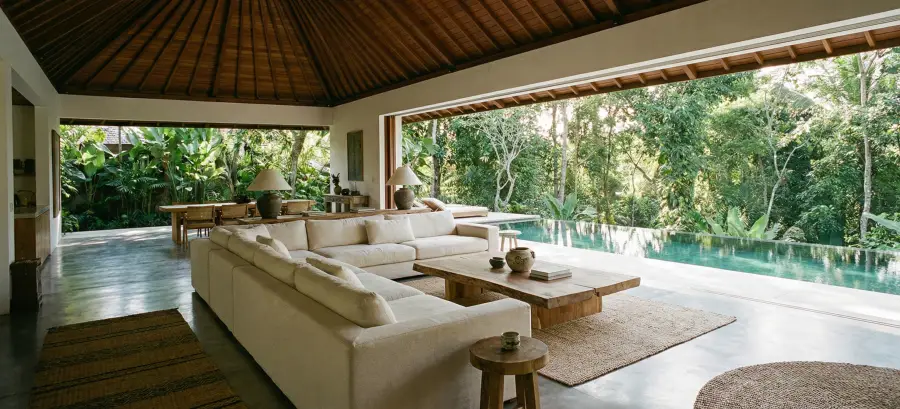
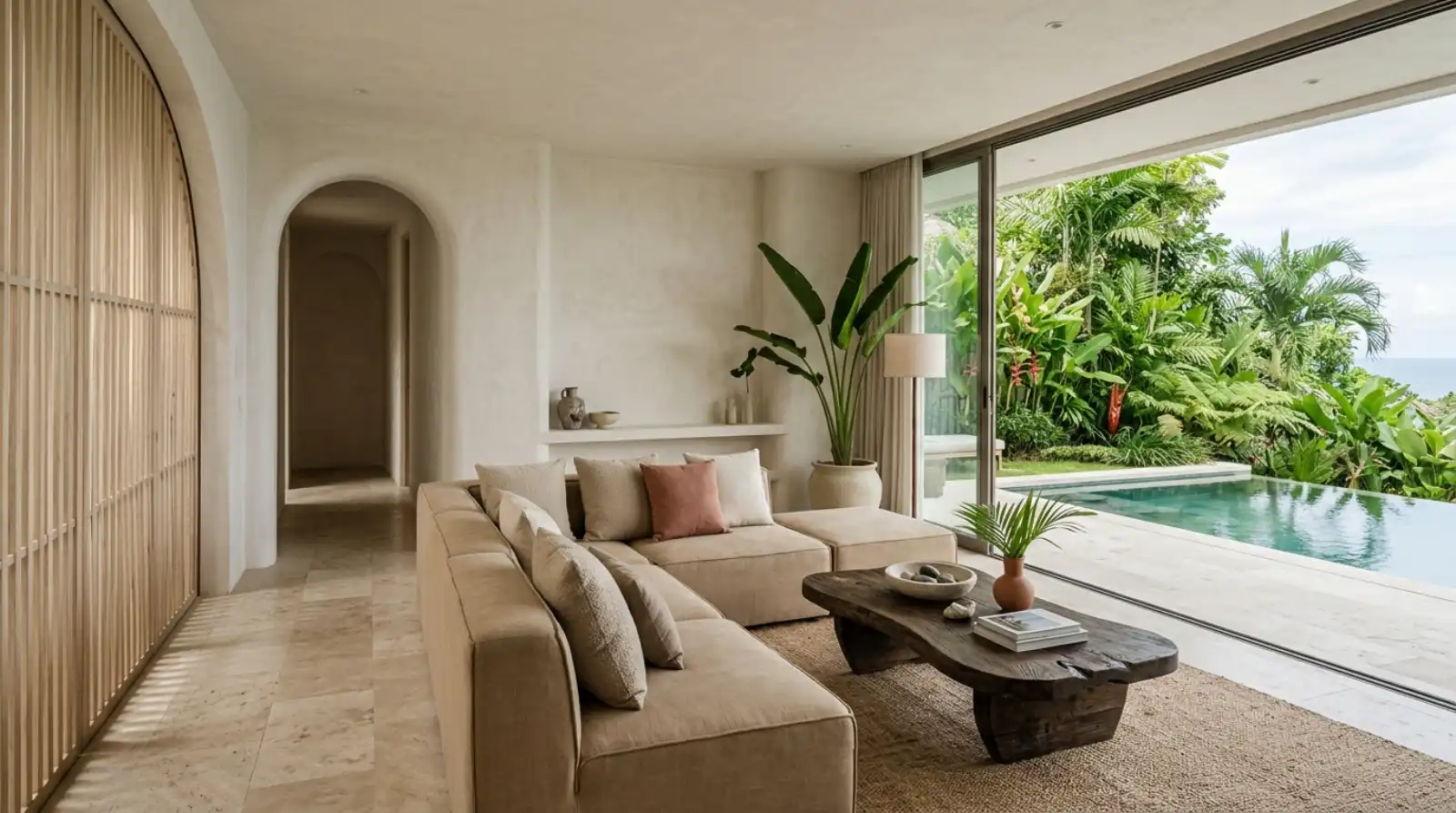
Tropical modern interior design in Bali takes the clean lines of contemporary design and warms them up. That warmth comes from natural materials, soft light and a constant connection to the outdoors. It is the look behind most of the island’s new villas: pared back but never cold, modern but unmistakably tropical. Think microcement walls, travertine floors, timber screens and a living room that opens straight onto the garden. This guide breaks down what defines the style, the materials that carry it, and how to get it right in Bali’s climate. It is one of several looks we cover in our guide to Bali interior design styles.
What Is Tropical Modern Interior Design?
Tropical modern is contemporary design adapted to a hot, humid, indoor-outdoor climate. It keeps the simplicity of modern interiors: the clean lines, the uncluttered space, the restrained palette. What it trades away is the cold, hard edge, in favour of warm, tactile, natural materials. The result reads calm and current without feeling like a showroom.
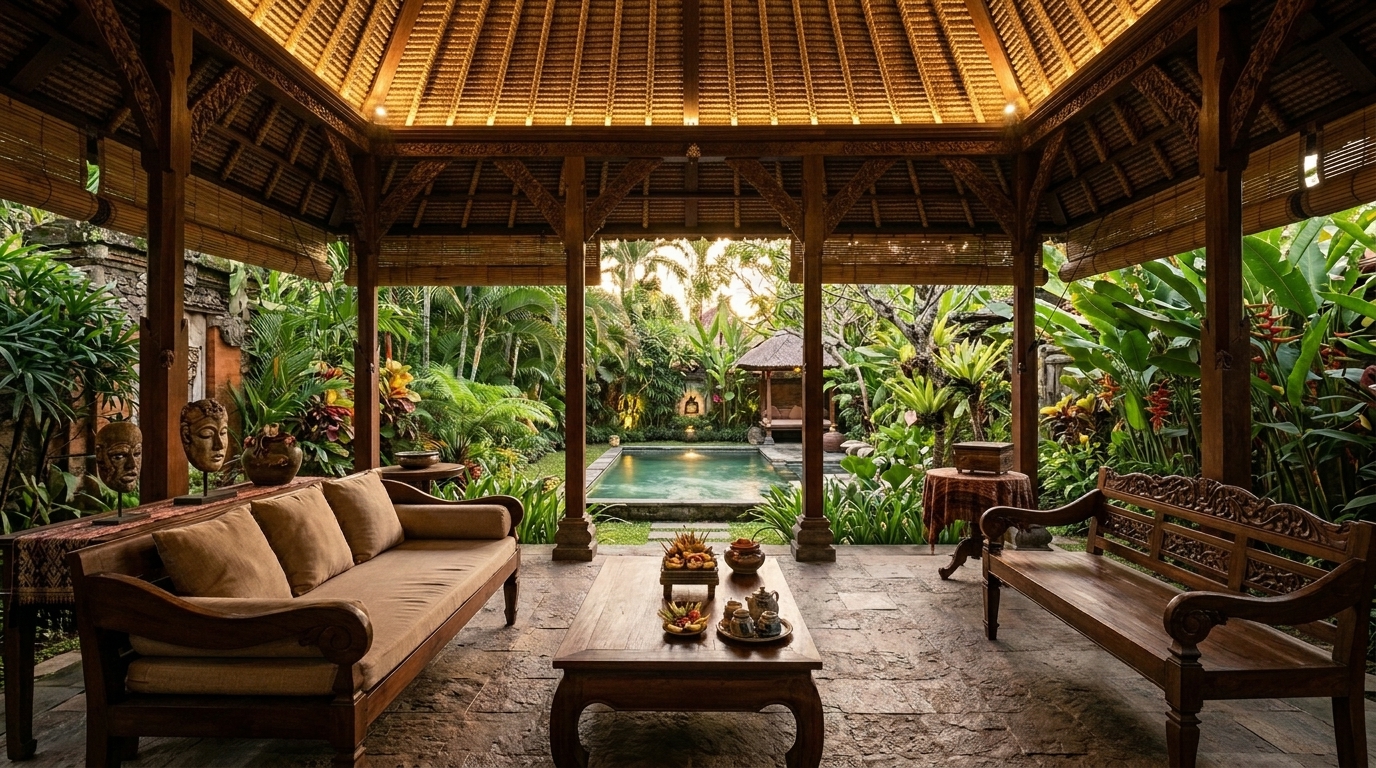
The style sits between two extremes. On one side is traditional Balinese design, rich with carved timber and ornate detail. On the other is stark international minimalism that ignores the climate entirely. Tropical modern borrows the discipline of the minimalist and the warmth and craft of the Balinese, and lands somewhere comfortable in between.
The Materials That Define the Look
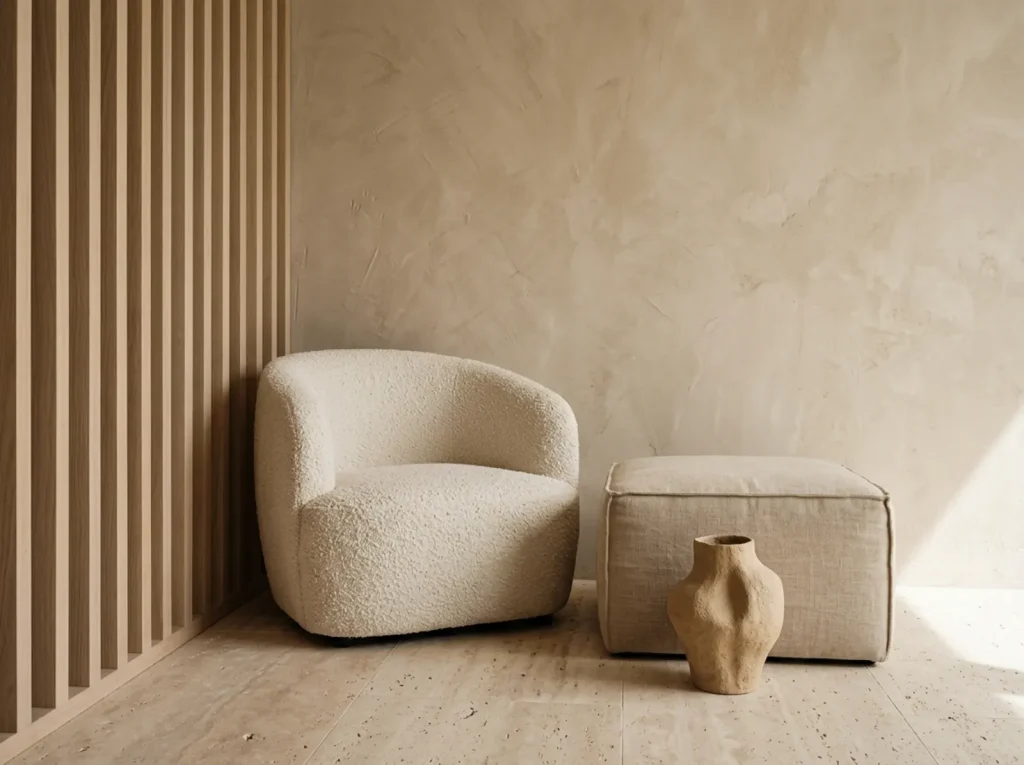
Materials do most of the work in a tropical modern interior. The palette leans on a handful of natural, tactile surfaces that feel contemporary without turning industrial:
- Microcement and limewash for seamless, warm walls
- Travertine and honed natural stone underfoot
- Pale timber for screens, joinery and ceilings
- Linen, bouclé and rattan for softness and texture
Texture matters more than colour. A microcement wall, a rough travertine floor and a slatted timber screen give a room real depth on their own. No bright colour is needed, and natural fibres keep the hard surfaces from feeling severe. What you will not find is high gloss or cold metal. Polished finishes throw glare in Bali’s strong light and sit awkwardly against the landscape, so tropical modern stays matte, grounded and tactile throughout.
Designing for the Bali Climate, Not Against It
The defining move of tropical modern is dissolving the wall between inside and out. Sliding doors retract fully, and floor levels run continuous from the living room to the terrace. The same stone flows out to the pool deck, so the eye reads one space rather than two.
This is a climate strategy as much as a look. Cross-ventilation, deep overhangs and generous shade keep a room comfortable without leaning on air conditioning. Natural daylight is treated as the main source of light. Handled well, it becomes the heart of good indoor-outdoor design, the quality that makes a Bali home feel unmistakably like Bali.
Bali’s humidity averages 80–85% year-round — Denpasar climate records show it stays above 80% in every month of the year. That sustained level is why material selection matters so much more here than in a temperate climate: it is the force that warps cheap timber, feeds mould on porous surfaces and corrodes uncoated metals within a season or two.
Warm Minimalism, Not Cold Minimalism
The most common mistake with modern design in the tropics is reaching for cold minimalism: white walls, grey concrete, hard edges and nothing soft. It photographs sharp and lives badly. Rooms turn echoey and stark, and the whole thing feels at odds with the warmth just outside the door.
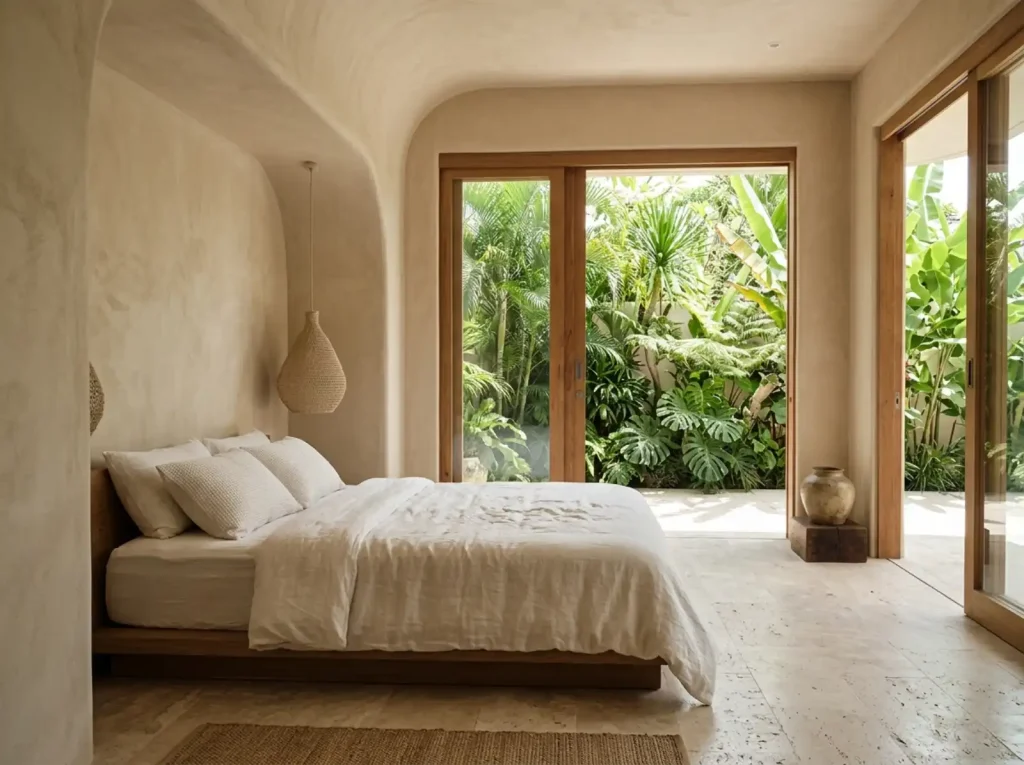
Tropical modern is warm minimalism instead. The restraint stays, but every surface invites touch and the palette is built from earth and sand rather than white and grey. In our own work we lean hard in this direction. We favour curved plaster over sharp corners, warm neutrals over clinical white, and one or two sculptural, handmade pieces in a room so it never feels mass-produced.
Getting the Palette and the Details Right
Colour is quiet by design. The base is a warm neutral, somewhere in the range of sand, oat, putty and clay, with depth coming from texture and natural grain rather than bold hues. A single muted accent, a terracotta cushion or a charcoal stone bowl, is usually all a room needs.
The current version of the style also carries an organic edge. Curved plaster forms, arched openings, rounded furniture and sculptural lighting have replaced the flat, boxy lines of a decade ago. Those soft shapes are the clearest sign of a 2026 tropical modern villa rather than a dated one.
Common Tropical Modern Mistakes
A few habits quietly undo the look. Going too cold is the first, trading warmth for a hard white minimalism that fights the climate. Over-furnishing is the second, because the style depends on space and restraint, and a crammed room loses its calm. The third is the cheap-material trap: laminate mimicking stone or vinyl posing as timber, both of which read instantly fake in Bali’s clear light. And the last is treating the style as pure aesthetics while ignoring ventilation and shade, which leaves a beautiful room that bakes by midday. Get the warmth, the restraint, the real materials and the climate right, and the look takes care of itself.
Want a villa that gets tropical modern right, warm and current and genuinely built for the climate? Our Bali interior design service shapes each space around natural materials, indoor-outdoor living and the way you will actually use it.
Frequently Asked Questions
Tropical modern interior design is contemporary design adapted to a hot, indoor-outdoor climate. It keeps clean lines and a restrained palette, but uses warm, natural materials such as microcement, travertine and timber instead of cold, industrial finishes.
It shares minimalism’s restraint and clean lines, but where minimalism can feel cold and white, tropical modern is warm. The palette is earthy, the surfaces are tactile, and the design opens to the outdoors rather than sealing the room off.
The core materials are microcement and limewash for walls, travertine and honed stone for floors, pale timber for screens and joinery, and natural fibres like linen, bouclé and rattan for softness. Everything stays matte and tactile rather than glossy.
A warm neutral base of sand, oat, putty and clay works best, with depth coming from texture and natural grain rather than bright colour. A single muted accent, such as terracotta or charcoal, is usually all a room needs.
No. Traditional Balinese style is rich with carved timber and ornate detail, while tropical modern is pared back and contemporary. Tropical modern borrows Balinese warmth and craft but expresses it through clean lines and simple forms.
Lead with warm, tactile materials, a sandy neutral palette and soft, curved forms, then add one or two handmade pieces. Pairing the restraint of minimalism with the warmth of natural materials is what keeps the room calm rather than clinical.