Last Updated on August 19, 2026 by Wisnu Arista H.
Online vs Local Interior Designer for an Overseas Villa
If you’re designing a villa or home abroad, you have two realistic options: hire an online (e-design) studio that works remotely, or engage a local interior designer who visits the site. The short version: online interior design costs less and removes the location barrier, but you (or a local contractor) carry out the build; a local designer offers hands-on, on-site oversight at a higher fee. For most overseas owners with a capable builder, e-design is the better value, with two honest exceptions we’ll come to. Here’s how they really compare.
E-Design vs a Local Interior Designer: The Quick Comparison
| Online interior design (e-design) | Local interior designer | |
|---|---|---|
| Typical cost | Lower, from ~$25/sqm (design) | Higher, often $54–$183/sqm (US, more at the high end), £500–£3,000 per room (UK) |
| Site visits | None, works from your photos/plans | In person, on site |
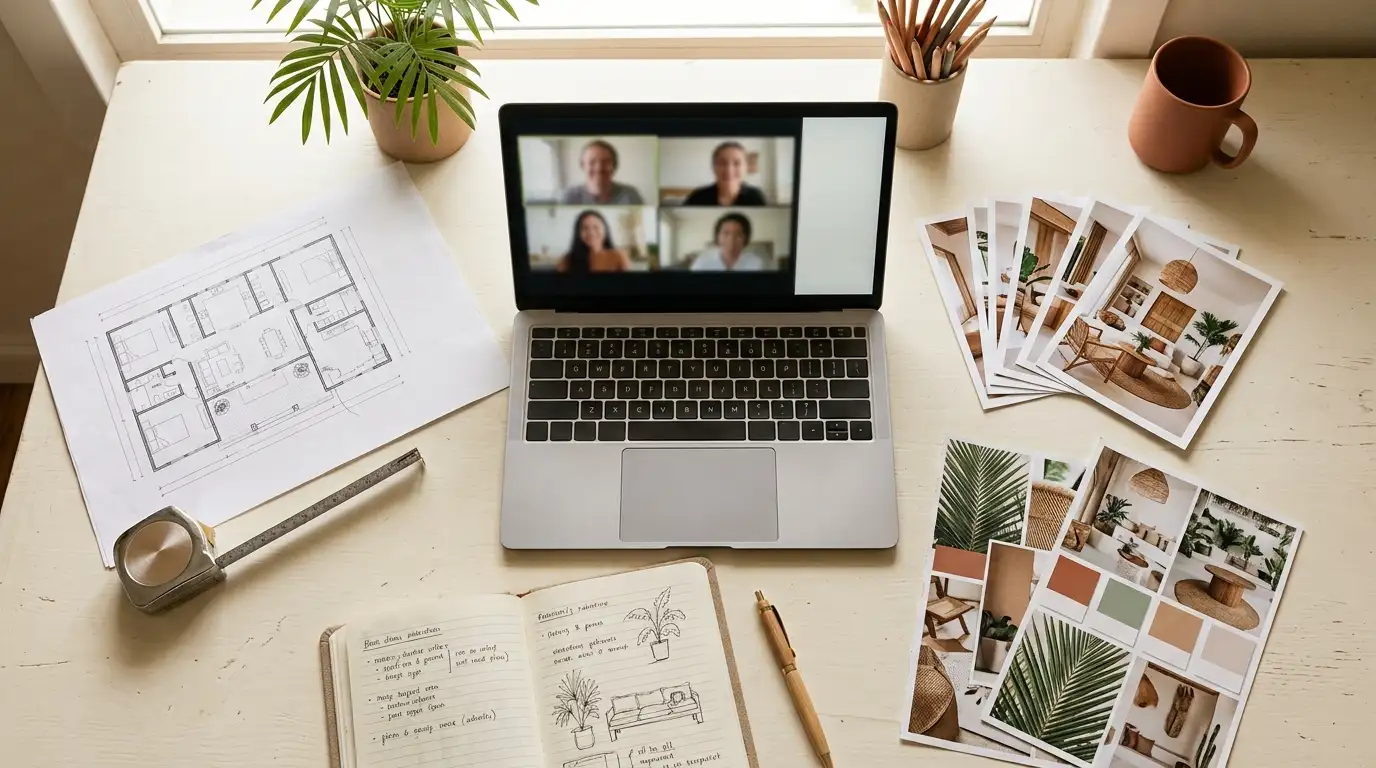
| Process | Calls, shared files, 3D renders | Face-to-face, physical samples |
| Who builds it | You / your local contractor | Often managed by the designer |
| Location | Anywhere | Limited to their service area |
| Best for | Owners abroad with a local builder | On-site, materials-heavy or complex builds |
When Online (E-Design) Interior Design Wins
E-design is the stronger choice when the specialist you want doesn’t operate where your property is, which covers most overseas and island projects. It’s markedly more affordable, because a remote studio carries no travel cost and can be based where overheads are lower, and it hands you a complete, documented design your own builder can execute. If you have a competent local contractor and a clear sense of the look you want, e-design gets you specialist design at a fraction of local-designer fees.
When to Hire Locally Instead, and When We’ll Turn a Project Down
It’s only fair to say where in-person still leads, and where we’ll decline remote work ourselves. A local designer is the better fit when the whole aesthetic depends on heavy, raw or highly customised materials that need someone solving problems on site as a maker works them. We’re also honest about a hard line: if a design needs specific materials and the client won’t source them, even the alternatives we suggest, we’d rather turn the project down than deliver something that won’t hold together. And if your property is somewhere a designer you trust already works, a build actually in Bali, say, where our own Bali interior design studio can visit on site, local is worth the premium.
A good remote studio should tell you this plainly, rather than take on work it can’t do justice to. The honesty is part of the service.
The Questions We Ask Before Taking a Remote Project
Before we take on a remote project, two questions decide whether it can work, and they’re worth putting to any online designer you’re considering:
- Who owns quality control on site? Because we can’t physically inspect the contractor’s work, can you act as the main authority on quality yourself, or do you have a local project manager who will? Someone has to hold that line day to day.
- Who verifies the measurements? Who is independently checking the site dimensions, and how do we handle structural discrepancies when they surface? Remote design lives or dies on accurate measurements, so we settle this before any design begins.
If a service can’t answer these clearly, that’s your signal they haven’t set up the remote model properly on their side.
Will a Remote Design Feel Flat? The “Soul” Question
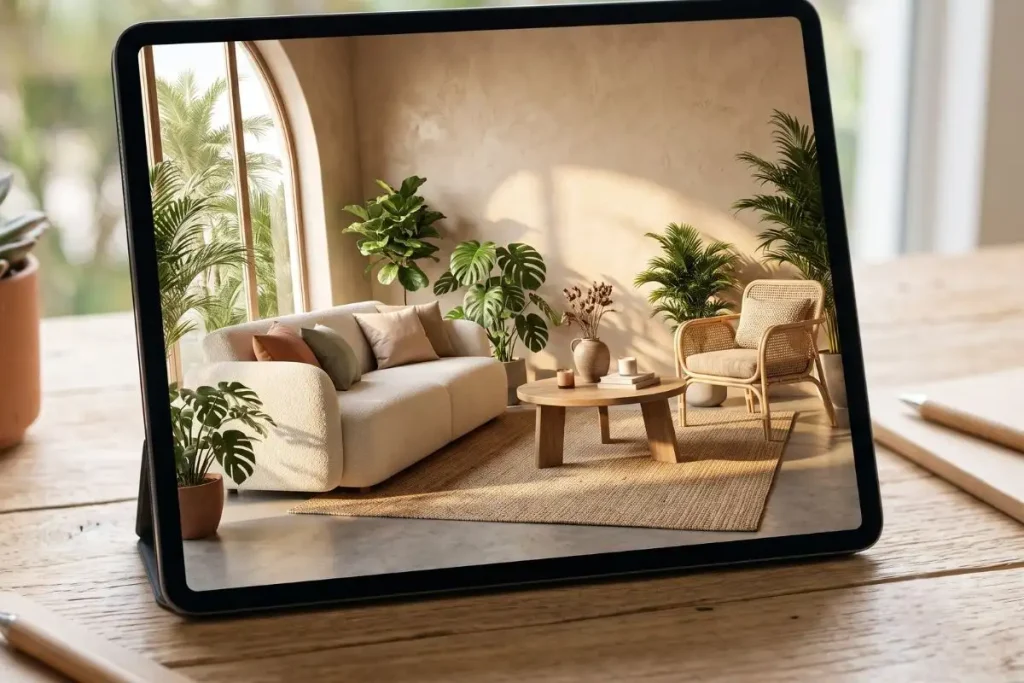
The biggest worry we hear from remote clients isn’t cost or logistics. It’s soul: whether a designer who never stands in the room can still get the feeling right. Renders are how we resolve that before the contractor builds anything. We go deeper on what makes a render trustworthy, and what it can and can’t predict, in our guide to how realistic 3D renders actually are.
The Cost Difference
The gap is real, and it’s the main reason overseas owners choose e-design. Design-only fees from Western studios commonly run $54–$183/sqm in the US, higher for high-end homes, and £500–£3,000 per room in the UK; online interior design from a studio like ours starts from $25/sqm. You’re not buying a lesser design, you’re removing the site visits and Western overheads, and you keep construction spend in your own local market.
Weighing it up for your own villa? See our online interior design service and book a free discovery call, we’ll tell you honestly whether remote design fits your project, or whether you’d be better off local. For the fuller outcomes-focused picture, see our breakdown of whether online interior design is worth it.
Frequently Asked Questions
For the design itself, layout, materials, furniture, styling, yes; the deliverables are the same. The difference is oversight: e-design hands the build to your local contractor rather than managing it on site.
This is the most common worry, and lifelike 3D visualisations answer it. You see exactly how the space and light will look before the contractor builds anything. That beats imagining it from mood boards.
Usually, and often substantially. Remote studios avoid travel costs and can be based in lower-overhead locations, so design fees are typically a fraction of US or UK rates.
Yes, e-design exists exactly for this. Location isn’t the barrier; accurate measurements, good photos and clear communication are what matter.
You do, usually through a local contractor or project manager who acts as the on-site authority. The studio provides the drawings and specifications your builder works from and stays available for questions.
When the aesthetic depends on heavy or highly customised materials that need on-site problem-solving, or when you need someone physically managing trades day to day. An honest studio will tell you when your project falls into that category.