Last Updated on July 31, 2026 by Wisnu Arista H.
How to Prepare for an Online Interior Design Consultation
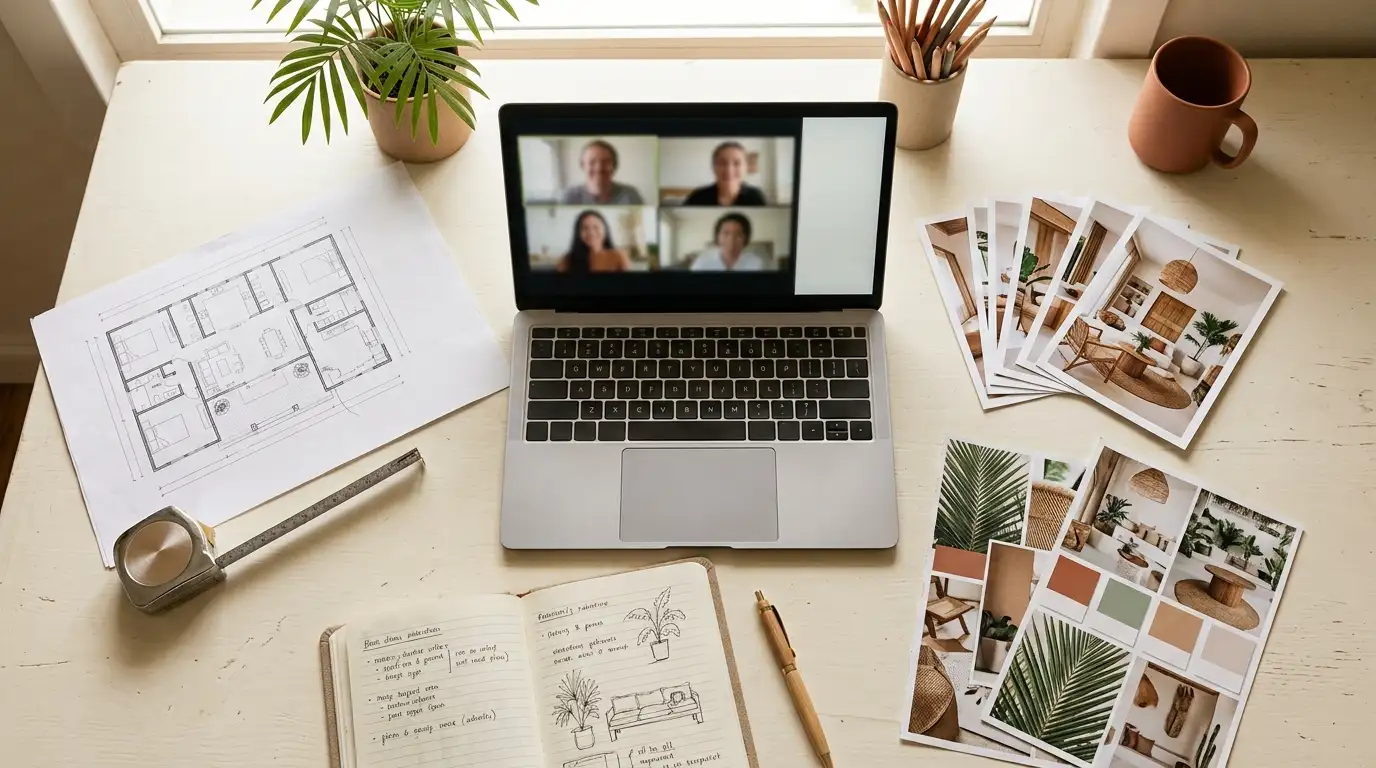
An online interior design consultation works best when you arrive with four things ready: photos of your space, rough measurements or a floor plan, a realistic budget range, and a short brief on how you use the property. With those in hand, a 30 to 45 minute call is enough for a designer to scope your project and tell you what it will take. The call also runs both ways: it is your chance to test whether the studio is the right fit. Here is how to prepare, what a good designer will ask you, and what you should ask them.
What to Have Ready Before the Call
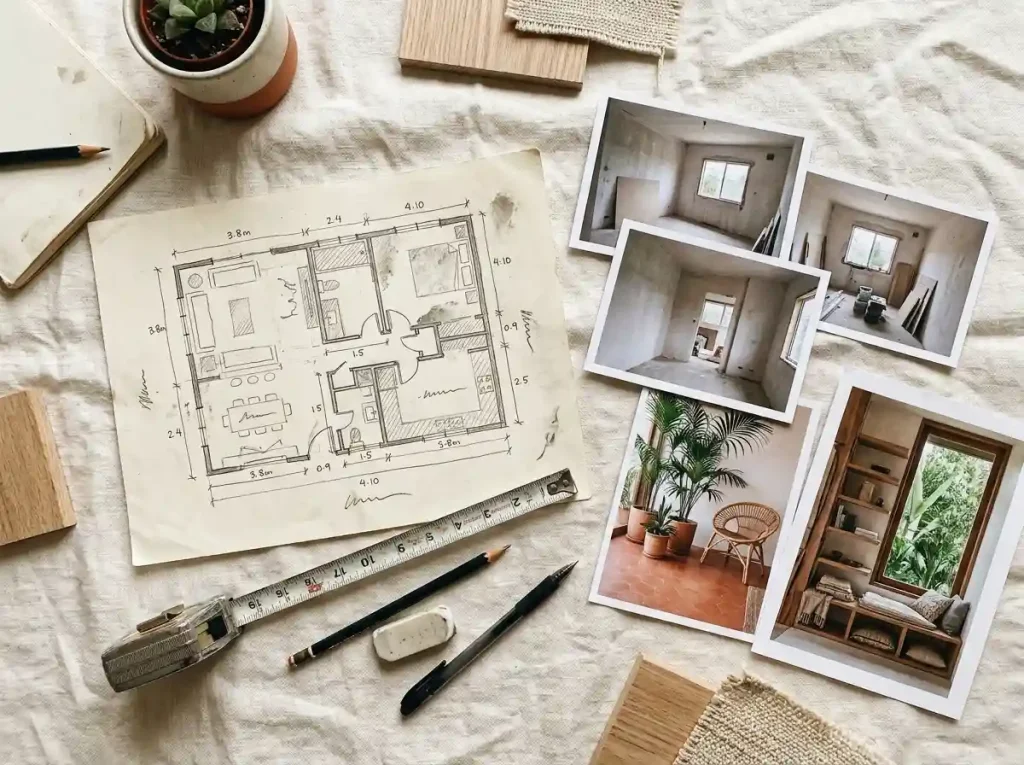
You do not need polished documents, just honest raw material:
- Photos of every space. Wide shots from each corner, in daylight, clutter and all. The designer needs the real room, not a staged version.
- Measurements or a floor plan. Even a hand sketch with a tape measure works at this stage; precise dimensions come later.
- A budget range. Not a fixed number, but enough for the designer to scope the design and any furniture sourcing realistically.
- How you use the space. Who lives or stays there, how you host, what frustrates you now. For a rental or guesthouse, how guests move through it.
- Reference images. A handful of rooms you love, and one or two you dislike (often more revealing).
What a Good Designer Will Ask You
A serious studio uses the first call to find the risks early, not just to admire your references. Expect questions about the property (new build or renovation, what stays fixed versus what can change), the people (who it is for, any rental plans), the look (styles and materials that appeal to you), and the practicalities (timeline, budget, who will build it). For a remote project, two questions matter more than any other, and a good designer will raise them up front:
- Who owns quality control on site? Because the studio cannot inspect the contractor’s work in person, someone has to be the authority on quality, whether that is you or a local project manager.
- Who verifies the measurements? Who checks the site dimensions independently, and how will the studio handle structural discrepancies when they surface? Remote design lives or dies on accurate measurements.
If the property is in a tropical or coastal climate, expect questions about humidity, airflow and what your local builder can realistically source, because that shapes every material decision. It is not a formality: the wrong timber warps, untreated metal corrodes in salt air, and a fabric that looks perfect in a showroom can grow mould within a season. A designer who genuinely works in that climate will want to understand your conditions before specifying anything.
What You Should Ask the Designer
The consultation is your vetting opportunity too. Clear, direct answers are a strong sign; vagueness, especially on deliverables and revisions, is your cue to keep looking. Worth asking:
- What exactly do I receive at the end? (Deliverables vary widely between services.)
- How many revision rounds does the fee include, and at which stage?
- How is pricing structured, and what moves it up or down?
- Who sources the furniture, and can you supply Bali-made pieces?
- Have you designed remotely for a property like mine before?
- What do you need from my builder, and when?
We go deeper on this in our guide to what to look for in an online interior design service.

What Happens After the Consultation
A serious studio follows up with a written scope: the deliverables, the timeline, the fee, and what they need from you to start. Nothing should surprise you if the call went well. From there a typical remote project moves through measurements and brief, concept, layout and 3D visualisation, then the final specification pack. You can read the full sequence in how online interior design works.
A scope worth trusting spells out the specifics, not just a price. Look for:
- The exact deliverables you will receive, itemised.
- The timeline, with the key milestones and sign-off points.
- How the studio calculates the fee, and what would change it.
- The number of revision rounds, and at which stage.
- What the studio needs from you, and by when.
- What the fee explicitly excludes (for us, that is architecture, structural work, and on-site construction management).
For a finished example of that sequence run end to end, see the Seychelles guesthouse, designed remotely from Bali and built by the owner’s local team.
When We Will Tell You It Is Not a Fit
A good consultation is also where an honest studio tells you if e-design is not right for your project. That includes structural work that needs an architect, a build that genuinely needs daily on-site supervision, and an aesthetic built on heavy, raw or highly customised materials that need someone solving problems on site. We are also upfront about a harder line: if a design depends on specific materials and you are not willing to source them, even the alternatives we suggest, we would rather say so than take on a project we cannot do justice. Treat that honesty as a good sign, not a rejection.
Ready to talk your project through? Book a free discovery call through our online interior design service. Come with your photos and a budget range, and we will do the rest. Based in Bali and would rather work with a studio on the ground? See our Bali interior design studio.
Frequently Asked Questions
Usually 30 to 45 minutes. Enough for a designer to understand the property, the brief and the budget, and to explain the scope and next steps.
Many studios, including ours, offer the discovery call free. Its purpose is to scope the project and check fit before any commitment.
Rough measurements and photos are enough to start. The studio will guide you through capturing accurate dimensions before design begins.
No. Reference images of rooms you love are enough; part of the designer’s job is turning those instincts into a coherent direction.
Yes. We schedule calls to suit you, and most of the project afterwards runs asynchronously by email and shared files.