Last Updated on August 22, 2026 by Wisnu Arista H.
Interior Design Process in Bali: Steps, Timeline & What to Expect
The interior design process in Bali runs through five stages — brief, concept, 3D visualisation, specification, and handover. Most villa projects move through those stages over months, not weeks. What usually surprises overseas owners is the timeline and the preparation, not the design itself.
This guide covers each stage of the interior design process in Bali — what happens, what you receive, and how long it takes. It then covers realistic timelines, how to prepare, and how the process works if you are managing it from overseas. We run design and furniture production under one roof, so what follows reflects how projects actually unfold here.
The Interior Design Process in Bali, Step by Step
Every studio words it differently, but the underlying journey is consistent across every interior design process in Bali. The five stages align broadly with the professional framework published by the British Institute of Interior Design, adapted here for villa and residential projects in Bali. Here is what each stage involves in practice.
Stage 1 — Discovery and Brief
This is where you and the designer define the project before any creative work begins. You establish what the space needs to do, who uses it, the style direction, and the budget. Constraints come next: site access, existing structure, timeline, and whether the project is a furnishing refresh or a full fit-out.
What you receive: a documented brief and scope that both sides agree on. How long: typically one to two weeks, including a site visit or, for remote clients, a digital handover of plans and photos. Getting this stage right prevents expensive changes later, so it is worth not rushing.
Stage 2 — Concept Development
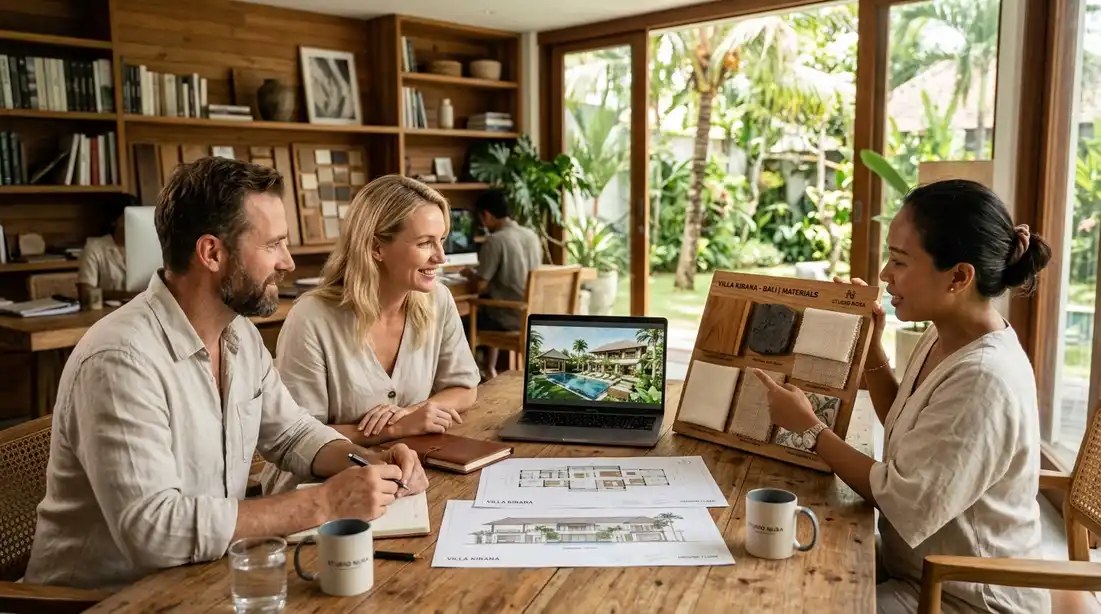
Here is where most clients find the process clicks into place. The designer develops the creative direction: spatial planning, the look and feel, and how the rooms work together. It arrives as a concept presentation — mood boards, a layout, a colour direction, and reference imagery.
What you receive: a concept package to react to, plus one or two rounds of revisions. How long: around two to three weeks, depending on project size and how quickly feedback comes back. Be specific in your feedback here — redirecting a concept costs far less than redirecting a finished space.
Stage 3 — 3D Visualisation and Material Selection
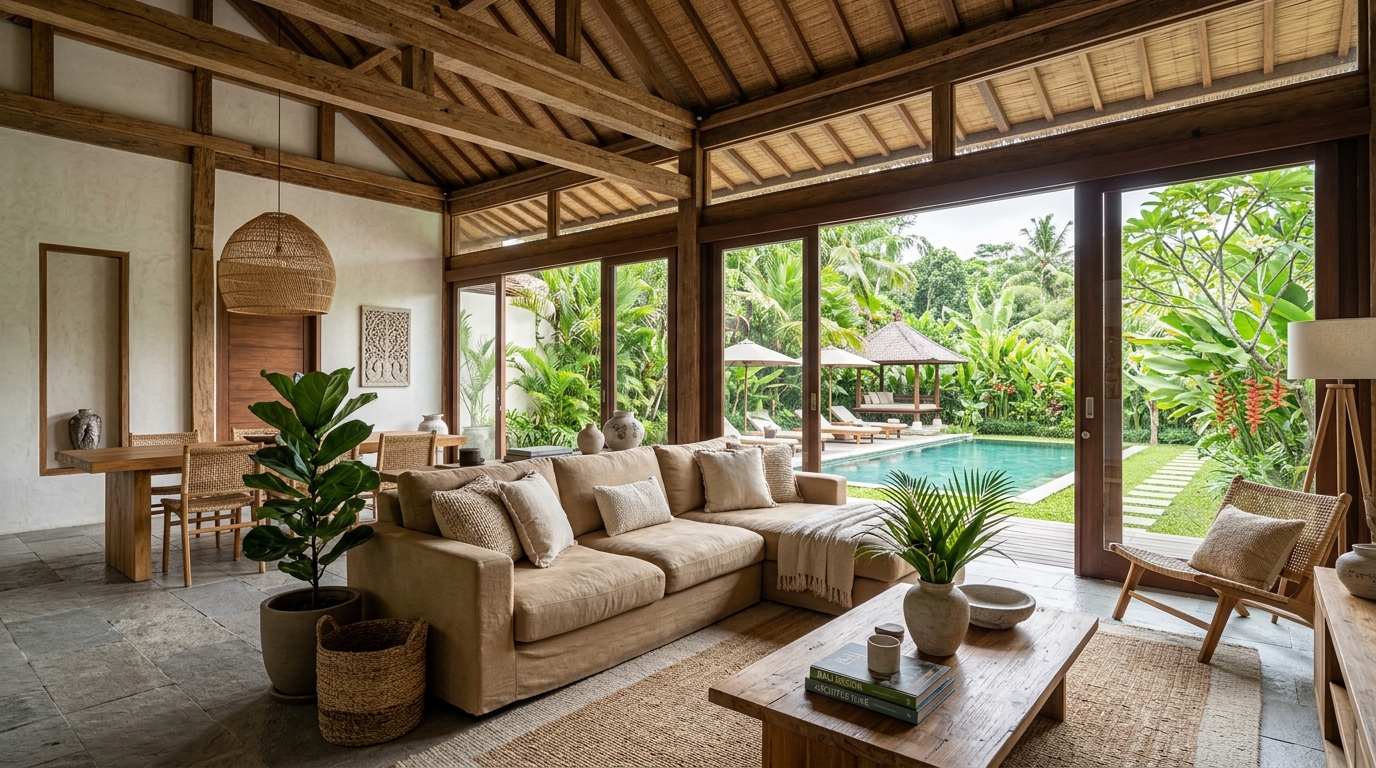
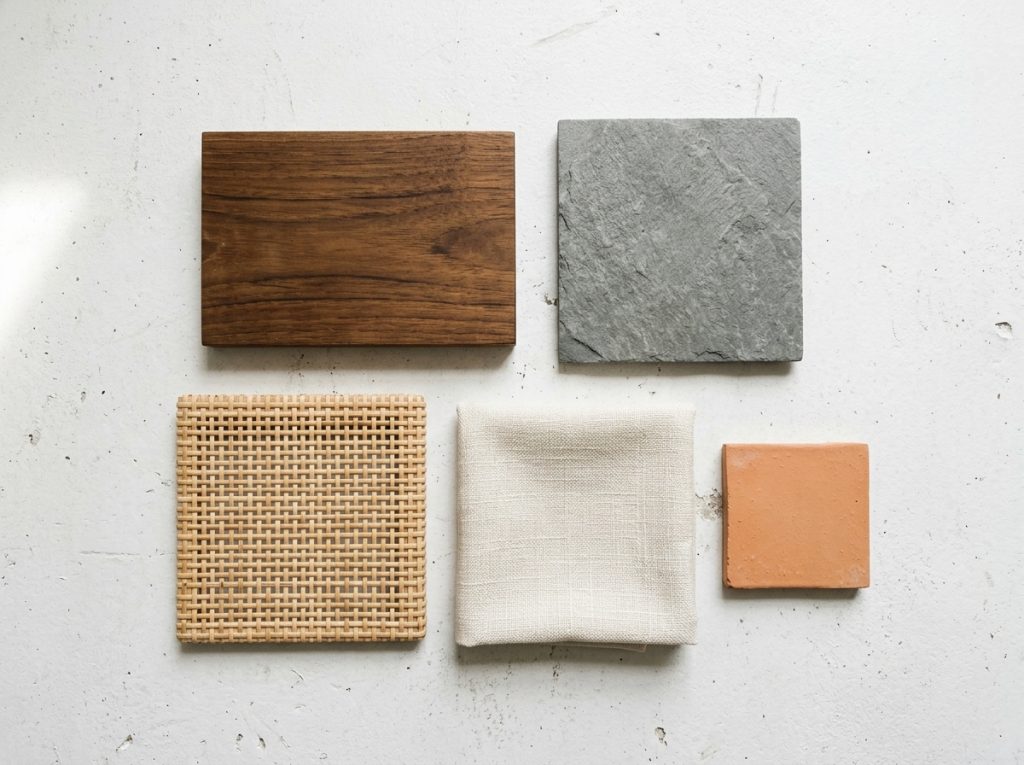
Here the concept becomes something you can almost walk through. The designer produces 3D renders of the key spaces and finalises the material palette — timber, stone, tiles, textiles, finishes. Every material choice accounts for how it performs in a humid tropical climate, not only how it looks.
What you receive: photorealistic 3D visualisations and a confirmed material specification. How long: roughly two to four weeks. The renders matter most for remote owners, showing the finished room before anything goes on order.
Stage 4 — Furniture, Styling and Specification
With the look locked, the spec covers every item — furniture, lighting, soft furnishings, and styling pieces, each with dimensions, materials, and finishes. Because we produce furniture in-house, we design custom pieces to fit the exact proportions of the space. Stock sizes do not get forced to fit; pieces get made to measure.
What you receive: a complete specification and a furniture schedule. How long: two to four weeks to specify. Custom production runs separately and longer (see the timeline section). Precise specification at this stage is what stops the wrong-scale-furniture problem that derails so many tropical interiors.
Stage 5 — Handover or Build-Ready Documentation
The final stage delivers everything needed to build, install, or hand over. For a furnishing project, that means coordinated delivery, installation, and styling on site. For a fit-out, it means a build-ready document set — drawings, specifications, and schedules a contractor can execute against.
What you receive: either a finished, styled space or a complete documentation package ready for construction. How long: the documentation is quick to finalise. The build or installation that follows depends entirely on scope.
How Long Does an Interior Design Project Take in Bali?
It depends heavily on scope — anyone quoting a fixed number without knowing your project is guessing. That said, there are realistic ranges.
A furnishing-only project typically runs two to four months from brief to installed result. Custom furniture production is usually the longest single element. A full fit-out or renovation more commonly runs six months to a year or more. Production and construction follow the design stages — that is where the extra time comes from.
The design stages alone — from brief through final specification — typically run eight to twelve weeks, regardless of project size. Two things stretch timelines in Bali specifically. First, custom production lead times — a feature of bespoke work, not a delay. Second, the realities of local supply and, where relevant, building permits — Bali’s old IMB system was replaced with PBG in 2021 and the approval process adds time to any construction-phase project. A good designer builds both into the schedule from the start.
Here is what actually drives the variance: it is rarely the design work itself. Swing factors include the number of custom pieces, local material availability, and the scale of any structural work. The fourth is how quickly decisions and approvals come back from your side. That is the factor most within your control. Fast feedback shaves three to four weeks off the timeline compared to week-long approval cycles. That difference is one more reason the preparation below pays off.
What to Prepare Before Starting Your Bali Interior Design Project
Arriving prepared means a faster, smoother start to the interior design process in Bali. The designer can work with very little, but the more you bring, the less time you spend backfilling.
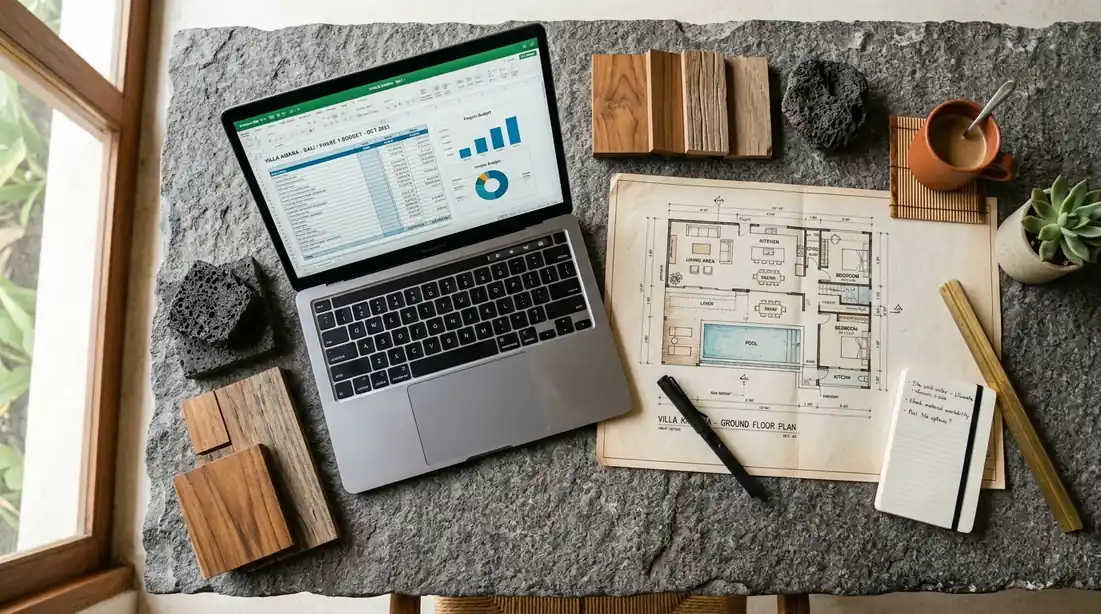
A few things genuinely help. First, a budget range you are comfortable sharing. A designer cannot specify appropriately without one — a range is more useful than a precise figure. (If you are still working that out, planning your interior design budget first is a sensible step.)
Second, references — images of interiors you like and dislike, which communicate taste faster than adjectives. Third, site information: plans, dimensions, and photographs if you have them, or access for a survey if you do not.
Fourth, a realistic sense of timeline and how involved you want to be. If you have not yet chosen a studio, read our guide on how to hire the right designer before you commit.
A short list of questions tells you as much as any portfolio. Worth asking: who produces the furniture and whether it is in-house. How the studio makes material choices for the climate. What the realistic timeline is for a project like yours. How the studio handles revisions and how many it includes. And who is accountable once design hands over to build. A studio that answers without hedging has run the process enough times to know where it strains.
Working With a Bali Designer Remotely (International Clients)
Managing an interior design process in Bali from overseas is entirely normal, and a well-run studio builds for it. All stages run at a distance. We take the brief over video call, with a digital handover of plans and photos. You review concepts and 3D renders online. We share specifications digitally.
The 3D visualisation stage carries extra weight for remote owners. It does the job an in-person walkthrough would otherwise do — showing the space before commitment. You approve something you can actually see, rather than trusting a description.
Clear documentation matters for the same reason. A complete specification and schedule lets the contractor execute without you needing to be on site for every decision. The question is not whether it can be done remotely — it can. It is how good the studio’s documentation and visualisation are.
If you are managing the project from overseas, book a free consultation with our Bali interior design service — we will walk you through what your specific project would involve, end to end.
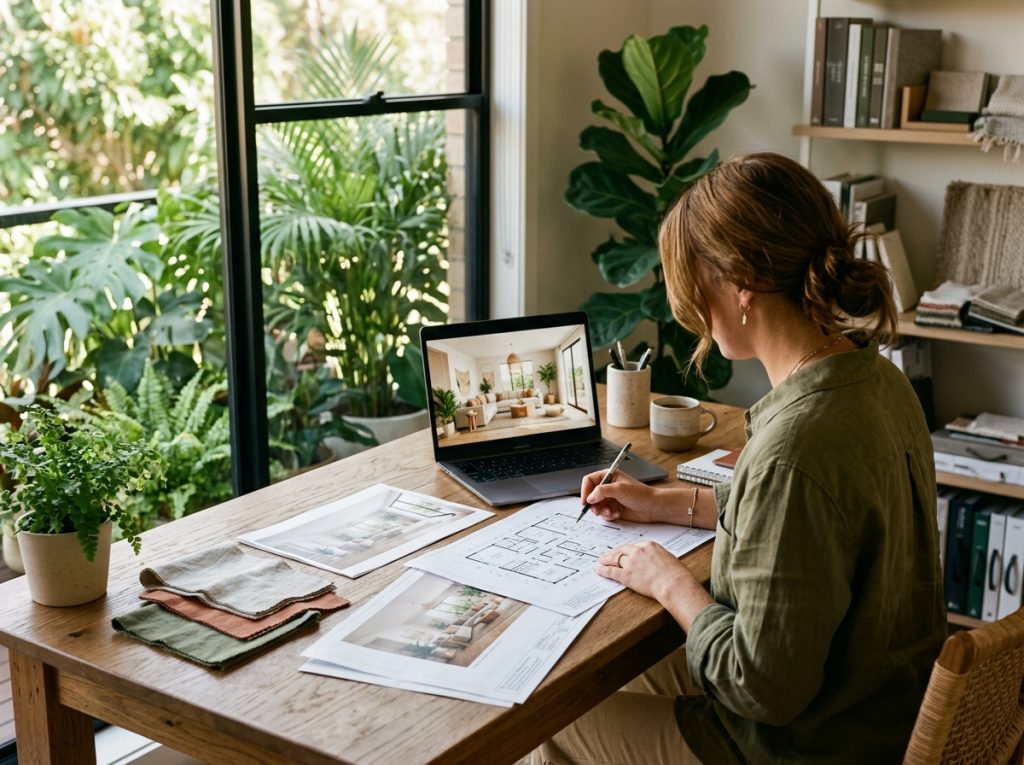
Common Questions Before Committing
Most owners approach the interior design process in Bali with the same underlying worry: am I making the right call, with the right people? A few related questions are worth working through before you commit.
If you are still deciding whether to hire at all, read whether a designer is worth it for your scope. It is not the right call for every project.
If you are unsure which professionals you need, the designer vs architect vs contractor page clears up who does what. The common Bali interior design mistakes article covers what typically goes wrong — worth reading before you start. Working through these before committing is what turns a nervous decision into an informed one.
If the key question is which type of professional you need — an interior designer or a decorator — the designer vs decorator comparison for Bali covers that distinction clearly, including which role fits each common project type.
Start Your Project
You now have a clear picture of the interior design process in Bali — the stages, the timeline, and what to prepare. The next step is a conversation about your specific space and scope. Book a free consultation with our Bali interior design service and we will walk you through your project, end to end.
FAQ – Interior Design Process in Bali
There are five stages: brief, concept development, 3D visualisation, furniture specification, and handover. Each stage delivers something you review and approve before the next begins. This keeps the project on track and on budget.
It depends on scope. A furnishing-only interior design process in Bali typically runs two to four months from brief to installed result. Custom furniture production is usually the longest element. A full villa fit-out with construction more commonly takes six months to a year or more. Production and building follow the design stages — that is where the extra time comes from.
Three things help most: a budget range you are comfortable sharing, references of interiors you like and dislike, and site information. Plans, dimensions, photographs, or survey access all count. A realistic sense of timeline and your preferred level of involvement also helps. The more you bring, the faster and smoother the brief stage runs.
Yes. We take the brief by video call, walk through renders with you online, and share specifications digitally. The 3D stage matters most for remote clients — it shows the space before you commit, replacing an in-person walkthrough.
It depends on the project. A furnishing project ends with an installed, styled space. A fit-out ends with a build-ready document set — drawings, specifications, and schedules a contractor can build from. Along the way you also receive the brief, concept package, 3D renders, and material and furniture specifications.
No, though it can help at certain points. Most stages run remotely through calls, renders, and shared documents. Some owners visit for the initial site stage or final installation. Neither is essential when the studio’s documentation is thorough enough to stand in for being there.
That depends on the studio’s model. With a design-only practice, you take the documentation to a contractor and they build from it. With a studio that produces in-house, design and furniture production sit under one roof, while civil construction stays with your contractor. The same team that designed the space also delivers it — removing the handoff where projects often slip.