Last Updated on September 18, 2026 by Wisnu Arista H.
Beyond the Catalog: Bespoke Balinese Craftsmanship Furniture
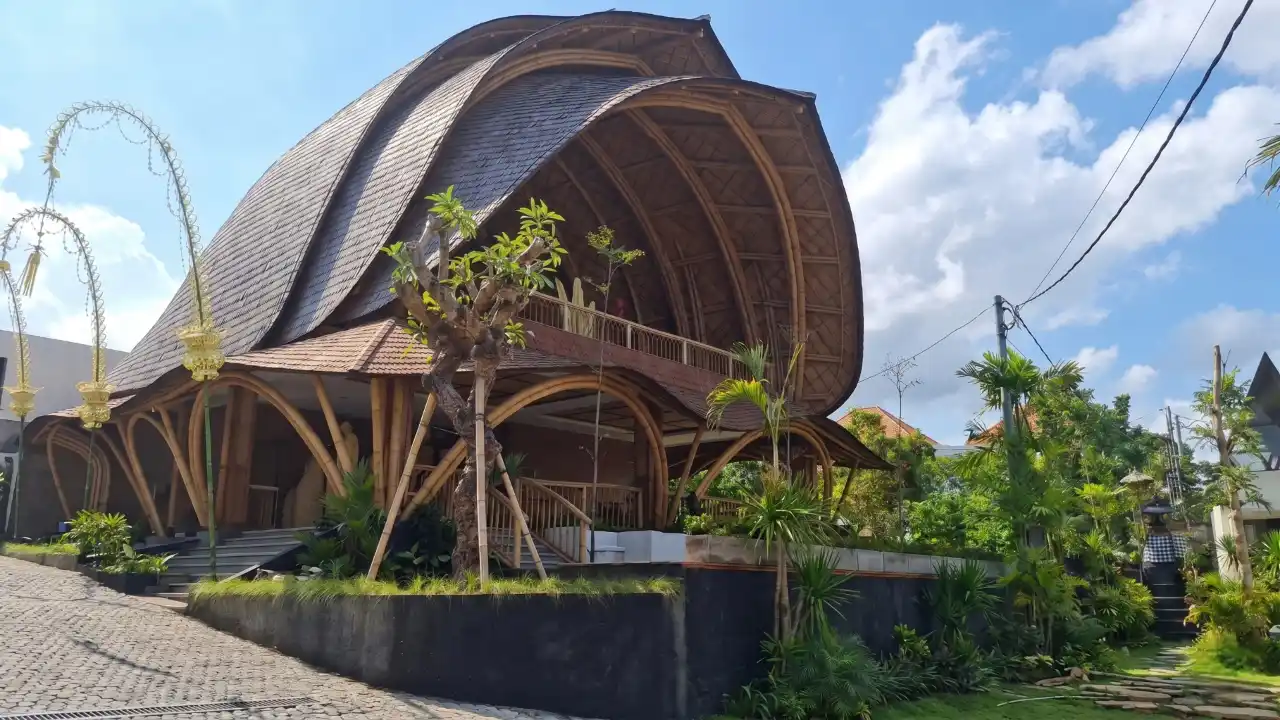
We see it happen all the time. An investor comes to Bali, secures a breathtaking piece of land overlooking a jungle ravine in Ubud or the ocean in Uluwatu, and pours their heart into building a stunning architectural shell. And then? They furnish it with a shipping container full of identical, mass-produced pieces from an overseas catalog. Some prefer it to bespoke Balinese craftsmanship furniture.
Honestly, it disappoints us a little every time.
We call it the “container villa” trap. We get the appeal: it feels like a quick, cost-effective way to get the property to market. But if you’re trying to play in the high-net-worth real estate space in 2026, ordering off-the-shelf furniture is the fastest way to kill your property’s soul. Today’s luxury buyers and high-paying guests don’t want a room that looks like a high-end lobby in Dubai or a sterile apartment in London. They flew across the world to be in Bali. They want the space to actually feel like the island.
This is why bespoke Balinese craftsmanship furniture isn’t just a nice design option anymore; it’s the definitive baseline for high-end Bali Interior Design Services.
The Brutal Reality of the Tropics
Let’s break down why leaning into local artisans and custom factory builds is the smartest money you can spend on your villa and also the new sustainable interior trends in Bali.
First off, let’s talk about survival. Bali’s climate is entirely unforgiving.
You’re dealing with relative humidity that averages 80–85% year-round, intense UV exposure, and salty ocean breezes. That beautiful, mass-produced MDF cabinet from Europe? The tropical moisture will eat its factory glue for breakfast. The veneer can start peeling within six to twelve months.
When you build custom, you build for the environment. At our manufacturing facility, we don’t just glue wood together. We use traditional interlocking joinery techniques that Indonesian carpenters have used for centuries. Why? Because solid wood is going to expand and contract with the humidity no matter what you do. Traditional joinery allows a massive reclaimed teak dining table to breathe and move naturally without cracking or warping. You simply cannot buy that kind of climate-specific engineering from a global catalog to be as good as bespoke Balinese craftsmanship furniture.
The Magic of the “Perfect Fit” for Bespoke Balinese Craftsmanship Furniture
Here is a frustrating truth that every interior designer knows: standard furniture almost never fits a room perfectly.
When you buy pre-made pieces, you are constantly compromising. You find a sofa you like, but it’s 30 centimeters too long, so it clumsily blocks the natural walkway to your pool deck. Or you buy a dining table that looks grand in a showroom, but once it’s in your massive 5-meter-high open living area, it looks tiny and pathetic.
Bespoke craftsmanship flips this dynamic entirely. The architecture drives the furniture, not the other way around.
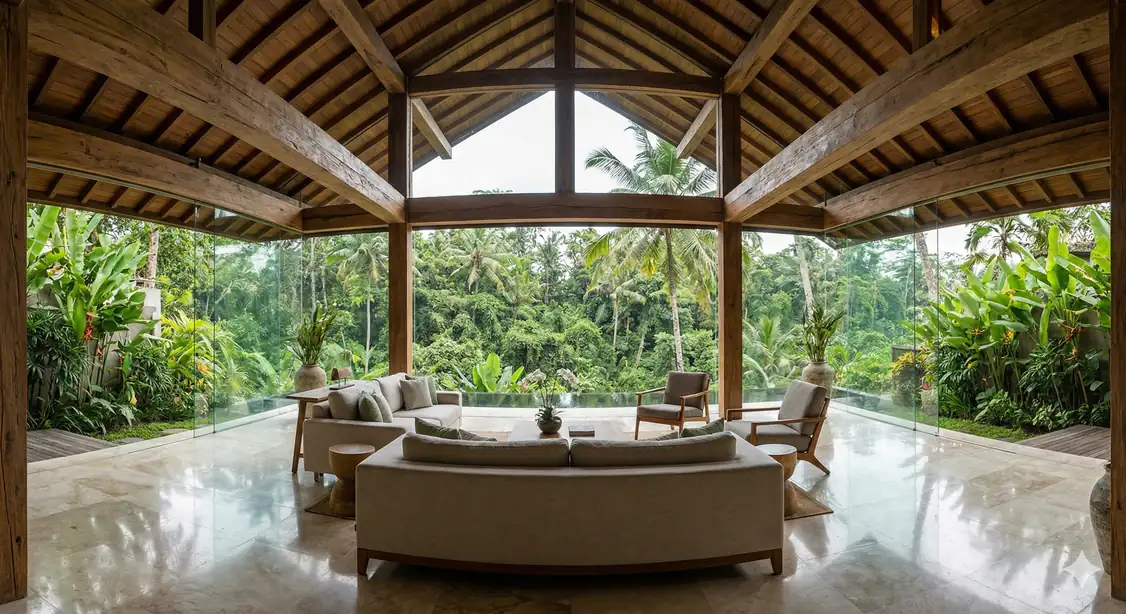
If your villa features an oddly angled, panoramic glass wall, we don’t try to cram a square sofa next to it. We design and build a custom sunken lounge that hugs the exact topography of your floor plan. We scale the height of the coffee table to match the exact sightline of the pool edge. That level of hyper-specific proportion is what makes the human brain subconsciously walk into a room and think, “Wow, this feels incredibly right.”

Functional Art and Raw Texture Using Bespoke Balinese Craftsmanship Furniture
When we talk about Balinese craftsmanship, we are not talking about generic wooden souvenirs you find in tourist markets. We are talking about functional, world-class art.
Think about the tactile experience of a home. Imagine walking into a master bathroom and running your hand along a massive, freestanding bathtub that was chiseled by hand from a single river boulder over the course of a month. Think about dining under intricate, geometric lighting pendants woven from raw rattan with a process so complex it cannot be replicated by a machine.
Or consider a feature wall built from Paras Kerobokan (local volcanic tuff). A master stone carver doesn’t just stack the stones; they read the texture of each piece, placing them so they catch the golden hour sunset to cast deep, dramatic shadows across your living room. Mass production gives you smooth, flat, lifeless perfection. True craftsmanship gives you texture, depth, and character.

The Social Eco-Luxury Standard
Sustainability has evolved. It’s no longer just about solar panels and greywater systems. For the modern, ethical investor of 2026, it’s heavily focused on social sustainability.
People want to know the provenance of the things they live with. When you choose bespoke furniture, your money goes directly into preserving generational skills. You are ensuring that master woodcarvers in Jepara and weaving collectives in Gianyar can pass their ancient techniques down to their children, rather than abandoning them for factory jobs.
Having that story matters. Being able to tell a prospective buyer or a luxury renter that the monumental carved doors to their bedroom took a local family two months to create by hand? That adds a massive layer of emotional weight to the property. It turns your villa into a patron of local culture.
The Bottom Line on ROI
Does all this extra time, thought, and custom manufacturing actually pay off?
The Bali rental and real estate market is incredibly crowded right now. To win, your property has to make people stop scrolling on their phones. A generic, mass-produced living room won’t do that. A hand-carved, century-old teak canopy bed frame standing in front of a hand-chiseled stone wall has a far stronger chance of stopping the scroll.
The case for bespoke is straightforward: a villa that photographs unlike anything else on the platform, and rooms people remember. Guests fall in love with the feeling of a space. And from an operational standpoint, custom-built heritage furniture lasts decades longer than cheap factory alternatives, practically eliminating your replacement costs over the lifespan of the investment.
Mass production will build you a house. True bespoke craftsmanship will build you a legacy. Don’t settle for the catalog.
Timber choice drives most of that craftsmanship. See our comparison of reclaimed vs. new teak, or the fuller picture in our guide to the best sustainable materials for Bali villas.
Planning a Villa Fit-Out?
Custom pieces have to be drawn, specified and scheduled alongside the build, not ordered at the end. Talk to our interior design team in Bali and we will plan the furniture programme around your construction phase.
FAQ (Bespoke Balinese Craftsmanship Furniture)
Balinese craftsmanship furniture is built using traditional joinery techniques and tropical hardwoods sourced locally. Unlike mass-produced alternatives, it’s engineered specifically for Bali’s climate — high humidity, UV exposure, and salty air — and scaled precisely to your villa’s architecture rather than a standard catalog size.
Very well, in our experience. Traditional interlocking joinery allows solid wood like reclaimed teak to expand and contract naturally with humidity without cracking or warping. Factory-glued, veneer-covered imports typically begin to degrade within 6–12 months in Bali’s conditions.
There is no measured figure to quote here. What bespoke, story-driven interiors give you is a room guests cannot find anywhere else on the platform, and a sense of place a generic catalog room cannot deliver.
Production timelines vary by complexity, but typically 4–10 weeks for a full villa fit-out. Signature statement pieces, hand-carved doors and custom stone baths, sit at the top of that range. We recommend planning furniture production in parallel with the final construction phase.