Last Updated on September 17, 2026 by Wisnu Arista H.
10 Bali Home Interior Design Ideas for Warm Tropical Living
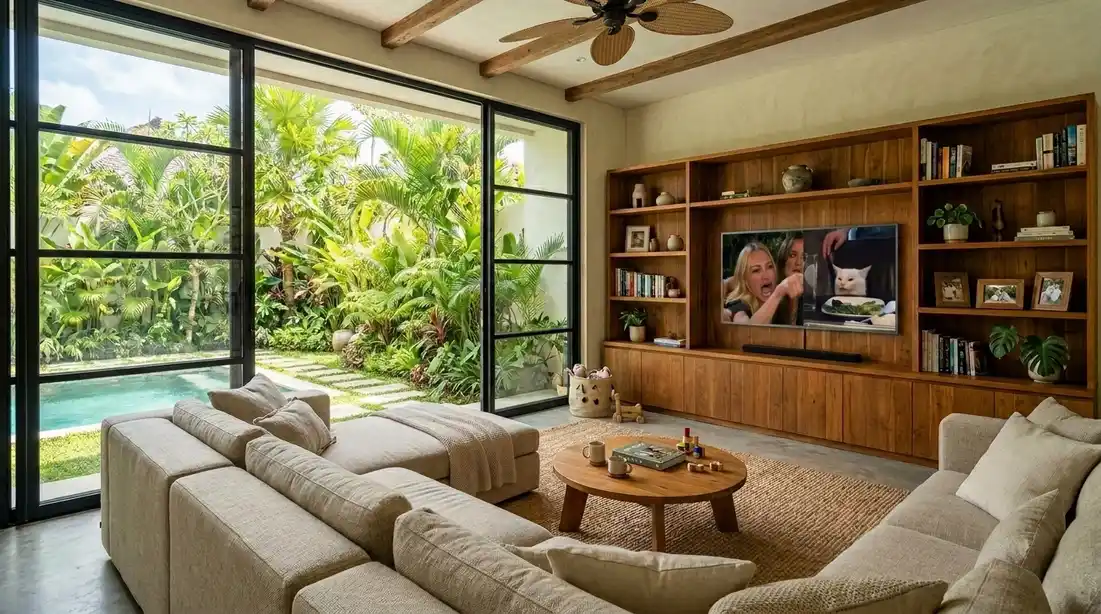
Bali is more than just a destination; it is a globally recognized design language. If you are searching for the best Bali home interior design ideas, you are likely trying to capture that elusive feeling of calm, grounded luxury.
However, recreating this tropical aesthetic is not simply about filling a room with rattan chairs and bamboo wind chimes. True Balinese interior design responds intelligently to the climate, maximizes natural light, and seamlessly blends the indoors with the outdoors.
Whether you are designing a permanent tropical residence on the island or trying to bring a touch of Bali to your home overseas, the goal is to create a space that feels warm, breathable, and deeply connected to nature. Here are 10 inspiring ideas to help you achieve the warm tropical sanctuary.
The Essence of a Bali-Inspired Home
Before diving into specific decor, it is crucial to understand the philosophy behind the aesthetic. A beautifully designed Bali home relies on authenticity. It heavily features natural, locally sourced materials that age gracefully over time. These are the core principles behind great Bali home interior design ideas.
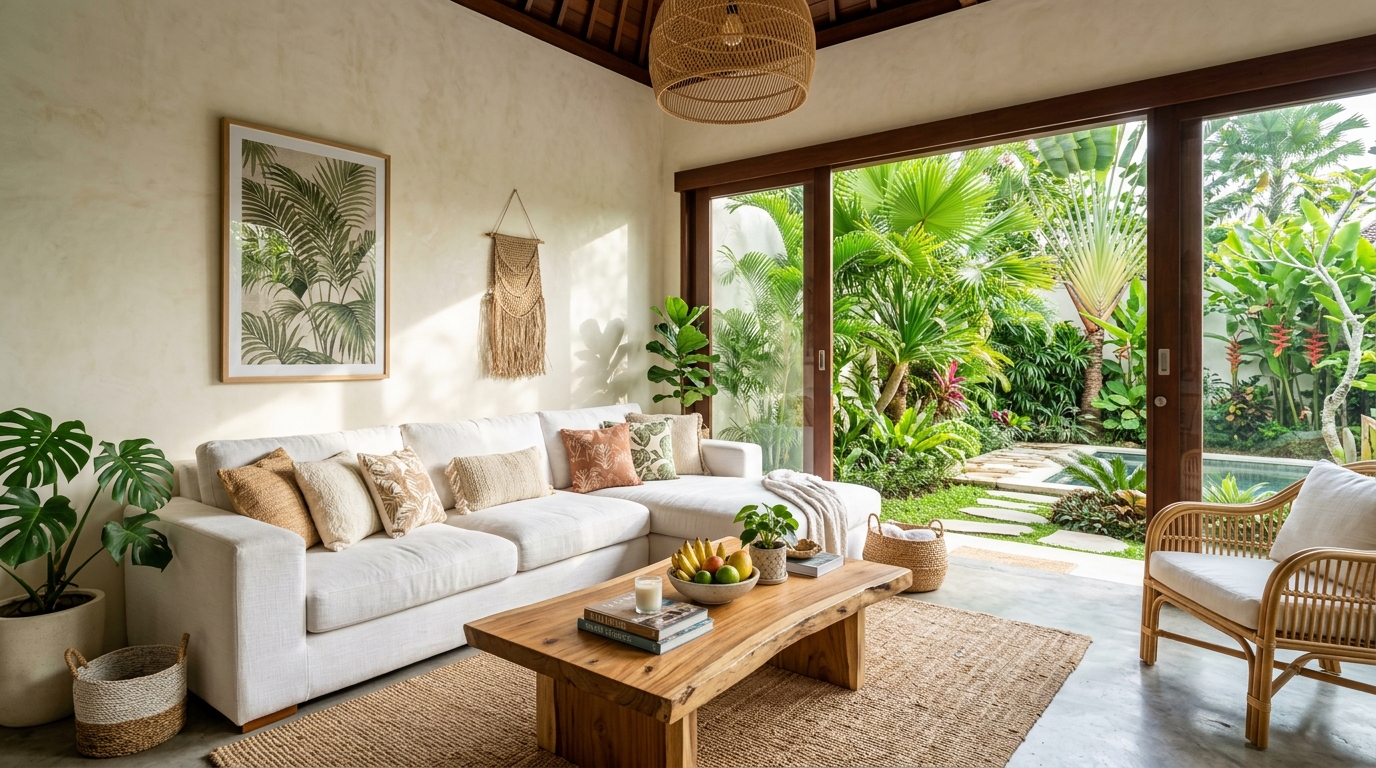
The color palette is derived directly from the earth: sandy beiges, warm terracottas, muted sage greens, and deep charcoal greys. By prioritizing texture over bold colors and embracing imperfection, you create a space that feels lived-in, relaxing, and effortlessly sophisticated.
10 Inspiring Bali Home Interior Design Ideas
As a Bali interior design studio , here are 10 Bali home interior design ideas that translate the magic of the Island of the Gods into your own tropical residence.
1. Embrace the Wabi-Sabi Philosophy
Wabi-sabi is the Japanese art of finding beauty in imperfection, and it has heavily influenced modern Bali interiors. Instead of aiming for sterile, flawless surfaces, allow your home to show its natural character. Use raw, unpolished stone for your countertops or unsealed brass fixtures in your bathroom that will naturally patina over time. It is one of the most enduring Bali home interior design ideas precisely because it works with the climate rather than against it.
2. Modern Mediterranean Archways & Curves
One of the most popular design trends in Bali right now is the Modern Mediterranean Tropical fusion. Introduce soft curves into your architecture through arched doorways, rounded kitchen islands, and curved shower walls. When combined with a stark white or creamy limewash palette and lush tropical planting, these curved lines make the entire home feel softer and more inviting.
3. Japandi Minimalism for Calm Spaces
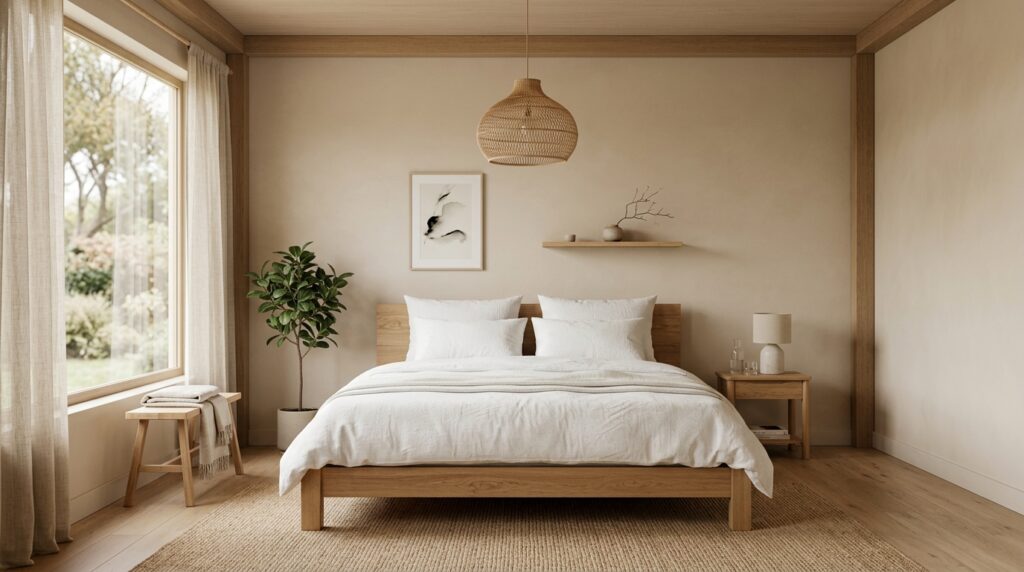
If you want a clutter-free sanctuary, look toward the Japandi style—a hybrid of Japanese minimalism and Scandinavian functionality. In a tropical context, this means utilizing low-profile teak wood furniture, hidden built-in storage to hide daily clutter, and a strictly neutral color palette. This style ensures your home remains visually quiet and intensely relaxing.
4. Softening Tropical Brutalism
Exposed concrete is a staple in Bali’s architectural scene, known as Tropical Brutalism. To prevent your home from feeling like a cold bunker, you must soften the concrete. Pair heavy, raw concrete walls with massive artisanal woven rugs, warm indirect LED lighting, and rich teak wood ceiling panels. The contrast between cold stone and warm wood creates a stunning, high-end visual impact.
5. Anchor Rooms with Well-Grown Teak
Teak (Kayu Jati) is the backbone of tropical furniture. To immediately elevate your interior, invest in custom pieces made from documented reclaimed teak or certified long-rotation heartwood. A massive, raw-edge teak dining table or a custom-carved solid teak headboard acts as a grounding anchor for the room. Teak is exceptionally durable and naturally resistant to humidity, making it both beautiful and highly practical.
6. Blur the Lines with Indoor-Outdoor Flow
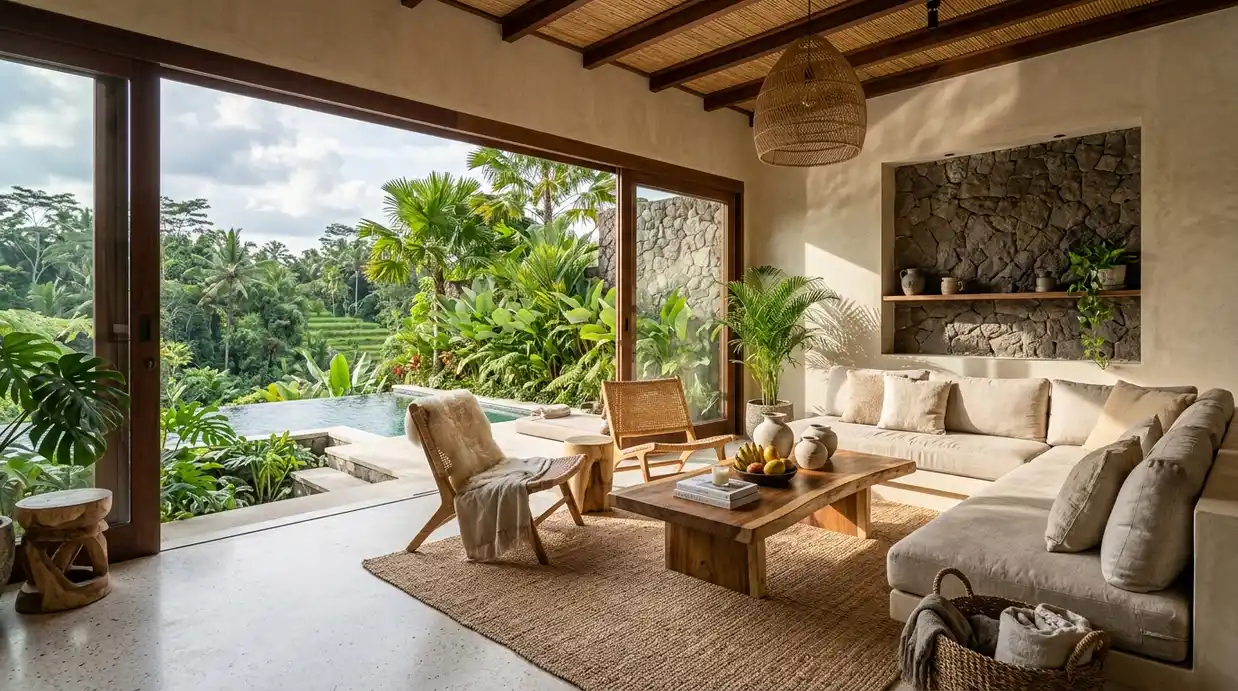
One of the most iconic elements of Bali home interior design ideas is the complete dissolution of boundaries. If your architecture allows, install massive floor-to-ceiling glass sliding doors or bi-fold doors that can be completely tucked away. Continue the same flooring material (like matte terrazzo or natural stone) from your living room directly out to your pool deck to create a seamless, expansive living area. This is the defining idea in our Bali living room ideas guide.
7. Apply Limewash and Clay Plasters
Say goodbye to flat, standard interior paint. To achieve that warm, earthy Bali texture, coat your walls in limewash or natural clay plaster. These finishes have a beautiful, cloudy depth that reacts dynamically with natural sunlight throughout the day. Furthermore, natural lime is highly breathable, which helps prevent mold buildup in humid, tropical environments.
8. Layer Organic Linens and Rattan
Texture is everything in tropical design. Since the color palette is generally neutral, you must create visual interest through tactile materials. Dress your beds and living room sofas in high-quality, breathable organic linen. Introduce rattan and bamboo through statement pendant lights, woven wardrobe panels, or relaxed lounge chairs.
9. The Dual Kitchen Setup (Clean & Messy)
If you are building a permanent home, aesthetics must meet deep functionality. Elite Bali homes often feature a “Show Kitchen” in the main living space—featuring a beautiful stone island and espresso machine—and a hidden “Messy Kitchen” behind closed doors. This keeps the smoke, oil, and visual clutter of daily cooking completely separate from your pristine entertaining areas. See our full Bali kitchen design guide for the layout details.
10. Design an Open-Air Sanctuary Bathroom
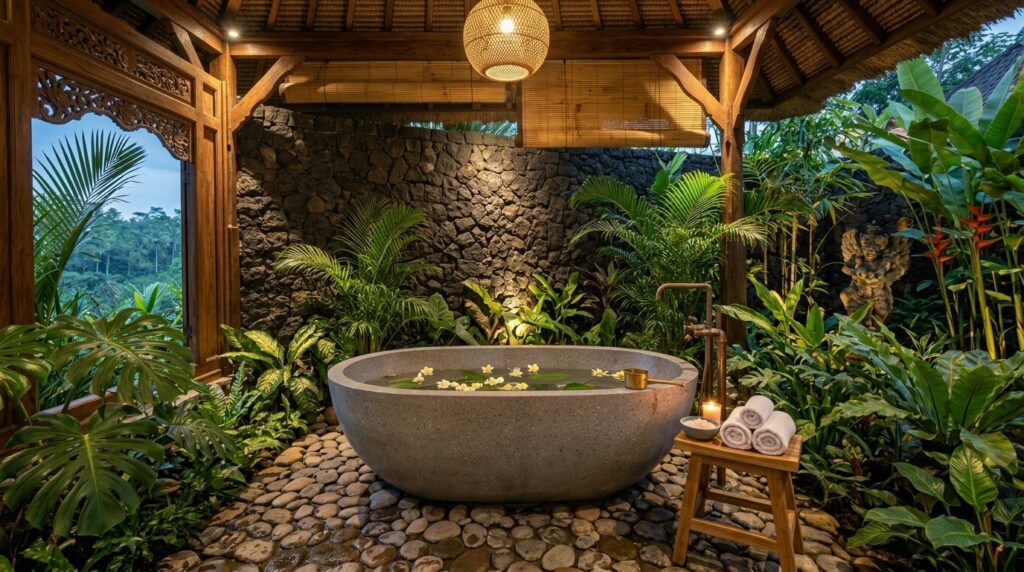
You cannot talk about Bali design without mentioning the bathroom. Transform your daily routine into a spa-like experience by incorporating natural elements. Use river boulders or hand-chiseled Sukabumi stone for the shower walls. If you cannot build a fully outdoor shower, place a massive freestanding terrazzo bathtub next to a large window surrounded by dense, potted tropical plants like Monsteras and Bird of Paradise.
Ready to Bring These Bali Home Interior Design Ideas to Life?
Gathering inspiration is the fun part, but executing these ideas in a harsh tropical climate requires serious technical expertise. Choosing the wrong type of wood or failing to plan for humidity can ruin your beautiful aesthetic within a year.
If you are planning to build or renovate a permanent residence on the island, you need a strategy that goes beyond pretty pictures. Dive into our comprehensive pillar guide on home interior design Bali to learn how our experts handle climate-resilient materials, spatial zoning, and custom furniture procurement for a warm, climate-resilient Bali home interior design that lasts decades.
FAQ — Decorating a Bali Style Home
To decorate a house in the Bali style, focus heavily on an earthy, neutral color palette (whites, beiges, and terracottas) combined with rich natural textures. Incorporate solid teak wood furniture, linen upholstery, rattan lighting fixtures, and abundant indoor tropical greenery to create a space that feels deeply connected to nature.
The best natural materials for Bali interiors include Grade-A teak wood for furniture, natural lava stone or terrazzo for cooling floors, and breathable organic linen for soft furnishings. Rattan and bamboo are excellent for decorative lighting and accent chairs, while limewash plaster is ideal for textured, breathable walls.
Absolutely. The most successful luxury homes in Bali often mix modern, clean-lined architecture with traditional artisanal accents. For example, you can pair a highly modern, minimalist modular sofa with a traditional hand-carved Balinese wooden door or an antique tribal rug to add warmth and cultural depth.