Last Updated on August 4, 2026 by Wisnu Arista H.
How Realistic Are 3D Renders in Online Interior Design?
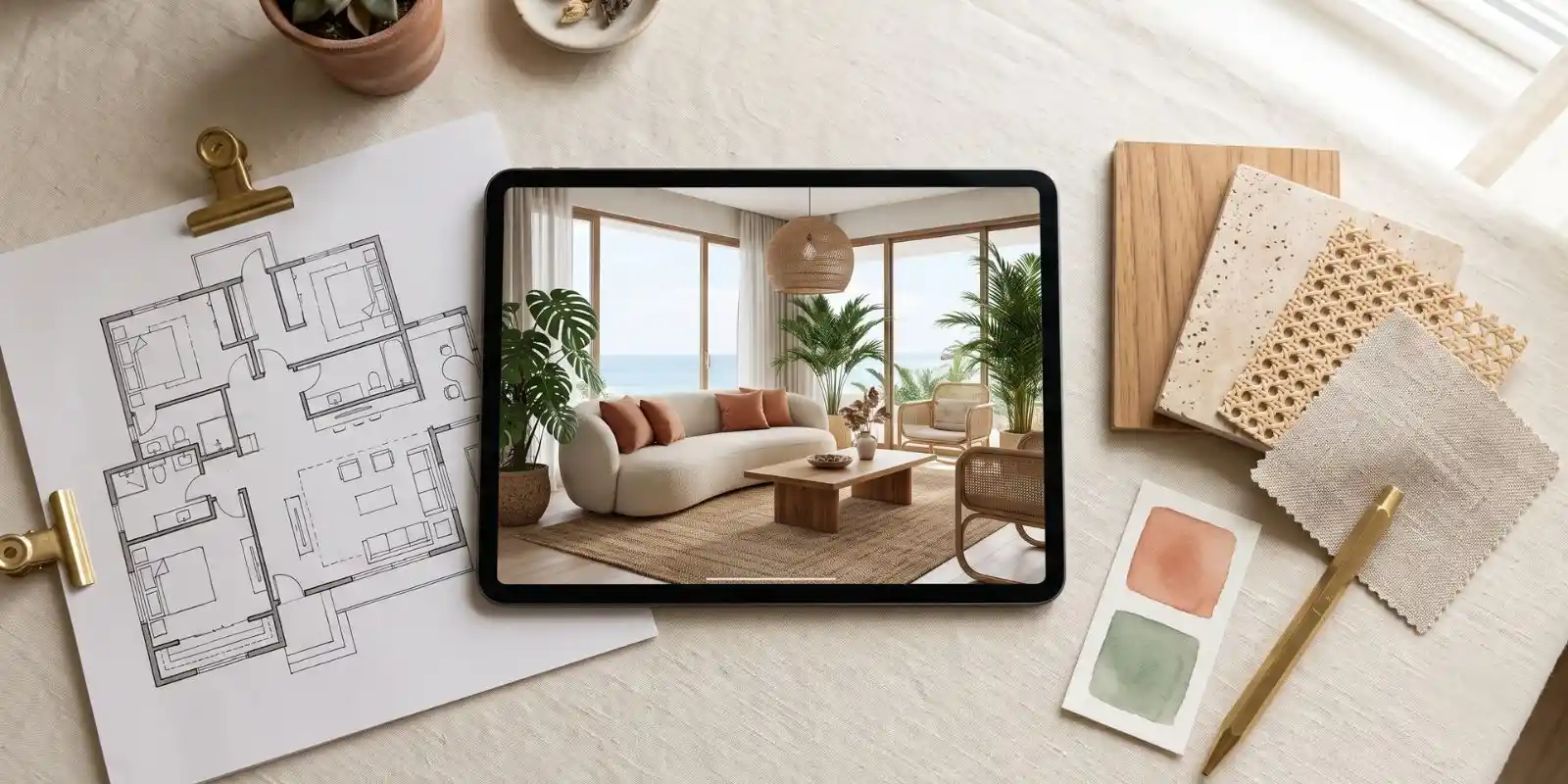
A well-built 3D render should show you almost exactly what a finished room will look like: the materials, the proportions, how the light behaves at different times of day. That is the honest answer to whether renders are realistic enough to commit to sight-unseen. It is also the question that decides whether online interior design works for you or feels like a gamble. Not every render clears that bar, and knowing what separates a convincing render from a flat one matters before you commit to a remote design.
The “Will It Feel Flat?” Objection
The most common hesitation about remote design is not cost or logistics. It is whether the finished room will feel generic, like a stock photo rather than your actual home. A render that gets lighting, material, and proportion right answers that worry directly. You are not imagining how the room will feel. You are looking at it before the workshop builds anything.
What Makes a Render Photorealistic
A render earns the word photorealistic when three things line up. The materials carry real texture maps, matched to the exact finish specified, not a generic stand-in. The studio models the lighting from the room’s actual orientation and window positions, not a default studio setup. And the camera sits at a true eye height with a realistic field of view. A wide-angle trick can make a room look bigger than it will feel in person. A careful studio avoids that shortcut.
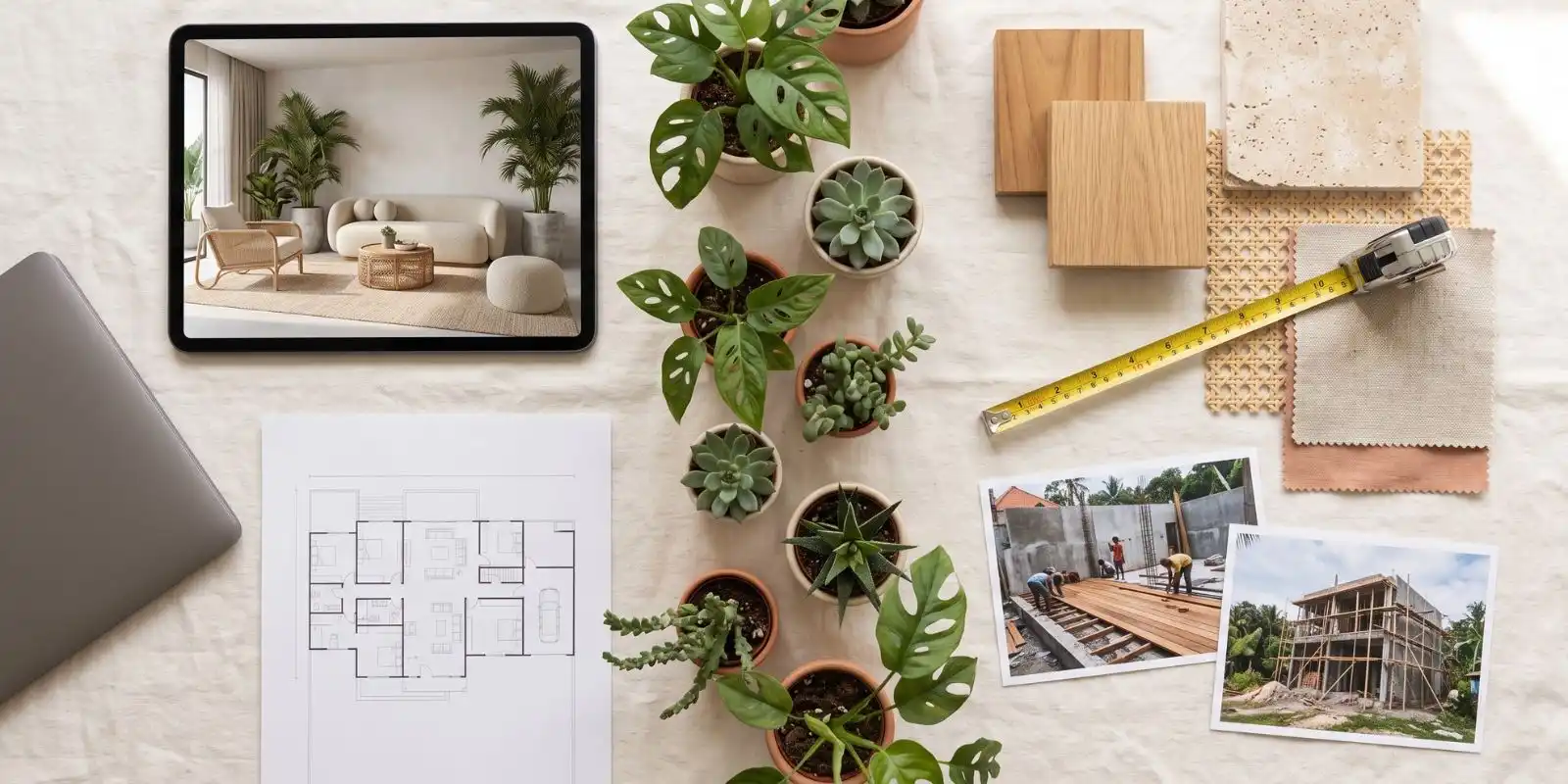
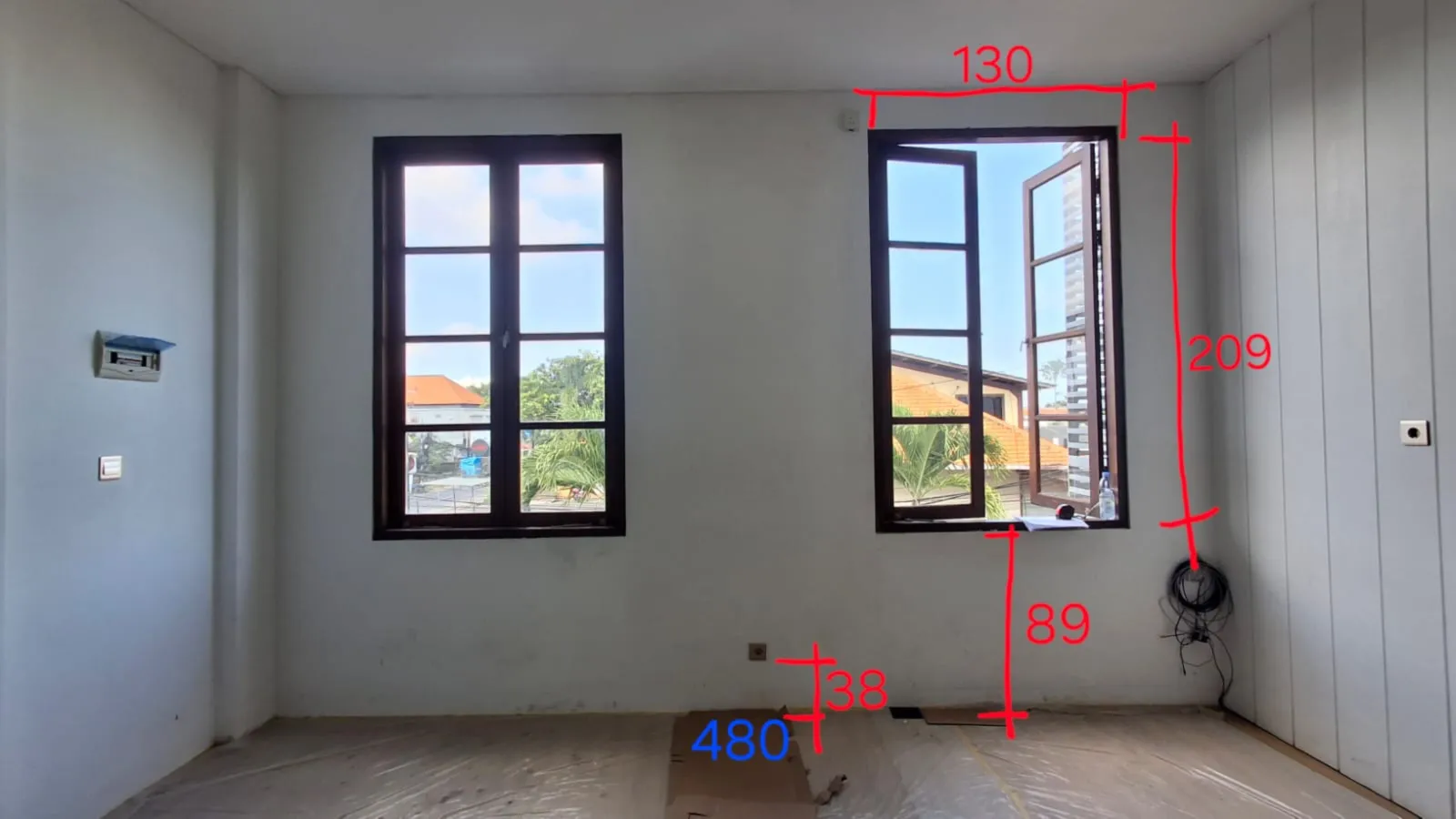
None of this happens by guesswork. It starts from the same measured floor plan and photos used to specify the furniture and finishes, so the render and the eventual build come from one source, not two separate interpretations. Our Alpha Prime office commission in Berawa is a good example. The render came from a measured site survey taken inside the existing shophouse, not a rough sketch.
The furniture and fixtures in the render are not stock models either. They come from the same sourcing specification used to order the actual pieces. What you see rendered is what eventually ships, not a generic placeholder swapped in later.
What a Render Can Predict, and What It Cannot
A render is very good at proportion, layout, and material pairing. Stand two sofa options side by side in a render and you can genuinely judge which one suits the room. Swap a stone benchtop for timber and see how the whole palette shifts. That comparison is close to what you would see walking into the finished room.
A render is weaker at two things: exact colour under your own lighting, and how a material feels to the touch. Screens vary, and the render’s assumed light bulbs may not match the ones your contractor installs. A fabric that reads as soft grey on screen can look warmer or cooler under a real halogen downlight. This is why a serious studio still sends physical swatches for anything textural, rather than asking you to trust the screen alone for a decision your hand should make.
A render is also useful for testing furniture arrangement at true scale before anything is ordered. Move a sofa six inches on screen and you can see whether the walkway still works. That is much cheaper than discovering the mistake after a return shipment.
How Revision Rounds Refine the Render Before Anything Is Built
The first render is rarely the final one. A typical remote project runs two to three revision rounds before the final version. That gap between first pass and final is where a render earns its keep. You are not approving a finished product. You are catching small mismatches while they still cost nothing to fix. Maybe a rug reads too busy against the flooring. Maybe a pendant sits too low over the table. Or a wall colour needs to shift half a shade warmer.
A Real Example: Testing the Same Room in Two Lighting Conditions
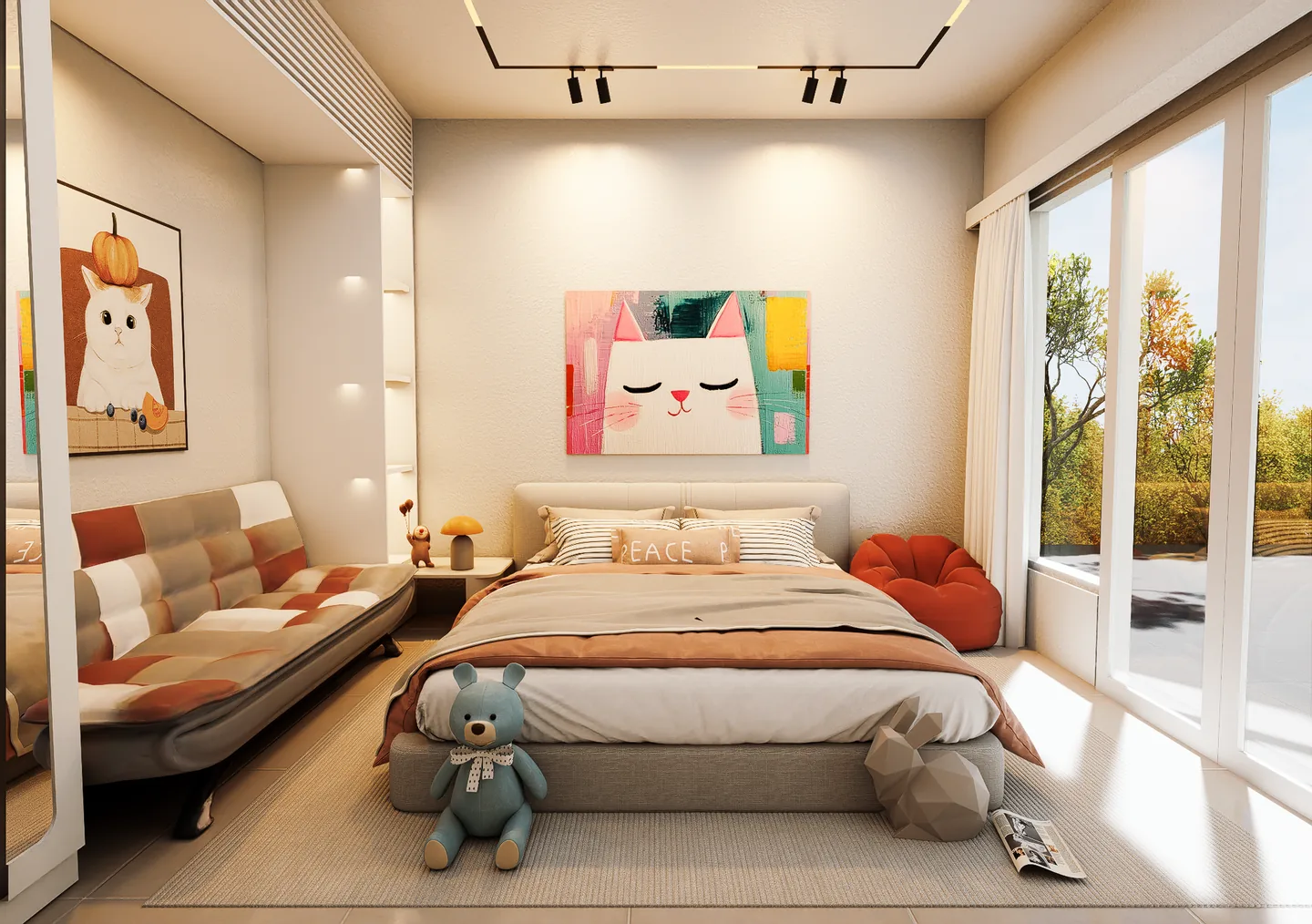
On a recent children’s bedroom in Kerobokan, we rendered the same room twice. The daytime version shows the joinery and layout in flat, even light. The evening version shows how the cove lighting and the track lights over the bed actually read once the sun goes down.
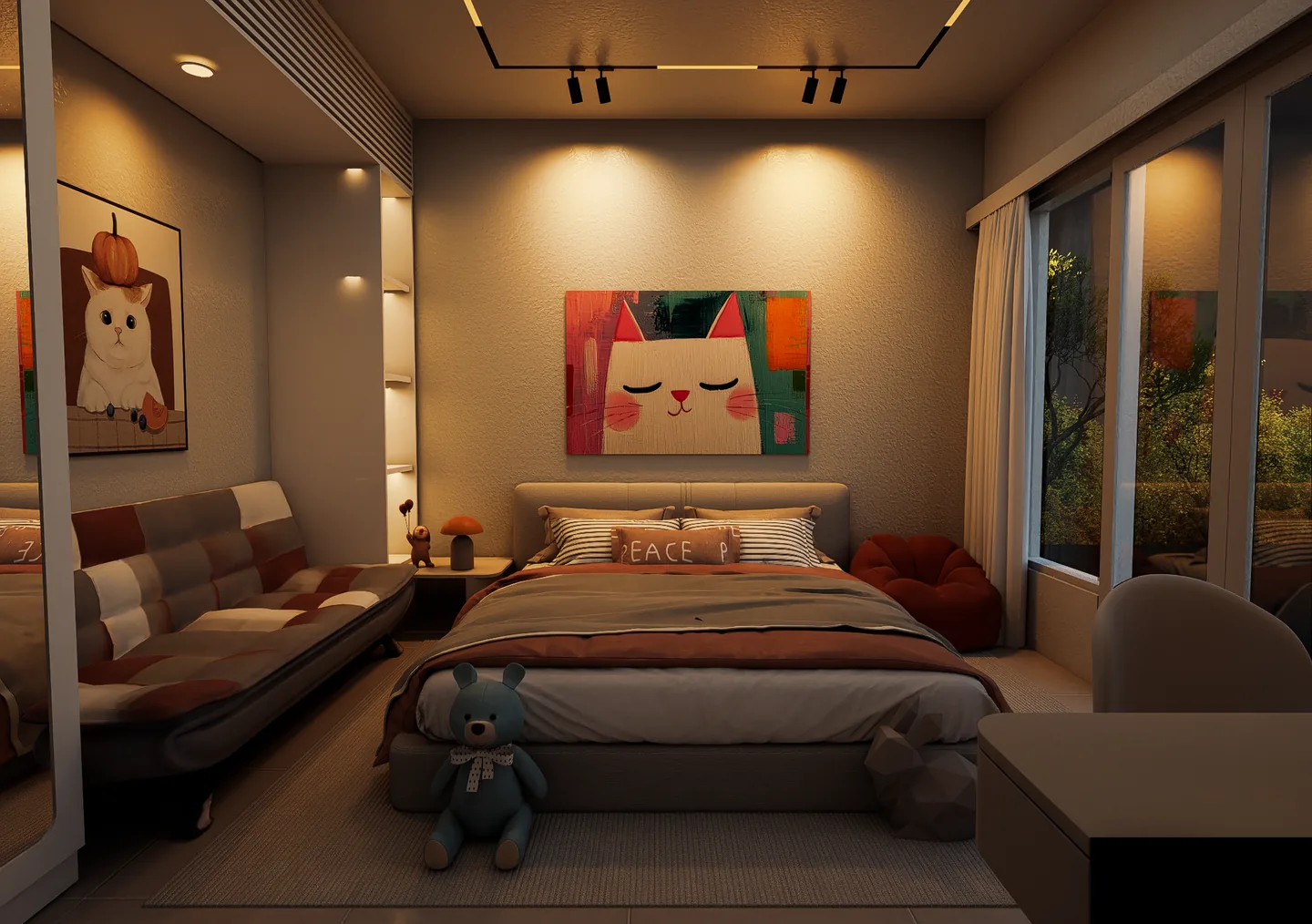
Lighting is the detail clients most often forget to ask about. It is also the detail a render can show you honestly, if the studio bothers to model it twice.
The strongest test of a render is a photograph of the finished room beside it. Our Lokalé Pererenan project page carries both: the original design renders of the exterior, reception, lounge and terrace, shown alongside photographs of the completed bamboo venue. Comparing the two is the most direct answer to this question we can offer.
Virtual visualization is no longer a fringe tool. The global real estate virtual staging market reached USD 2.5 billion in 2025 and is forecast to grow to USD 12.1 billion by 2034. Renders are now the default way most remote projects get shown, not the exception.
Ready to See Your Own Space Rendered?
See our online interior design service for how rendering fits into the wider process, or read how e-design compares to hiring locally if you are still deciding between the two.
Based in Bali and would rather work with a studio on the ground? Start with our Bali interior design studio.
Frequently Asked Questions
Close, if the studio works from accurate measurements and real material specifications. Colour can shift slightly under your contractor’s actual light fixtures, and fabric texture reads differently in person than on a screen. Layout, proportion, and material pairing should match closely.
Most remote projects include two to three revision rounds between the first render and the version the workshop builds from. That is enough to catch a rug that reads too busy, a pendant hung too low, or a colour that needs to shift half a shade.
Broadly, yes for how a material reads visually, less so for how it feels to the touch. A serious studio still sends physical swatches for anything textural, rather than asking you to judge fabric or stone finish from a screen alone.
When lighting matters to the design, yes. We rendered a recent children’s bedroom in Kerobokan twice, once in daylight and once in the evening with the cove and track lighting on, so the owner could judge both.
Say so. A render exists to surface exactly that kind of doubt while it still costs nothing to fix. See our online interior design consultation guide for how we handle feedback during the process.