Last Updated on September 12, 2026 by Wisnu Arista H.
Furniture in Lombok: Where to Buy and What to Expect
Furnishing a property on the island of Lombok is not the same as furnishing one in Bali, and the difference catches people out. Lombok has a real furniture market, but it is narrower than most buyers expect, concentrated around Mataram, and strongest in standard residential pieces. Everything else you either order made to measure or bring across from Bali or Java.
This guide covers the three routes open to you, what local showrooms genuinely stock, and what sets a delivery date. It also covers the six things worth checking before you commit to any order for furniture in Lombok. We write from the supply side. We design furniture in Bali and ship it to island projects.
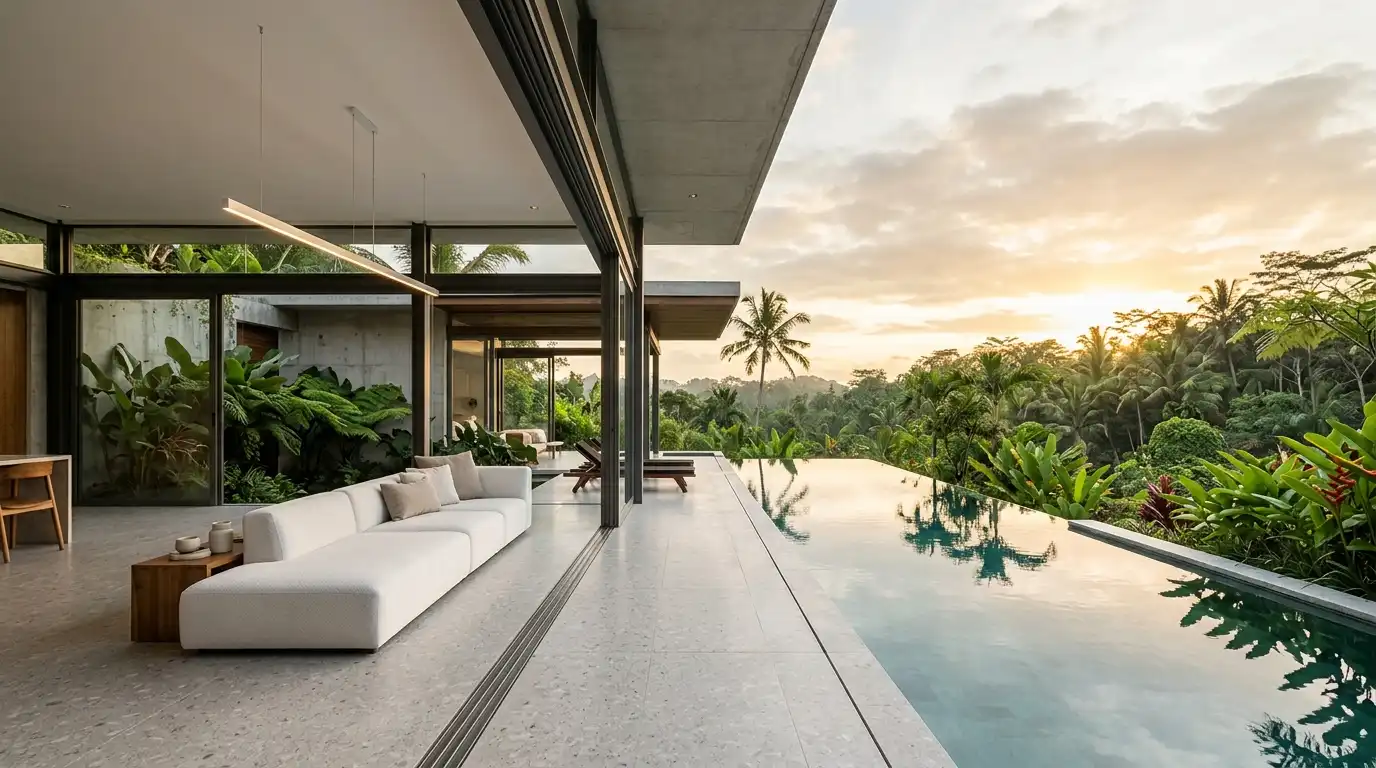
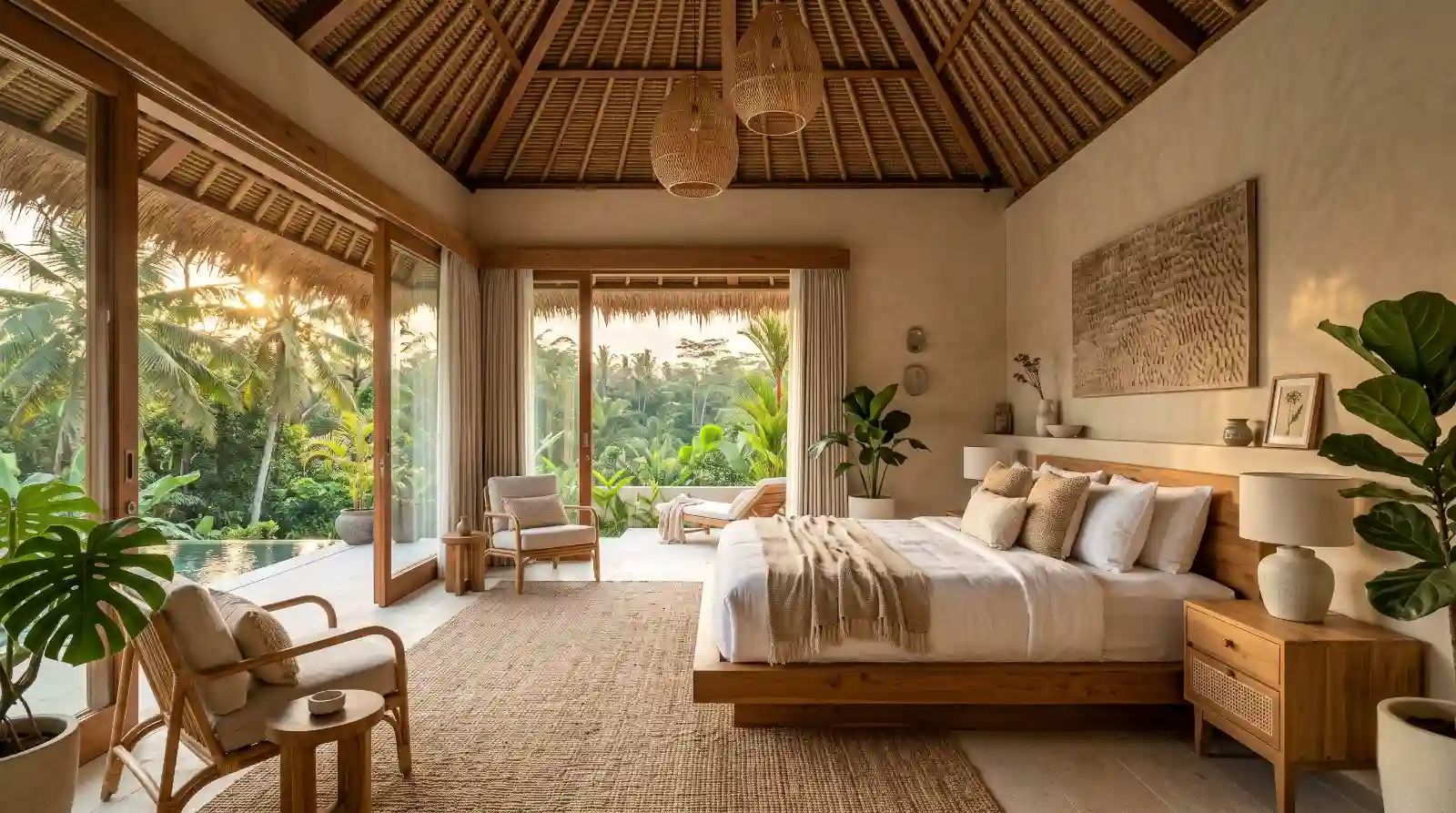
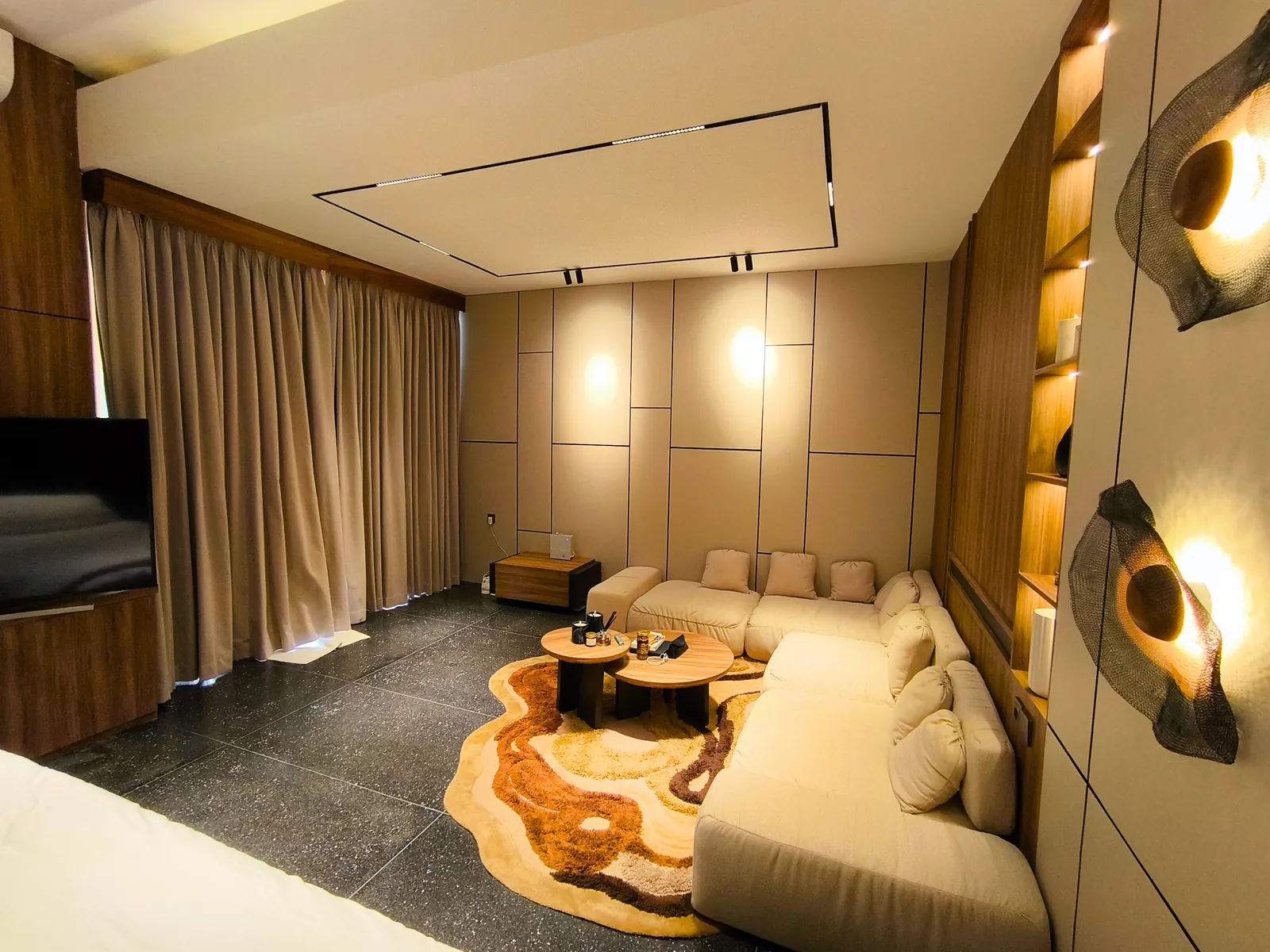
The room above is one of our own, in Kerobokan, Bali. It sits at the top of a Lombok guide because the workshop and the specification behind it are the same ones a Lombok project draws on. What changes between the two islands is the delivery, and that is most of what this guide is about.
Quick Answer: The Three Ways to Furnish a Property in Lombok
There are three ways to get furniture into a Lombok property, and most projects use more than one of them. Which route fits depends less on budget than on what you are furnishing, how much of it has to match, and how exposed the property is.
- Buy from a local showroom. Fastest route. Mataram carries the bulk of the island’s retail stock, and for standard residential pieces you can often walk in, buy, and take delivery within days.
- Order made to measure. Necessary when a piece has to fit a specific space, match across several rooms, or meet a particular specification. Takes weeks rather than days, and the maker can be in Lombok, Bali or Java.
- Ship in from Bali or Java. The usual route for whole property furnishing, matched schemes, and anything specified for coastal exposure. Longest lead time, widest choice, and the option with the most variables in the delivery itself.
Most projects end up using two of the three. A villa might take its beds and wardrobes from a Mataram showroom and order the kitchen and built in storage to size. The outdoor pieces then come across from Bali, because nothing local carries the right specification for that exposure. The decision is rarely all or nothing, so work through it route by route rather than settling on one answer for the whole property.
| Route | Typical lead time | Best for |
|---|---|---|
| Buy from a Mataram showroom | Days | Single pieces, small properties, short timelines |
| Order made to measure | Weeks | Pieces sized to a space, matched across rooms, a specific timber or finish |
| Ship in from Bali or Java | Weeks, plus a delivery window | Whole property furnishing, matched schemes, coastal specification |
Where to Buy Furniture in Lombok: What Showrooms Actually Stock
The island’s retail furniture layer clusters in and around Mataram. It is genuinely useful for standard residential pieces, beds, wardrobes, dining sets, basic seating, and for replacing single items quickly.
Where it thins out is in scale and consistency. Buying eight matching dining chairs, or matching a bedroom scheme across four rooms, is harder from local stock than buying one of each. Specification is the other gap. If you need a particular timber, a particular finish system, or upholstery rated for a specific environment, local retail stock is unlikely to carry it.
None of this is a criticism of the market. It reflects the size of the island’s population and the volume that supports a retail floor.
When Local Stock Is Enough and When It Is Not
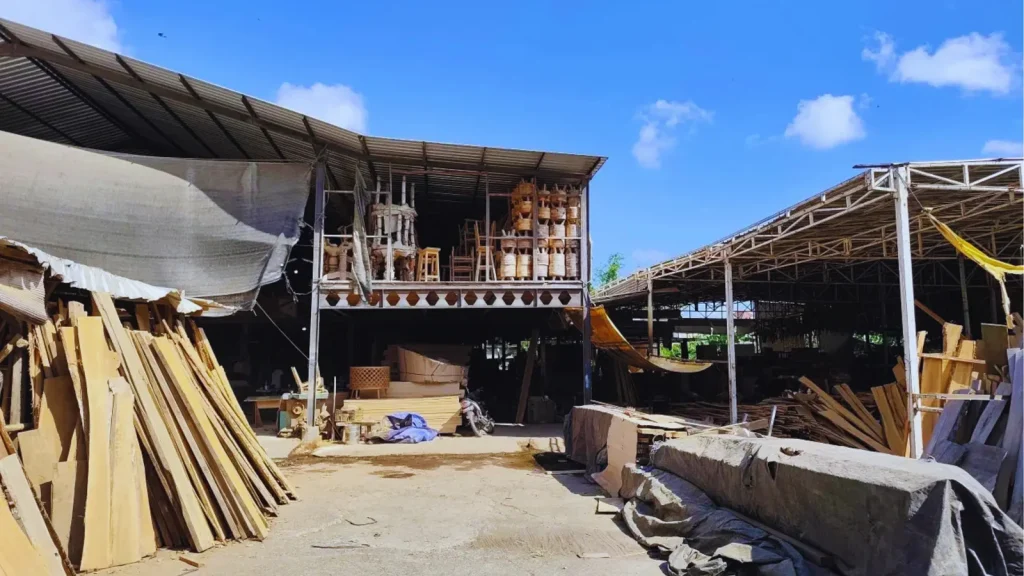
Local stock is usually the right answer when you are furnishing a small property, replacing individual pieces, working to a short timeline, or you are relaxed about exact matching.
It is usually the wrong answer in four situations.
- Scale. Once you need quantities of the same piece, local availability becomes the constraint rather than your choice of design.
- Matching across rooms. Stock rotates. A piece bought in March may not be available in June, which matters for a multi room property furnished in phases.
- Replacement consistency. For rental and hospitality properties, being able to replace a damaged chair with an identical chair in two years is worth more than the original saving.
- Coastal specification. This one matters most, and the next sections cover it.
Two of these cases have their own guides. If the property is a rental, furnishing a villa in Lombok covers what wears out first under guest turnover.
If it is a commercial space, specifying restaurant furniture for a coastal site goes into the exposure question in more detail.
What Has to Be Made or Brought In
Three categories almost always fall outside local retail stock.
- Anything sized to an existing space. Kitchen islands, banquette seating, wall panelling and built in storage all take their dimensions from the room. You commission them rather than buy them.
- Anything matched across a whole property. A consistent scheme across bedrooms, terraces and common areas needs a single production run, which means ordering rather than buying from a floor.
- Anything specified for its environment. Timber species, moisture content, finish system and hardware all answer to the exposure the piece will live in. You settle that specification before production starts, and no later fix replaces it.
This is where made to order work enters, whether from a Lombok workshop, a Bali studio, or a Java factory.
Lead Times and Delivery: What Actually Sets the Clock
The most common mistake is estimating a delivery date from distance. Bali to Lombok is a short crossing, and people reasonably assume the furniture arrives quickly.
Distance is not what sets the clock. Handling points are. Every time someone loads a piece, unloads it, moves it between vehicles, carries it across a port, or parks it in a yard, you add both time and the main opportunity for damage. A short journey with six handling points takes longer, and carries more risk, than a longer journey with two.
For our own work the timeline is roughly four weeks in production and one week in delivery, so about five weeks from order confirmation to furniture standing in the room. The delivery week is short for a specific reason. We load at our own workshop onto our own transport. The truck crosses on the ferry with the furniture still on it, and the same vehicle unloads at the property.
That means we load a piece once and unload it once. It never changes vehicle, waits in a freight depot, or passes through an intermediary at either port. A consolidated freight route over the same distance can involve twice as many handlings. Every one of them risks a knocked corner or a wait for the next available truck.
This works because of how the crossing itself operates. The Padangbai to Lembar service is a roll on, roll off ferry, so vehicles drive aboard and drive off again at the other end. Departures run roughly every hour, around the clock, and the crossing itself takes about four to five hours. A loaded truck can therefore stay loaded from the workshop door to the property gate.
The remaining variable is the receiving end. Whether there is vehicle access to the property, whether the building is ready to take furniture, and whether someone is there to check condition on arrival. The weakest handover in the chain sets the delivery date, not the day production finishes.
Six Things to Check Before You Buy
- Moisture content, and whether it was dried for here. Timber that nobody dried to the right level moves after installation. Joints open, doors stop closing, tops cup. The trap is that “kiln dried” alone tells you nothing, because the correct target depends on where the furniture will live.
Interior hardwood destined for a climate controlled temperate house sits around 6 to 8 percent. Indonesian suppliers typically dry to about 14 percent, because that is what matches the local humidity. Furniture dried for export and then kept here will take up moisture and swell. The ATIBT guidance on wood moisture content and drying levels makes the same point: a kiln dried label means little unless it states the moisture content, so ask for the number and for the climate it was dried for. - Heartwood or sapwood, not just the species name. “Teak” on its own is not a specification. The European durability standard treats sapwood as not durable regardless of species. Under NF EN 350, CIRAD’s Tropix sheet separates teak by origin: heartwood from natural forest is Class 1, very durable. Plantation grown teak is the middle case, given a range of Class 1 to 3. A seller can honestly call two pieces teak when they have completely different lifespans outdoors. Ask which part of the log the maker cut it from.
- Joinery. Look at how the maker joined the pieces rather than how they finished them. Mechanical joints outlast glue and screws, particularly in a climate that moves timber through the year.
- The finish system. Finish is protection, not decoration. Ask what the system is, how many coats it carries, and whether it suits the exposure the piece will live in. Interior finish on an outdoor piece fails quickly, and metal frames near salt air depend entirely on the coating rather than on the steel underneath.
- Hardware. Hinges, runners, fixings and frames fail before timber does near salt air. Stainless or properly coated hardware costs more at purchase and is usually the difference at the three year mark.
- How it will be delivered. Ask before ordering, not after. Find out how many times the piece changes hands between the workshop and your room, and whether one operator carries it the whole way or hands it to a freight partner. Then ask who unloads at your end and what happens if it arrives damaged. This is the question buyers ask last and regret asking last.
Furnishing a New Build or Development
Furniture on a new build is a scheduling problem before it is a buying problem.
Order too early and you store finished pieces on an active construction site, which is where damage happens. Order too late and you have a completed building you cannot use. Phase furniture against the construction programme instead. Order in batches tied to whichever areas complete first, and agree in advance where the pieces wait between delivery and installation.
For anything made to order, count the lead time backwards from the handover date, and include the delivery window rather than just the production window. On our own work that means allowing five weeks in total, not four.
Our Furniture
Round Nesting Coffee Table in Teak
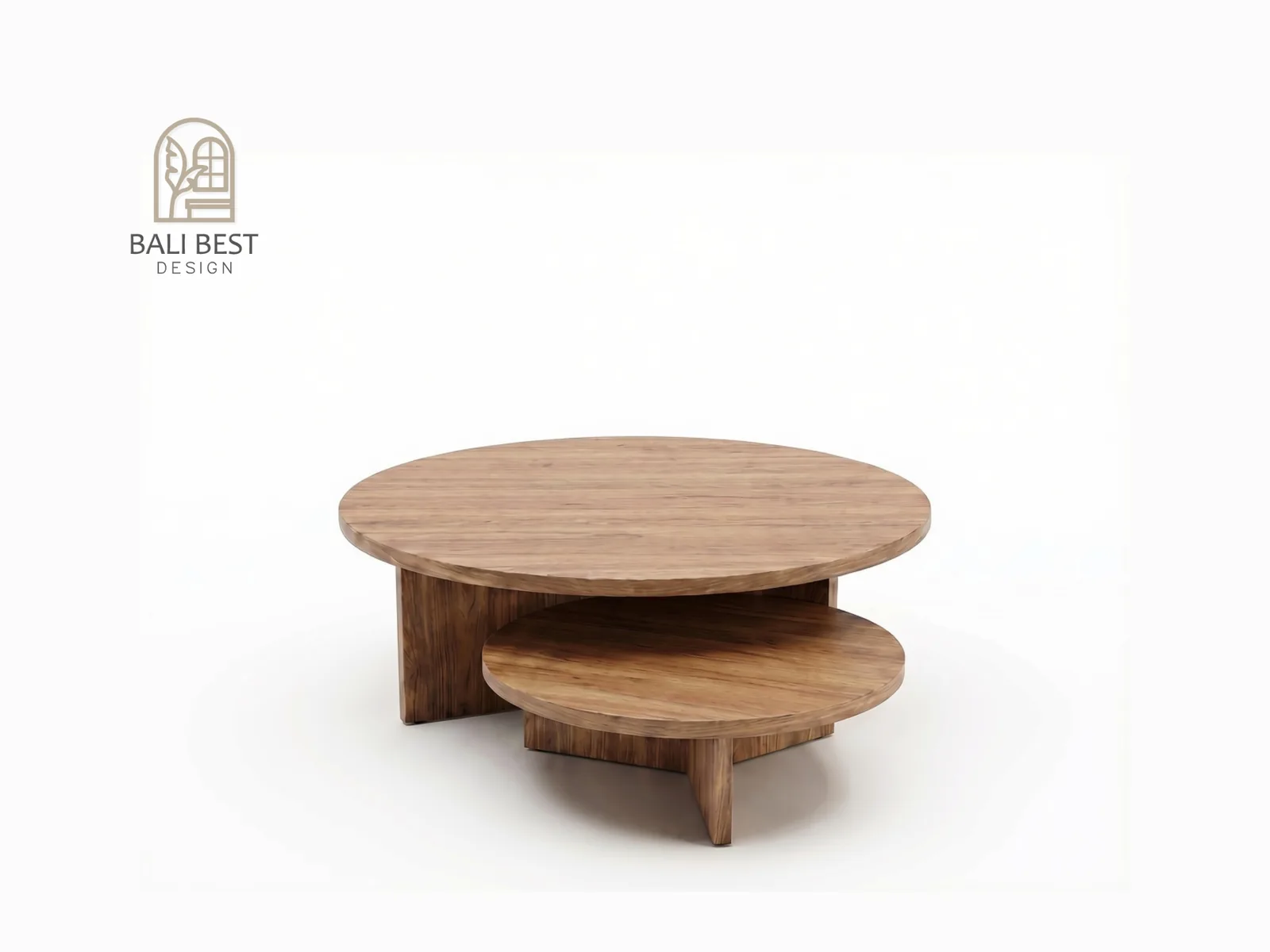
Two circular tops on solid plinth bases, set at different heights so the lower disc tucks beneath the upper. Solid teak throughout, with a softly eased edge that survives handling better than a sharp arris. Designed by Bali Best Design, produced in our Kerobokan workshop.
Kitchen Island with Terrazzo Top
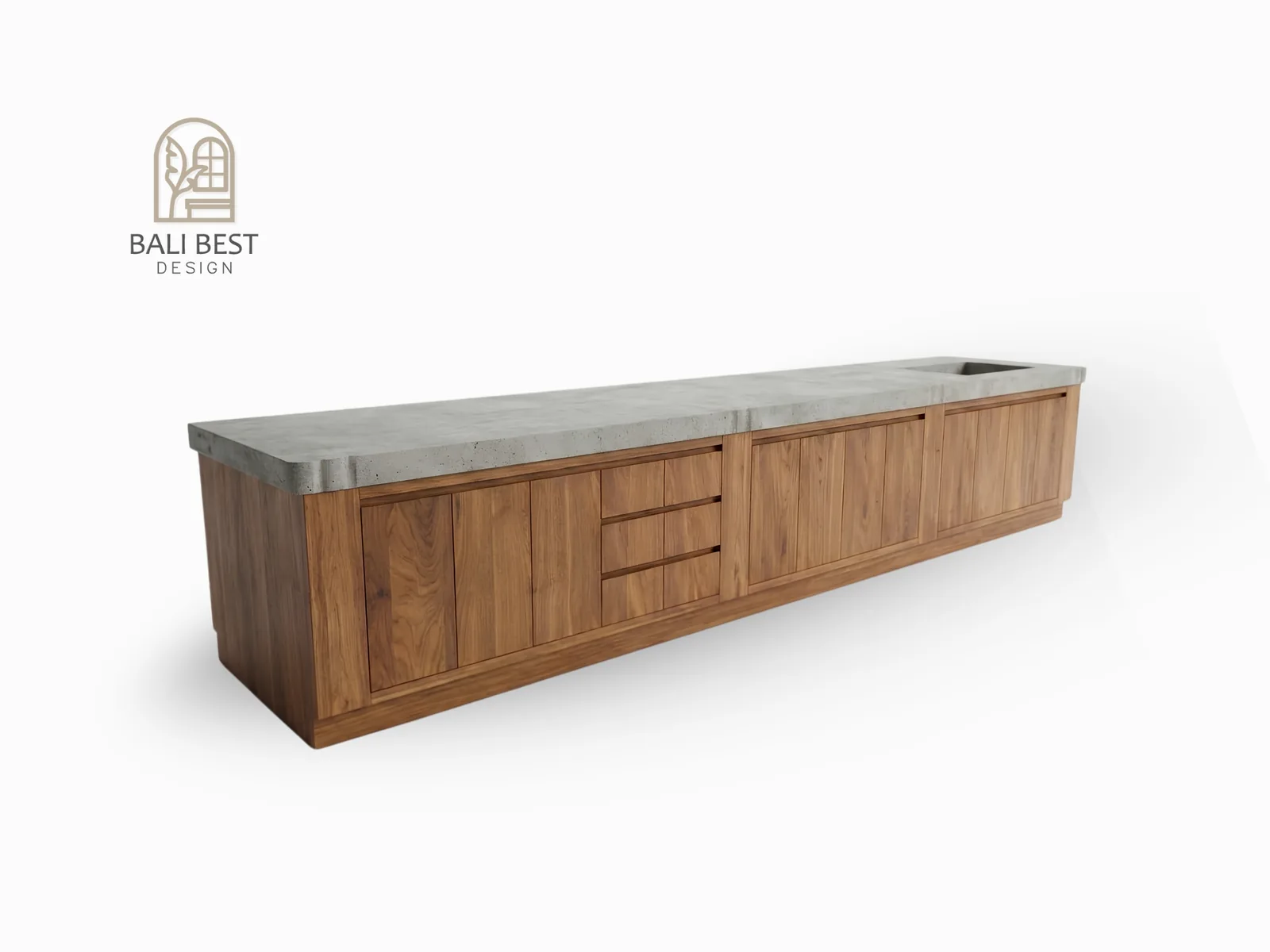
A long run of teak fronted cabinetry under a cast terrazzo top with an integrated sink cutout. Doors, drawers and an open return. Terrazzo suits a working surface in this climate because it is dense, repairable and does not mark the way a softer stone does. This is the piece most often sized to an existing space rather than bought from a floor. It is also the clearest example on this page of something that has to be made rather than sourced.
Teak Round Chair with Hand-Woven Seat
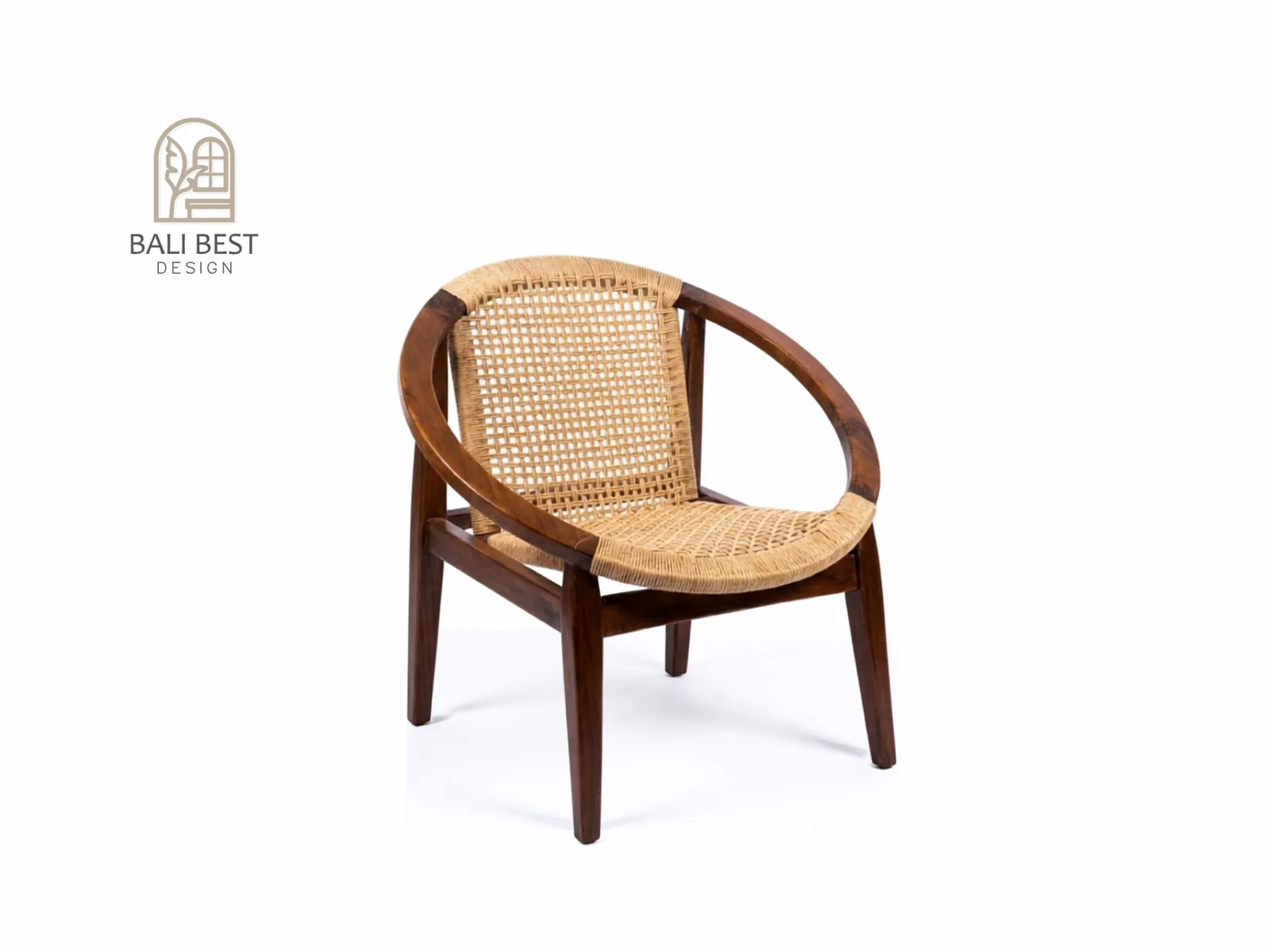
A circular teak frame carrying a hand woven seat and back. The weave is the labour in this piece, and it is also what dictates its lifespan. A worn seat can be rewoven on the original frame, which is worth knowing before you replace a chair.
Woven Bar Stool with Steel Frame
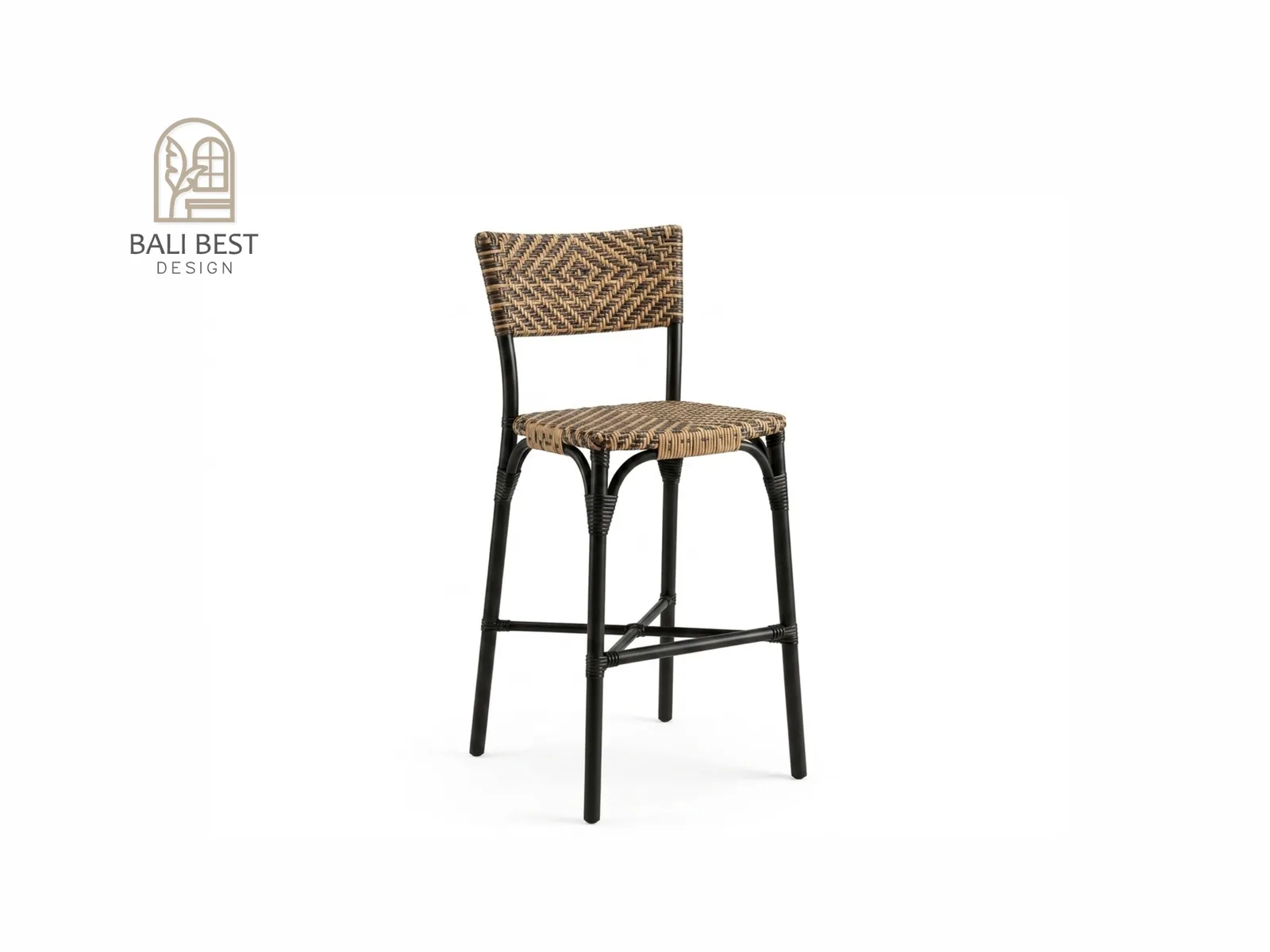
Woven seat and back on a slim steel frame. The weave gives airflow and keeps the stool light enough to move daily, which matters in a bar or a poolside setting. Steel is the right frame material for the load a bar stool takes, and the coating on it is the detail to ask about anywhere near salt air.
Cafe Table and Cone Stool Set
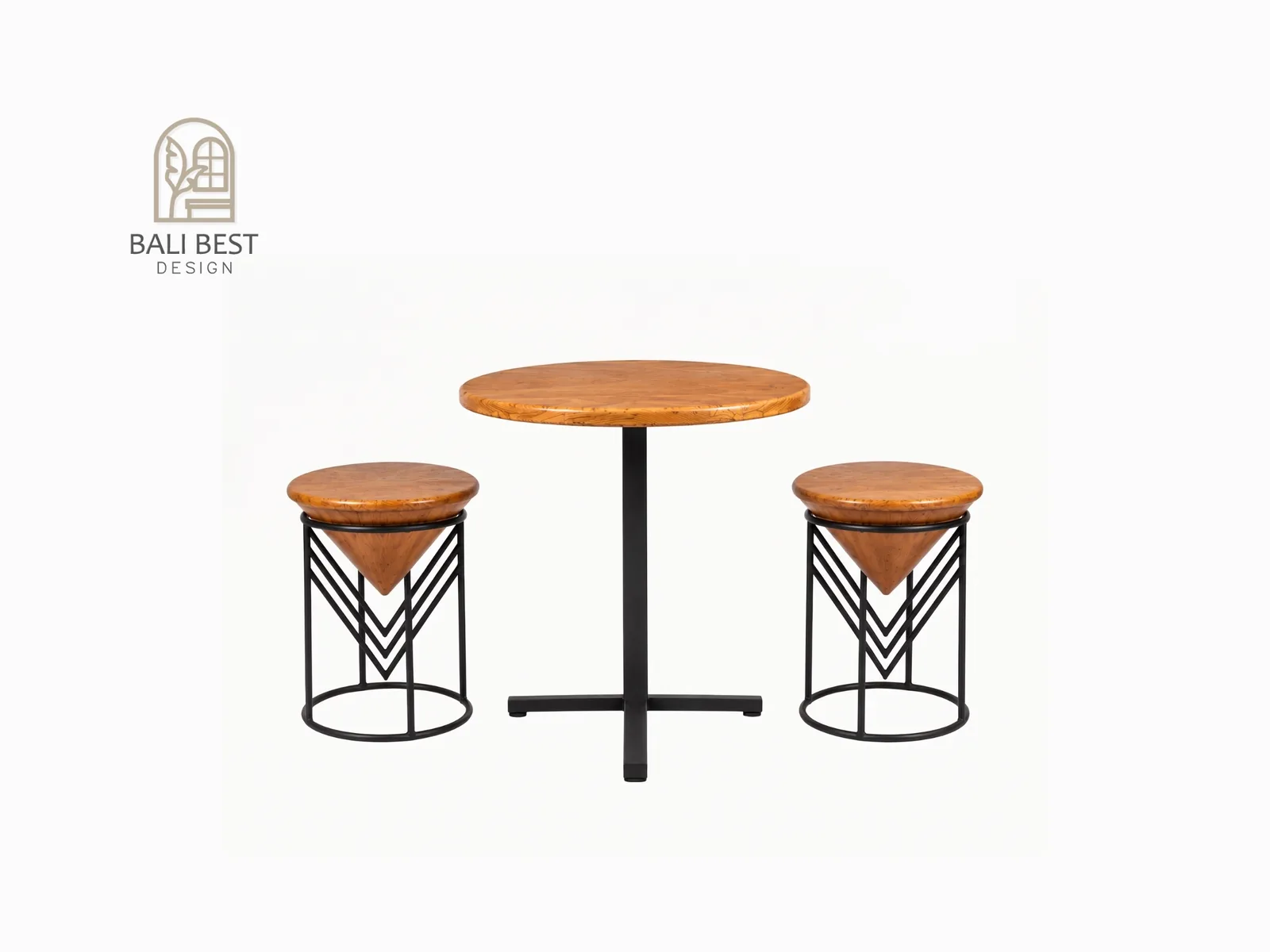
A round solid teak top on a steel cross base, paired with two matching teak cone stools. Specified as a set for cafes and bar corners where the footprint has to stay tight and the seating has to tuck fully under the table.
Teak Cone Stool with Chevron Base
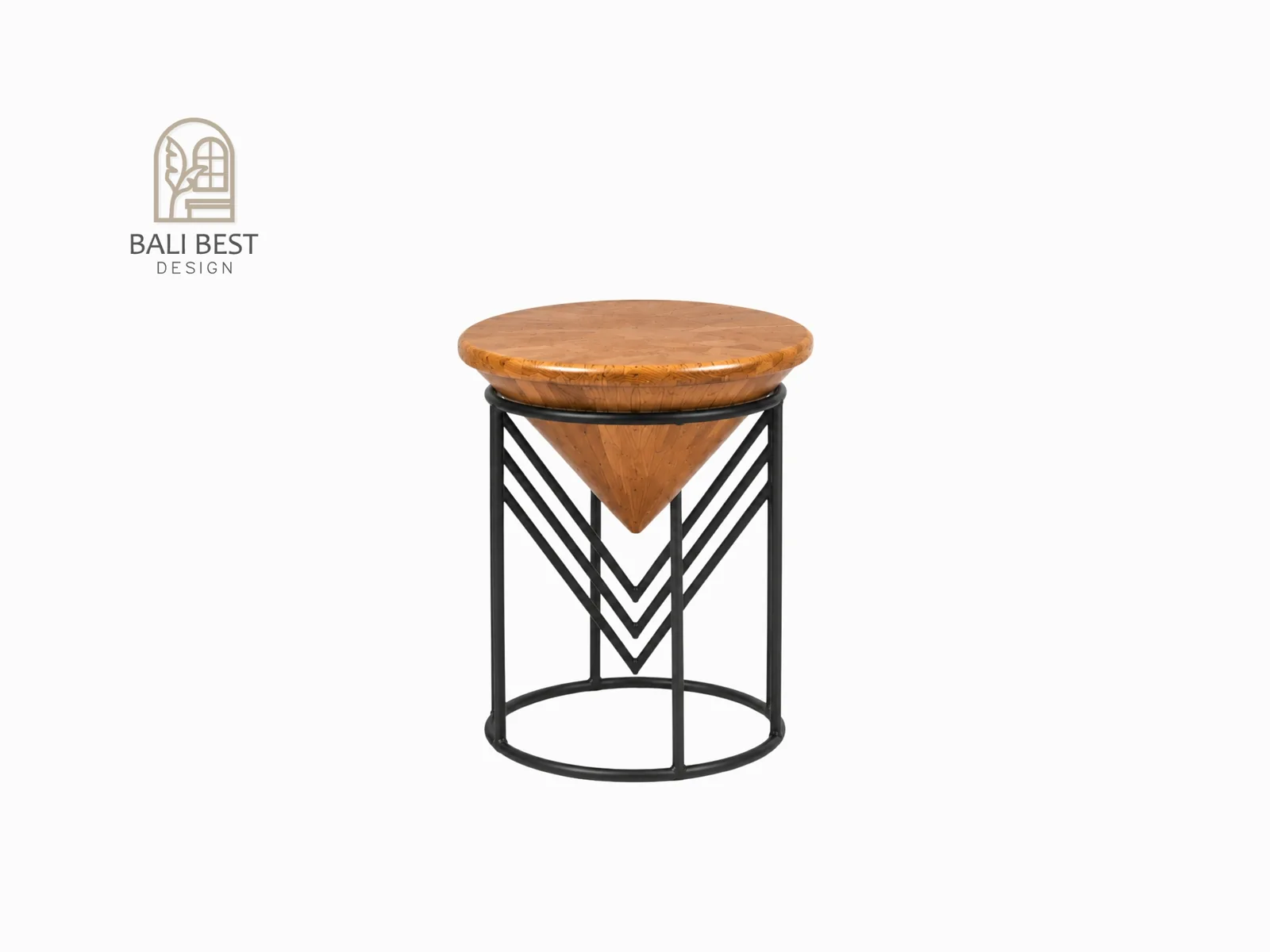
The stool from the set, shown on its own. A turned solid teak cone seat cradled in a chevron steel frame. The cone is a single piece, so the grain runs continuously through the seat rather than breaking across a joint.
Teak Side Table with Cantilever Base
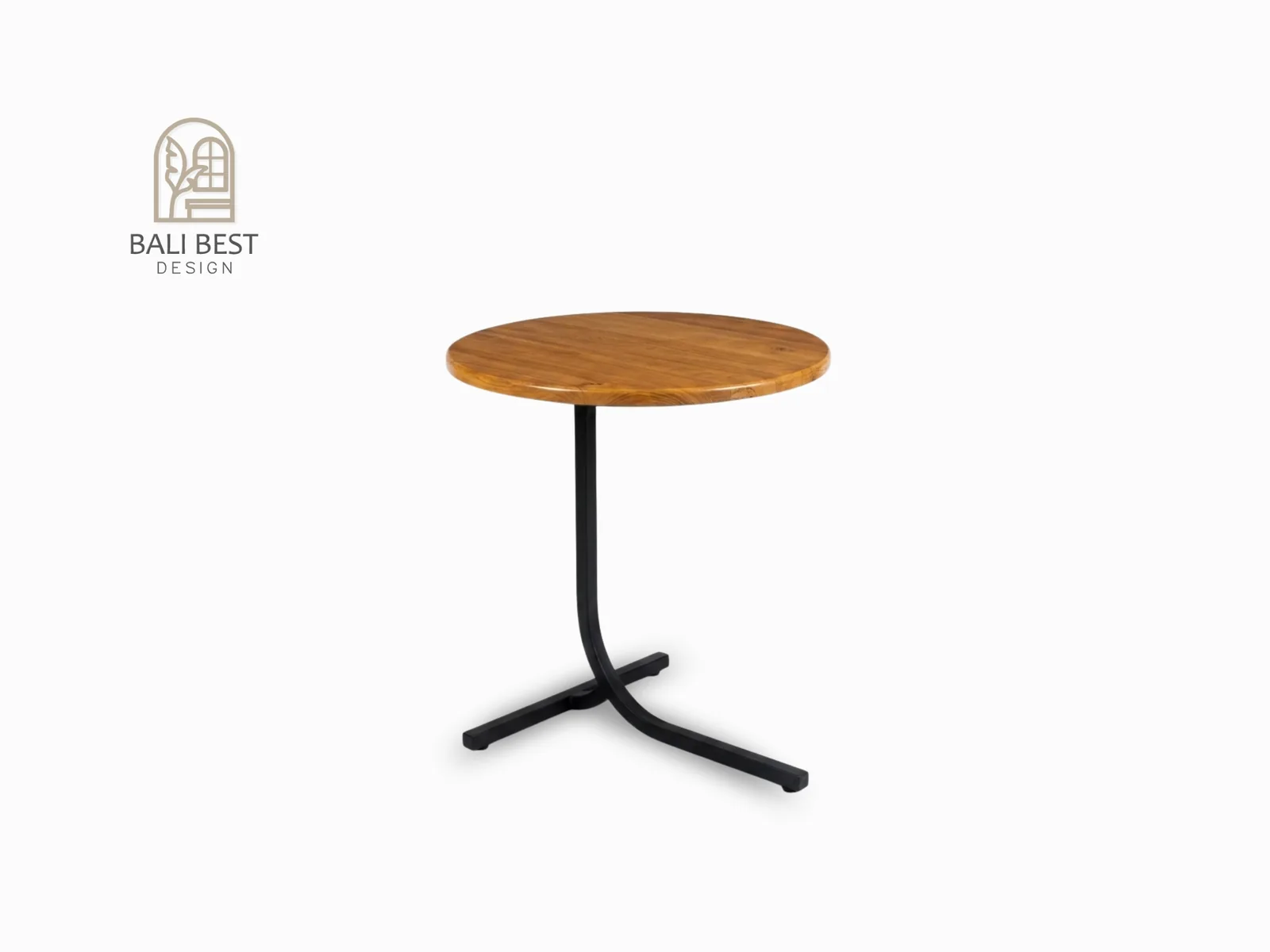
A solid teak top on an offset steel base, shaped so the foot slides under a sofa or a bed. Small footprint, and the cantilever is where the engineering sits. The weight of the base is what stops it tipping when the top is loaded at the edge.
Block Coffee Table in HPL and Plywood
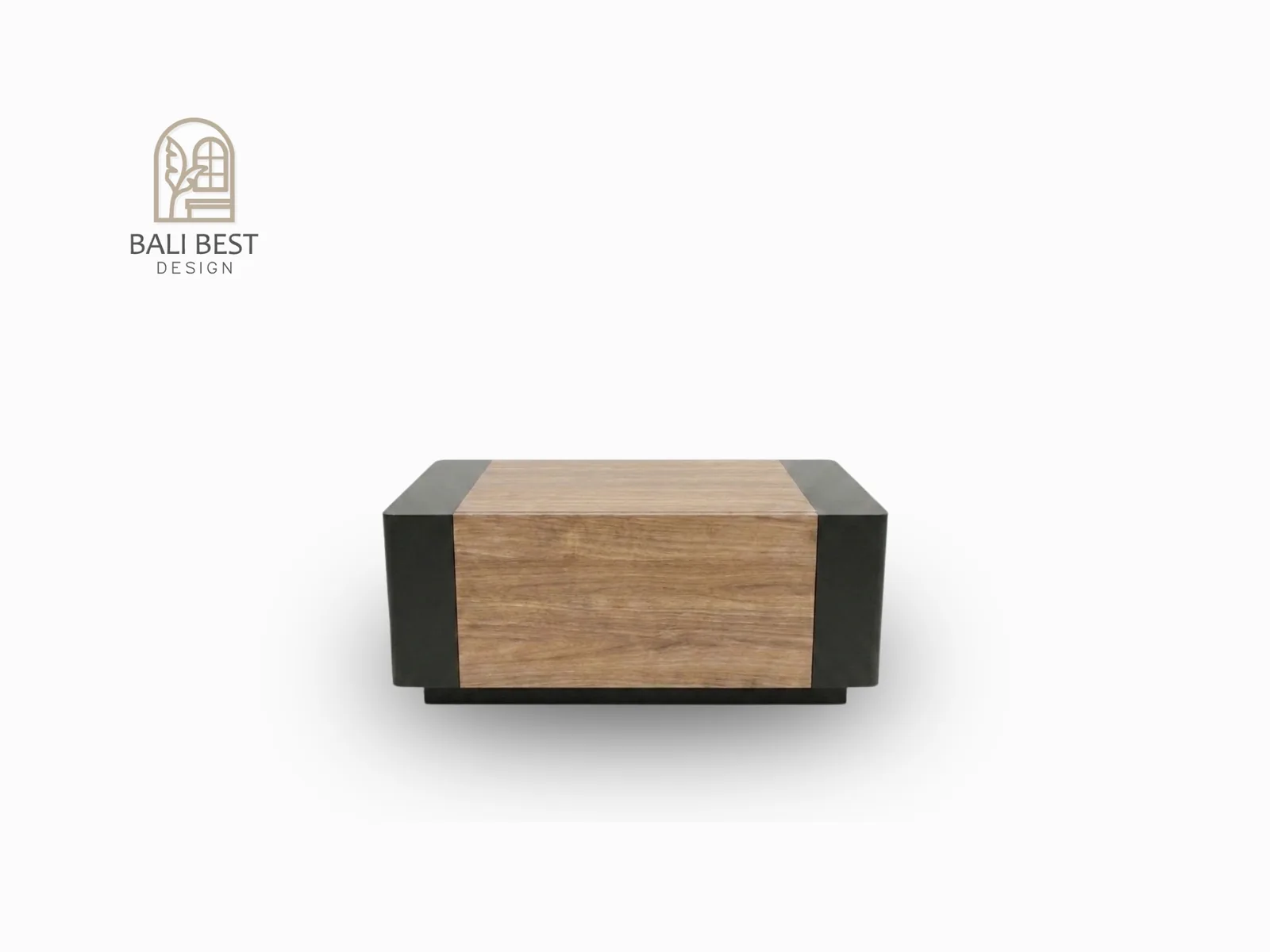
The one piece here that is not solid timber. An HPL faced plywood carcass, wood decor between dark end panels on a recessed plinth. HPL is the sensible choice where a large flat surface has to stay dimensionally stable and take daily wear. On a low table it does that better than a wide solid top would. The joint line between the two finishes is the whole detail. It either lines up or it does not, which makes it a quick way to read a maker’s tolerance.
Where to Go From Here
If you are furnishing a property in Lombok and some of it has to be made rather than bought, that is a specification conversation before it is a purchase. Our Lombok interior design service covers how we scope and deliver island projects.
For work on the other island, our Bali interior design service explains how the studio works.
FAQ – Furniture Lombok
For a small property furnished with standard residential pieces, often yes. For a whole property, a matched scheme, or anything specified for coastal exposure, usually not. Most projects buy some items locally and order the rest.
It depends on what you are buying and how much of it. Shipping adds cost and handling, so a single item rarely justifies it. A full property order usually does, because the wider choice and consistent specification outweigh the delivery. Compare purchase plus delivery plus replacement risk, not just the purchase.
Local stock can take days. Made to order work takes weeks, covering production plus delivery. Our own typical timeline runs four weeks in production and one week in delivery, so around five weeks from order confirmation to furniture in the room. The delivery week stays short because we load at our workshop, cross on the ferry with the furniture on our own truck, and unload at the property. That way the pieces change hands at each end and nowhere in between.
Teak heartwood is the usual answer, and the European durability standard rates heartwood from natural forest Class 1, very durable. Two qualifiers matter: sapwood is not rated durable at all, and plantation grown teak ranges from Class 1 to Class 3. Beyond that the combination decides lifespan: the right part of the log, dried to the right moisture content for this climate, with a finish system and hardware that suit the exposure. A durable timber with the wrong finish still fails.
Ask before ordering. Some suppliers deliver to the port and no further. Others reach the property but will not carry pieces inside or assemble them. Establish who unloads, who installs, and what happens if something arrives damaged.