Last Updated on October 16, 2026 by Wisnu Arista H.
Japandi vs Balinese Interior Design in Bali: Which Style Fits Your Villa?
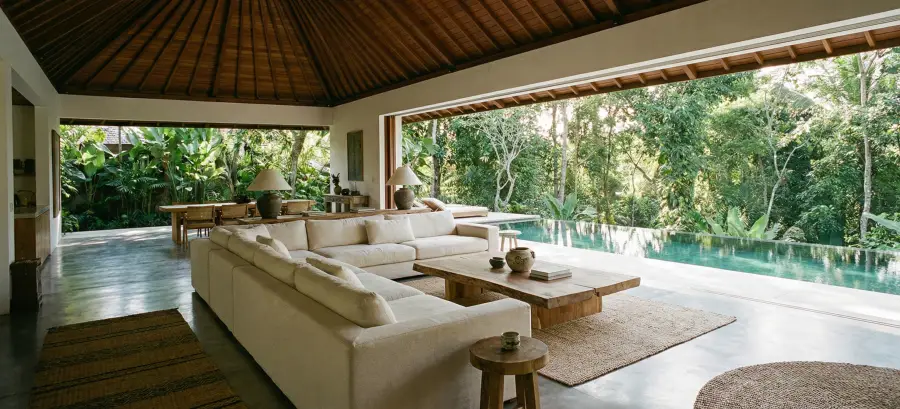
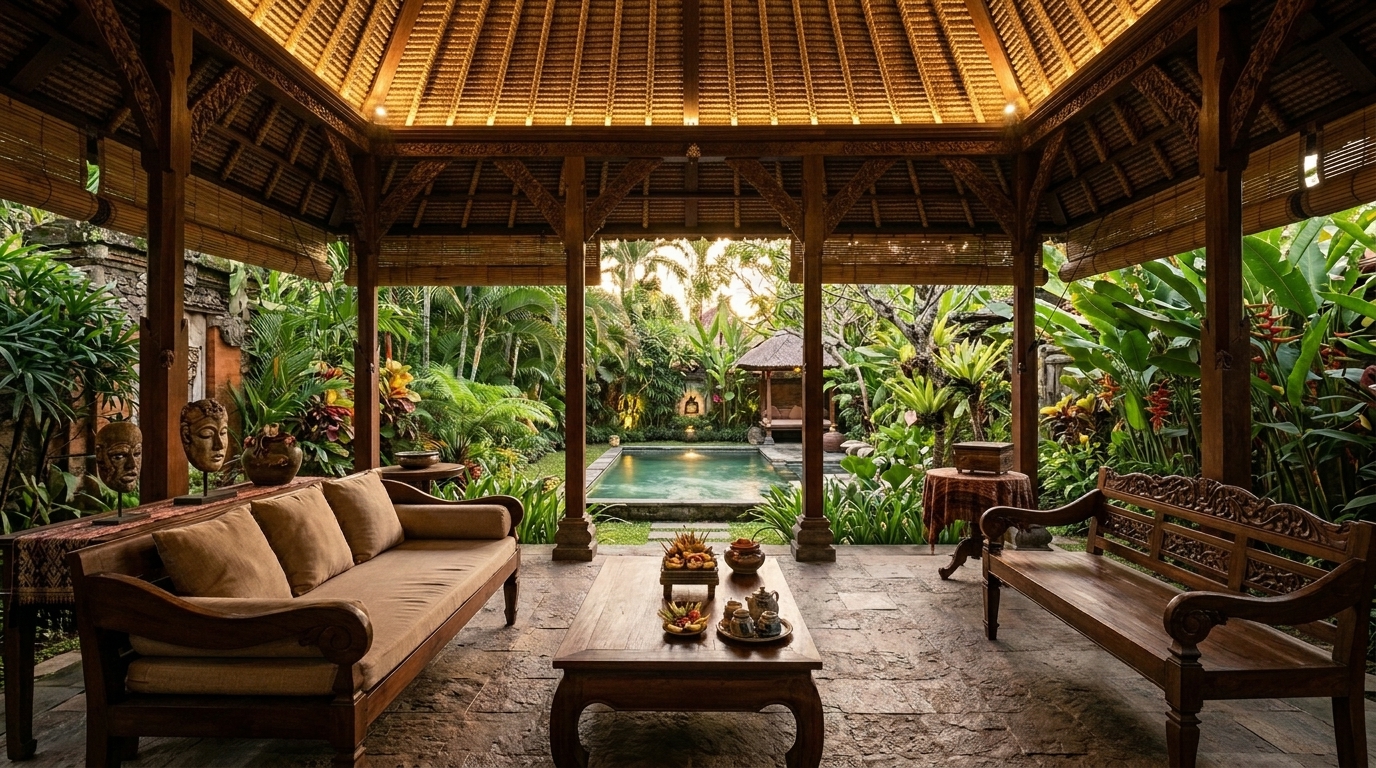
Japandi and traditional Balinese sit at opposite ends of Bali’s style spectrum. One is restrained and imported; the other is ornamental and rooted in the island itself. Japandi interior design in Bali pairs Japanese minimalism with Scandinavian warmth: low furniture, muted palettes, quiet materials. Balinese interior design grows out of the island’s own building tradition. Its core is open pavilions, carved timber, natural stone and alang-alang thatch, all opening onto the garden. It carries a visible connection to local craft and spirituality.
Both work in a tropical villa, but they solve different problems and suit different owners. This guide compares the two directly (materials, spatial impact, maintenance, and who each style actually fits) as part of our broader Bali interior design styles coverage, so you can choose with your eyes open rather than by mood board alone.
Japandi vs Balinese at a Glance
| Japandi | Traditional Balinese | |
|---|---|---|
| Core idea | Japanese restraint + Scandinavian warmth | Open-pavilion architecture rooted in local craft |
| Visual density | Spare, uncluttered, quiet | Ornamental, layered, visibly handcrafted |
| Key materials | Light-to-mid timber, rattan, linen, matte stone | Carved timber, natural stone, thatch, stone carving |
| Spatial commitment | Works within an existing layout | Best built in from the foundation stage |
| Maintenance in the tropics | Moderate; treated timber and rattan need upkeep | Higher; thatch, carving, and open pavilions need more regular care |
| Best fit | Owners who want calm and function first | Owners who want the villa to feel authentically of Bali |
| Renovation-friendly | Yes, retrofits onto most existing villas | Limited: pavilion layout is hard to add after the fact |
What Each Style Actually Delivers
Japandi’s appeal is restraint. Every object in the room has to earn its place, and the palette stays muted enough that the space reads as calm rather than empty. It suits owners who find full Balinese ornamentation too busy but still want warmth, not the starkness of pure minimalism. Because it is a material and furnishing style rather than an architectural one, it can be layered onto almost any villa shell without touching the structure.
Traditional Balinese design is a different kind of commitment. It is the island’s own architectural language, built around open pavilions that blur the line between inside and garden, with carved timber, natural stone, and thatched roofing carrying visible craft. That openness and ornamentation is structural, not decorative: the layout has to be planned for it from the start. A villa built for a closed, air-conditioned floor plan cannot simply be “styled” into traditional Balinese; the architecture has to support it.
That difference, a furnishing style versus an architectural one, is the real fork in the decision, more than which look you personally prefer.
Materials and Climate Behaviour
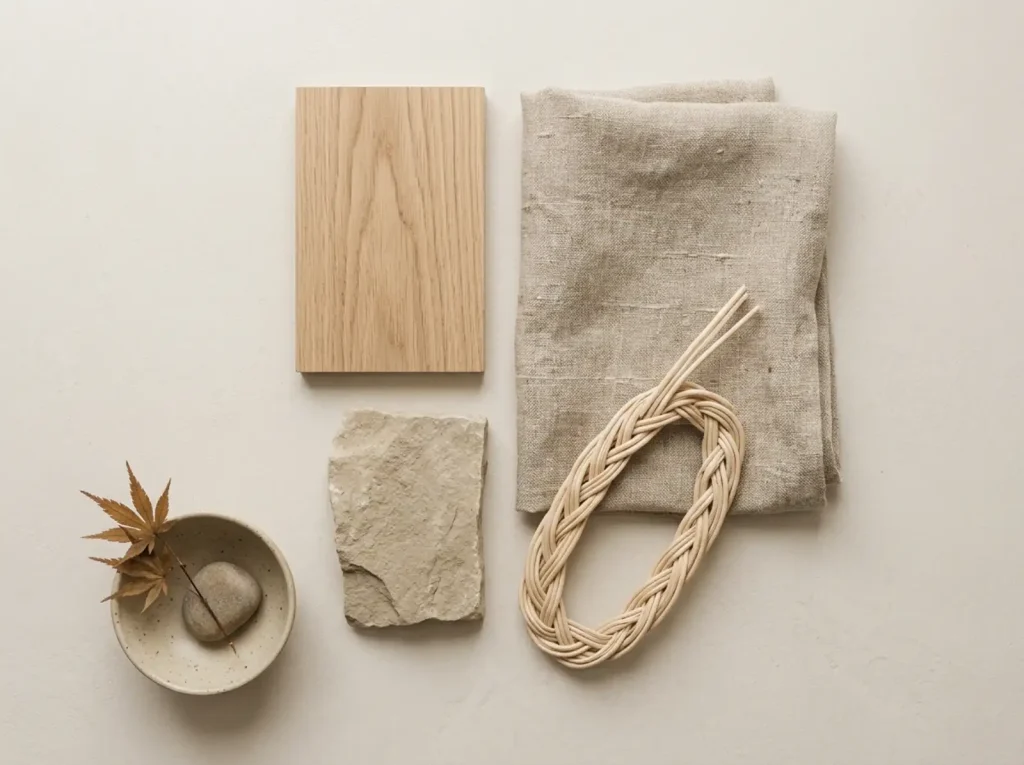
Both styles lean on natural materials, but they stress-test differently in Bali’s humidity. Japandi’s low, light-to-mid timber furniture and rattan pieces need kiln-dried, climate-appropriate wood and natural penetrating oils; untreated timber warps, and untreated rattan turns brittle or moulds within a season. Its palette is otherwise low-maintenance once specified correctly, since the material list is short and consistent room to room.
Traditional Balinese design uses a wider material range: carved timber, stone, thatch, and each element carries its own upkeep profile. Thatched roofing needs more frequent attention than tile or metal. Exposed carved timber in open pavilions sees more direct weather than furniture set back under cover.
None of this makes the style impractical; Bali villas have used these materials for generations. It does mean the ongoing maintenance conversation is more involved than it is for a Japandi interior, where the exposure is mostly limited to furniture rather than the building envelope itself. For how Balinese design is adapted in today’s villas, see our guide to Balinese interior design style.

Which One Do You Need? Common Scenarios
- You’re renovating an existing villa and don’t want structural work. Japandi is the practical fit: it layers onto the shell you already have.
- You’re building new and want the home to feel unmistakably Balinese. Traditional Balinese needs to be part of the architectural brief from day one, not added after design.
- You want warmth without visual clutter. Japandi’s restraint delivers this more directly than Balinese ornamentation.
- You want visible craftsmanship and cultural specificity, even if it takes more upkeep. Traditional Balinese carries that in a way no imported style can replicate.
- You’re unsure and want a lower-risk starting point. Japandi is more forgiving to adjust later; a pavilion layout is not.
In practice, the choice usually follows those lines. Owners who prioritise flexibility and calm lean Japandi; owners who prioritise cultural authenticity and are willing to commit architecturally lean traditional Balinese. Some projects blend the two, pairing Balinese architectural bones with a Japandi-influenced material and furniture palette inside, though that hybrid works best when it’s a deliberate design decision rather than an afterthought.
Getting the Decision Right
Neither style is objectively “better.” They answer different questions. Japandi asks what makes a space feel calm and functional with the fewest elements. Balinese asks how a home can carry the identity of the island it sits on. A villa’s existing architecture, the owner’s renovation budget for structural changes, and how much ongoing material upkeep the owner wants to take on all weigh more heavily on the outcome than aesthetic preference alone.
Getting either style right in a working tropical climate is a matter of interior design experience as much as taste. The wrong timber treatment or an under-planned pavilion layout can undo the aesthetic within a year. If you’re weighing which direction suits your villa, our Bali interior design services team can walk through your specific layout and climate exposure before you commit to a direction.
Frequently Asked Questions
Traditional Balinese generally involves more upkeep, since thatch, exposed carved timber, and open pavilions see more direct weather exposure than Japandi’s furniture-focused material list. Both require climate-appropriate material choices from the start to keep upkeep manageable.
Yes. A common approach pairs Balinese architectural elements like open pavilions with a Japandi-influenced material and furniture palette inside. It works best as a deliberate plan rather than a retrofit.
Japandi, generally. It is primarily a furnishing and material style, so it layers onto most existing floor plans. Traditional Balinese depends on open-pavilion architecture, which is difficult to add after a villa is already built.
Yes, when specified for the climate: light natural timber, rattan, linen, and indoor-outdoor flow keep it from feeling imported. The restraint is the point; it is not meant to look maximalist or ornamental.
Start with your architecture and renovation appetite. If the layout is fixed and you want calm and function, Japandi fits. If you’re building new and want the space to read as distinctly Balinese, plan the pavilion architecture in from the start. For a closer read on the minimalist side, see our guide to Japandi interior design in Bali.