Last Updated on September 18, 2026 by Wisnu Arista H.
Custom Furniture and Local Procurement in Bali
Custom furniture is where a Bali home interior is won or lost. The island has some of the best woodworking and rattan craft in the region, which means bespoke pieces are not a luxury add-on here so much as the sensible default. Imported flat-pack and branded furniture tends to fail fast in the tropics, while a well-made local piece is built for the climate from the first cut. This guide covers why custom and locally procured furniture usually beats importing, what timber and materials to specify, how long the process realistically takes, and how to keep quality high across a whole project, as part of our wider home interior design in Bali coverage.
Bali Furniture Sourcing: Why Custom and Local Beats Importing
Imported furniture arrives with a hidden problem: it was engineered for a different climate. Kiln-dried to a temperate moisture content, a piece made in Europe or North America meets Bali’s humidity and starts to move. Drawers swell, veneers lift, and hardware corrodes, often within the first couple of years. Shipping also adds long transit times, handling risk, and import duties that inflate the furnishing budget without adding any durability.
Local sourcing solves the climate problem at the source. A Bali custom furniture workshop building with properly seasoned tropical timber makes furniture that has already reached equilibrium with the environment it will live in. Custom also means the piece is sized to your actual space rather than a showroom average, which matters in villas with open-plan rooms and non-standard dimensions. The trade-off is that you manage a build process rather than clicking “add to cart,” and that process rewards diligence.
What to Specify: Timber, Rattan, and Hardware
Material choice is the single biggest driver of how a piece of custom furniture ages. A short, reliable shortlist covers most residential work.
| Element | Specify | Why |
|---|---|---|
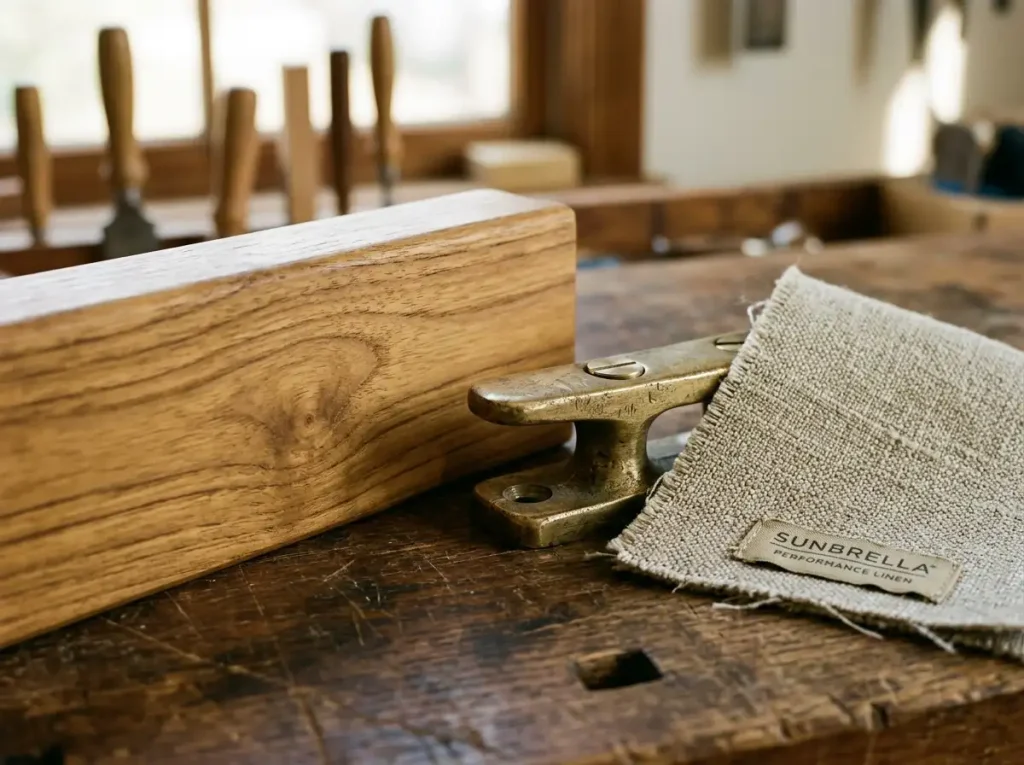
| Primary timber | Teak (kayu jati), properly seasoned | Naturally high oil content resists moisture, insects, and warping |
| Secondary timber | Mahogany or suar (for select pieces) | Workable and stable when kiln-dried; confirm moisture content |
| Woven elements | Treated natural rattan or synthetic outdoor weave | Untreated rattan turns brittle and moulds in humidity |
| Upholstery | Solution-dyed or performance fabrics | Resist damp, mildew, and UV fading better than untreated fibres |
| Hardware | Stainless steel or solid brass | Standard steel and low-grade plating rust in coastal air |
Teak is the anchor of most tropical furniture for good reason: its oil content makes it resistant to the exact failures that sink imported pieces. The point across every row is the same as it is for finishes in general: choose for how the material behaves in a warm, humid, sometimes salty environment first, and for how it looks second.
How Long It Actually Takes
Lead time is the part first-time clients underestimate most. A custom piece is not stock; it moves through design, timber selection and seasoning checks, joinery, finishing, and curing before it reaches the house. A single statement piece can take several weeks; a full villa’s worth of furniture is a multi-month programme that has to be sequenced against the build.
Two things drive the timeline more than anything else. The first is timber readiness: rushing wood that has not properly stabilised is how you get movement later, so a good workshop will not skip the seasoning step. The second is revision loops: every change to a prototype resets part of the schedule. Planning furniture early, ideally alongside the layout rather than after handover, is what keeps procurement from becoming the thing that delays move-in.

Keeping Quality High Across a Whole Project
Commissioning one beautiful chair is straightforward. Furnishing an entire home to a consistent standard is a procurement discipline, and it is where projects most often slip. A few checkpoints keep quality even.
- Ask for samples and a prototype on repeated pieces before the full run is built.
- Verify moisture content of the timber rather than taking it on trust; movement problems trace back here.
- Inspect joinery and finish at the workshop, not only on delivery, so issues are caught while they are cheap to fix.
- Confirm hardware grade in writing; substitutions to cheaper metal are a common quiet downgrade.
- Sequence deliveries to the build programme so finished pieces are not stored on-site in dust and damp.
None of this requires you to be a furniture expert. It requires either your own diligence or a designer who runs this process routinely and has workshop relationships to lean on.
Custom, Off-the-Shelf, or a Mix?
Full-custom everywhere is not always the right answer. The honest position is that most homes are best served by a mix: custom for the pieces that carry the room or need to fit an exact space, and quality local off-the-shelf for secondary items where a stock size works fine. The deciding questions are whether a standard size genuinely fits, whether the piece takes hard daily use, and whether it is visually central to the room. Where the answer points to “important, exposed, or oddly sized,” custom earns its place. Where it does not, a good ready-made local piece saves time without costing durability.
Getting this balance right, and running the procurement cleanly, is a large part of what a designer does on a Bali project. If you want the furniture and sourcing decisions handled alongside the rest of the design, our interior design services in Bali team can plan and manage the procurement against your build timeline.
If you would rather not manage the sourcing yourself, we design and build custom furniture in Bali in our own Kerobokan workshop, and deliver and install across the island.
See this balance applied to specific rooms in our Bali dining room design ideas and Bali living room ideas.
FAQ – Custom Furniture and Local Procurement in Bali
Imported furniture is usually built for a temperate climate. So it swells, delaminates, or corrodes in Bali’s humidity, often within a couple of years. Local custom furniture made from properly seasoned tropical timber is built for the environment from the start. It can be sized to your exact space rather than a showroom standard.
Teak (kayu jati) is the most reliable choice because its natural oil content resists moisture, insects, and warping. Mahogany and suar work for select pieces when properly kiln-dried and moisture-checked. Whatever the timber, confirming it has been correctly seasoned matters more than the species name alone.
A single custom piece typically takes several weeks through design, timber seasoning, joinery, and finishing. A full villa’s furniture is a multi-month programme. Timber readiness and revision loops drive the timeline most, so planning furniture early, alongside the layout, avoids delays to move-in.
Ask for a prototype on repeated pieces, verify the timber’s moisture content, inspect joinery and finish at the workshop rather than only on delivery, and confirm hardware grade in writing. Sequencing deliveries to the build programme keeps finished pieces from sitting in site dust and damp.
A mix usually works best. Use custom for pieces that must fit an exact space, take hard use, or anchor a room, and quality local off-the-shelf for secondary items where a standard size fits. Full-custom everywhere is rarely necessary and adds time without always adding value.