Last Updated on October 19, 2026 by Wisnu Arista H.
Bohemian Interior Design Bali: Origins, Materials and What Lasts
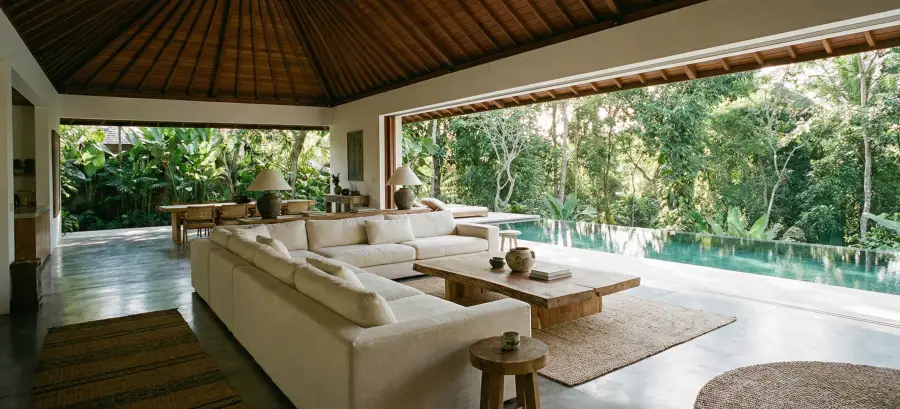
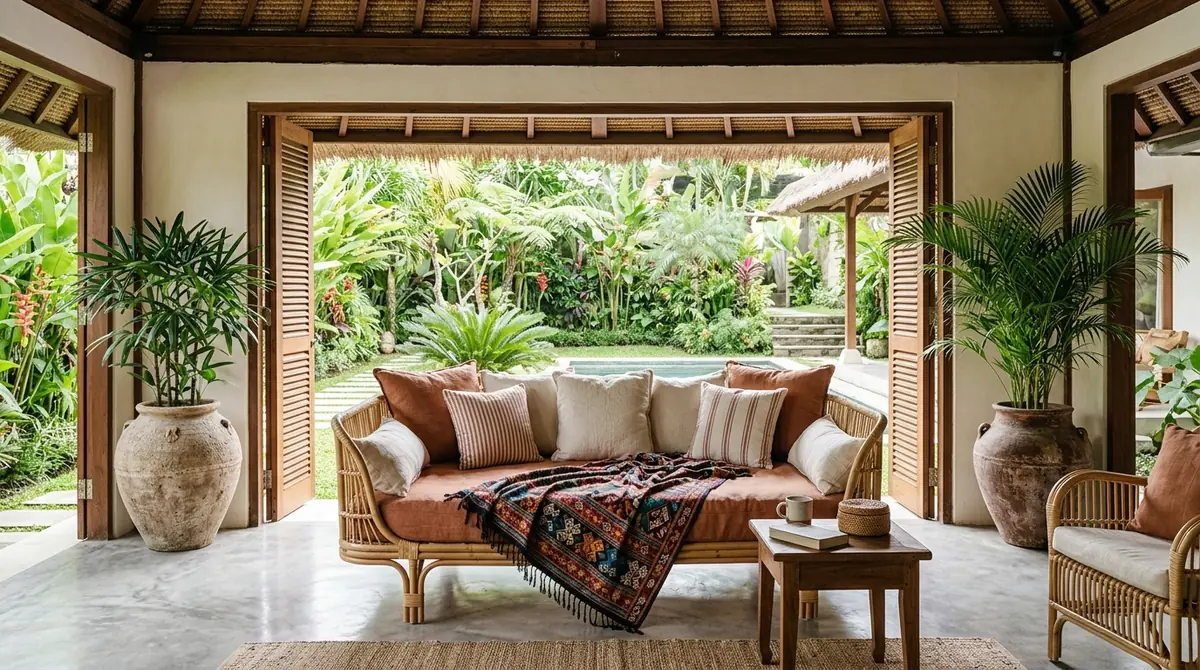
Bohemian interior design in Bali is a relaxed, layered style built from woven furniture, handmade textiles, earthenware and plants. The aim is a room that looks collected rather than bought as a set. On the island the style has its own accent. Rattan and teak replace flea-market finds, ikat and songket replace kilims, and the climate tests every one of those materials.
This guide traces where the look came from and where each piece is actually made in Indonesia. It then covers which materials survive a Bali wet season and how to keep boho from sliding into clutter. For the styles it sits beside, see our overview of Bali interior design styles.
What Bohemian Interior Design Means in Bali
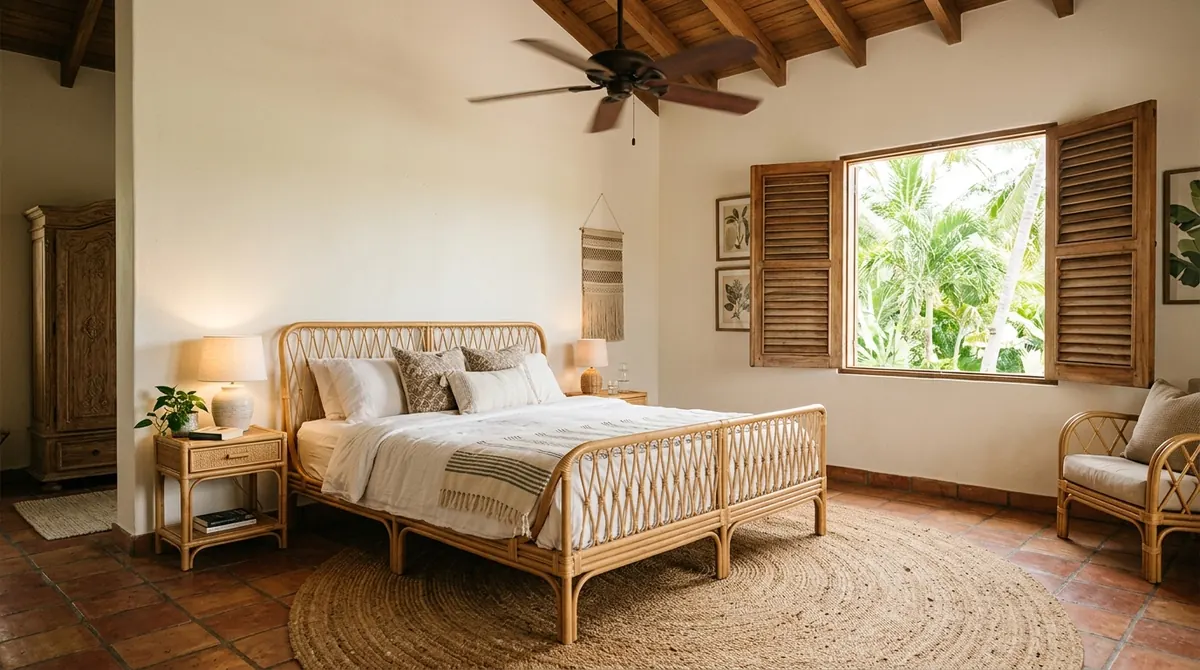
Globally, bohemian (or boho) decorating borrows from travel and craft. It layers rugs, woven textures and patterned cloth, fills corners with plants, and favours furniture that looks found. In Bali the idea is the same, but the kit is local, and five traits set the island version apart:
- Woven furniture: rattan, cane and bamboo seating, usually grounded by solid teak.
- Hand-woven textiles: ikat, endek and songket on cushions, throws and wall pieces.
- Hand-built earthenware: unglazed pots, jugs and planters rather than glossy ceramics.
- Plants as structure: palms and trailing greenery used like furniture, not as accessories.
- Air around everything: pieces spaced so air can move, because the climate insists on it.
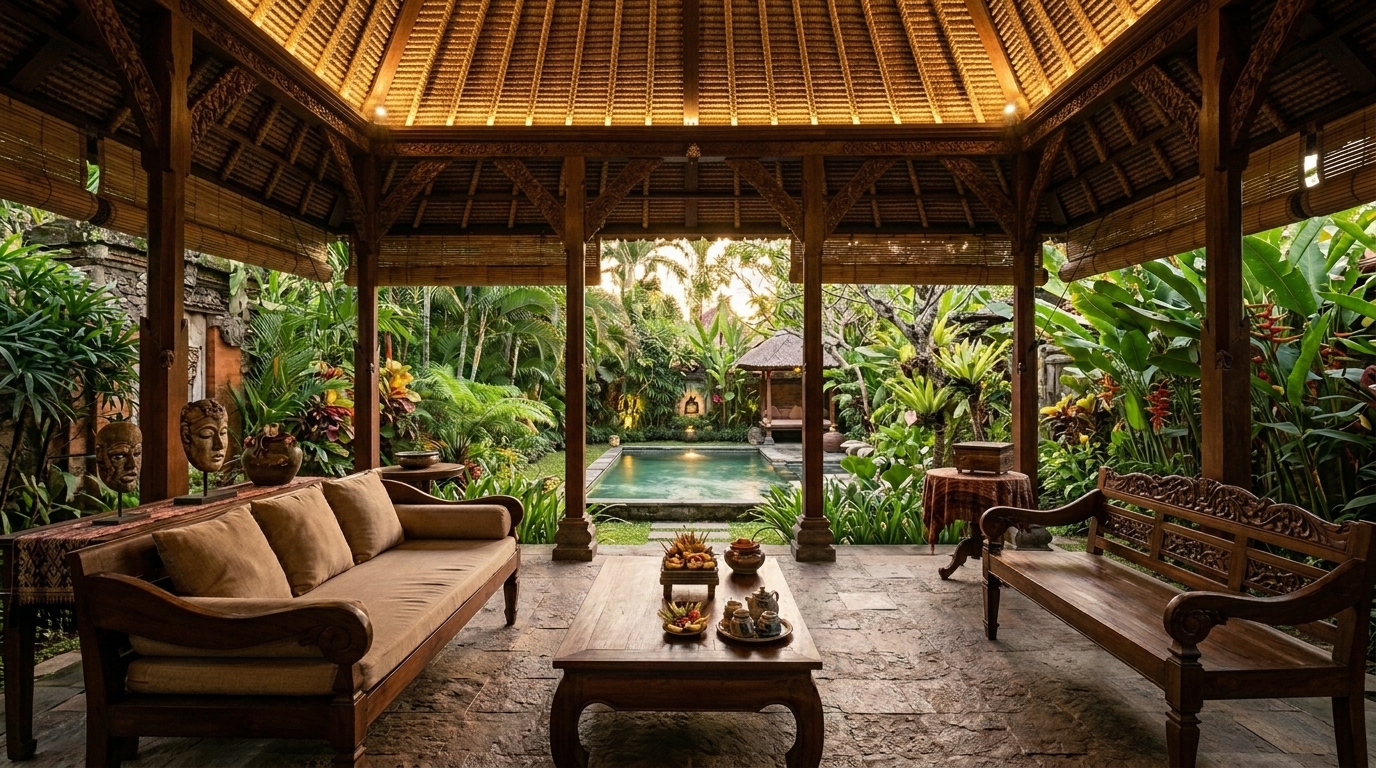
It is not the same thing as traditional Balinese interior style, which is carved, ceremonial and more formal. The two share materials. Boho borrows the craft and leaves the ceremony behind.
Why Bali Became Shorthand for Boho
The association is older than Instagram. The German painter Walter Spies settled in Ubud in 1927, and through the 1930s his house drew artists, musicians and anthropologists. The Dutch painter Rudolf Bonnet arrived in 1929, and the Mexican artist Miguel Covarrubias came in 1930 and again in 1933 to research and draw the island. With the Ubud royal family, Bonnet helped found the Pitamaha artists’ guild in 1936 (Wikipedia: Walter Spies).
That circle sent an image abroad of Bali as a place where art, craft and daily life were not separate. It is close to what “bohemian” has always meant.
The second wave came in the early 1970s. Backpackers crossing Asia and the first surfers found Kuta, and stayed in simple rooms inside Balinese family compounds (The Bali Times). They bought woven goods and batik, and carried the look home.
The current version lives in the cafés and villas of Canggu and Seminyak, where rattan pendants hang over polished concrete. It reads as believable here because it grew out of a real history and real workshops, not a mood board.
Where the Pieces Actually Come From
Much of what sells as “Bali boho” is made elsewhere in Indonesia. Knowing the origin changes the question you ask the maker.
| Piece | Where it is made | What to ask before you buy |
|---|---|---|
| Rattan and cane furniture | Rattan grows across Indonesia’s outer islands; Cirebon in West Java is the country’s best-known rattan furniture centre | Was the cane treated against borers? Is the frame solid rattan or a steel core? |
| Endek (weft ikat) | Bali; Dior used it in its Spring/Summer 2021 collection under an agreement with the provincial government (NOW! Bali) | Is it handwoven, or a printed ikat pattern? |
| Geringsing (double ikat) | Only Tenganan, a Bali Aga village in east Bali | This is a ceremonial cloth. Ask how it may be displayed, not what it costs to cut. |
| Songket | Lombok, in weaving villages such as Sukarara and Pringgasela | Hand-woven with metallic thread, or machine-made? |
| Earthenware (gerabah) | Lombok villages such as Banyumulek, Penujak and Masbagik, where pots are still shaped by hand without a wheel | Is the inside glazed or sealed, if it will hold a plant? |
What the Label Leaves Out
The rattan trade has a policy story behind it. In 2011 Indonesia’s trade ministry banned the export of raw rattan (Decree 35 of 2011) to keep the weaving at home, and exports of finished rattan products rose in the years that followed (ANTARA). Buying woven furniture in Indonesia means buying at the source of the craft, not a copy of it.
Lombok is a sourcing trip of its own, and our guide to buying furniture in Lombok covers what to check before you commit.
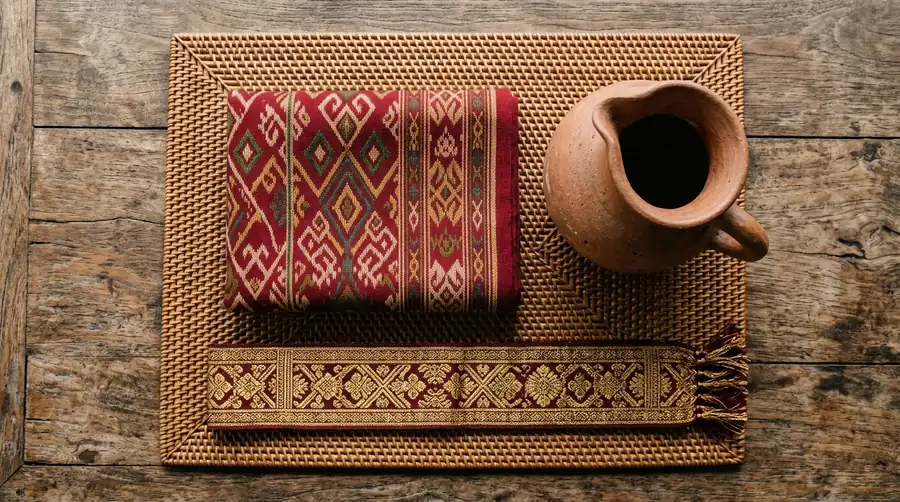
One line matters more than the rest. Geringsing takes two to five years to weave, and double ikat is otherwise known only in India and Japan (Australian Museum). Families use it in life-cycle ceremonies. Everyday cloths such as endek and songket make good cushions and throws. A sacred textile belongs framed and respected, never cut into a pillow.
The Humidity Test: Which Boho Materials Survive a Bali Wet Season
At the Ngurah Rai weather station near Denpasar, average relative humidity stayed between about 77 and 84 percent in every month of 2023 and 2024 (BPS Bali). Nearly every boho staple is a natural fibre that takes on moisture. That does not rule the style out. It changes how you specify each piece.
| Material | What goes wrong in Bali | How to specify it |
|---|---|---|
| Rattan and cane | Mould in still, damp corners; wood-boring beetles leave small round holes and fine powder; resistance varies by species (BRIN, 2016) | Treated cane, air on all sides, never in a poorly ventilated bathroom (Island Living) |
| Cotton macramé | Soaks up moisture and mildews in damp rooms | Dry, ventilated rooms only; a synthetic or blended cord for semi-outdoor spots |
| Jute rugs | The most moisture-sensitive rug fibre: water marks, then mildew | Air-conditioned rooms; never on a terrace |
| Seagrass and sisal | Guides disagree on seagrass in humid rooms; both dislike standing water | Indoors, lifted and dried after any spill |
| Linen and cotton upholstery | Fades in strong UV; stays damp in shaded, closed rooms | Removable, washable covers; lighter colours where sun reaches |
| Unglazed earthenware | Porous; sweats and stains under watered plants | A liner or a sealed interior for every planter |
The pattern across the table is simple. Air movement decides whether a boho room ages well, so plan the furniture layout around cross-ventilation before you choose a single cushion. For the wider list of finishes that cope with the island, see our guide to mold resistant materials.
Boho Without Clutter: Making It Work in a Villa
The direction for boho in 2026 is curated layering: fewer, better, handmade pieces rather than a shelf of small objects. In a Bali villa the argument is practical as well as aesthetic. Every object is something housekeeping must dust in humid air, and every loose textile is something that can mildew.
- One large woven anchor per room: a daybed, a pendant or a screen does more than ten baskets.
- Two or three patterns per room: and every one of them on a washable cover.
- Plants as the layering: they thrive in the climate that defeats paper and fabric.
- Closed storage behind the display: the collected look stays on show, the clutter does not.
- Repeatable pieces in a rental: choose items housekeeping can clean in minutes, and repeat them across bedrooms so replacements are easy to find.
If the villa earns its keep from guests, our guide to durable rental villa design covers the finishes that stand up to constant turnover.
Bohemian, Wabi-Sabi or Coastal? How Three Bali Styles Differ
| Aspect | Bohemian | Wabi-Sabi | Coastal / Mediterranean-Tropical |
|---|---|---|---|
| Feel | Layered, warm, collected | Quiet, imperfect, spare | Bright, breezy, whitewashed |
| Palette | Terracotta, ochre, olive, cream | Stone, clay, ash, raw plaster | White, sand, pale blue |
| Signature materials | Rattan, woven textiles, earthenware, plants | Raw plaster, aged timber, stone | White render, arches, light rattan |
| Pattern | Plenty, but edited | Almost none | Little, mostly stripes |
| Upkeep in Bali | Highest: many fibres to air and clean | Low: patina is part of the look | Moderate: white surfaces show mould first |
Wabi-sabi shares boho’s love of handmade texture but strips the pattern out. Our guide to wabi-sabi interiors explains how that restraint works in a humid climate.
Coastal keeps the rattan but trades pattern for whitewash and light. Our guide to coastal interior design in Bali shows how the two can meet in a beach villa.
Found Pieces or Made to Measure?
Boho’s charm is the collected look, and part of it should stay found. Think of a market textile, a hand-built Lombok pot or a basket bought on a trip. The large pieces are a different matter. A rattan daybed, a built-in bench or a teak table sized to the room is where made-to-measure pays off. A found piece rarely fits a villa’s proportions or leaves the gap the airflow needs.
Bali Best Design is the design arm of Bali Best Buy, whose workshop has built furniture in Bali since 2005. Our guide to custom furniture and local procurement in Bali explains how made-to-measure pieces are specified and built.
Want a bohemian interior that still looks right after its third wet season? Our Bali interior design studio can plan the layout around the airflow. We source the textiles and pottery, and design the pieces that have to fit.
Bohemian Interior Design in Bali: FAQ
Bohemian, or boho, interior design is a relaxed, layered style. It mixes natural textures, handmade textiles, plants and furniture that looks collected over time. In Bali it draws on local craft: rattan and teak furniture, ikat, endek and songket textiles, and hand-built earthenware. Each piece is spaced so air can move around it.
Yes, in a calmer form. The 2026 direction is curated layering: fewer, better, handmade pieces and warm earthy palettes rather than a room full of small objects. In Bali the style has lasted because its materials and workshops are genuinely local.
Yes, if it is treated and placed well. Specify cane treated against borers, keep air moving on all sides, and keep it out of poorly ventilated bathrooms. Check new pieces for small round holes and fine powder, the sign of wood-boring beetles, and wipe mould early with a mild solution.
Everyday woven cloths such as endek from Bali and songket from Lombok work well as cushions, throws and wall pieces. Ceremonial cloths are different. Geringsing, the double ikat of Tenganan village, is sacred and takes years to weave. Families use it in life-cycle ceremonies, so display it whole and respectfully, never cut.
Traditional Balinese style is carved, ceremonial and formal: heavy timber, alang-alang thatch, stone and temple-inspired detail. Boho is looser and lighter: woven furniture, layered textiles, plants and collected pieces. They share natural materials, and many Bali villas mix the two, using boho layering inside a Balinese architectural shell.